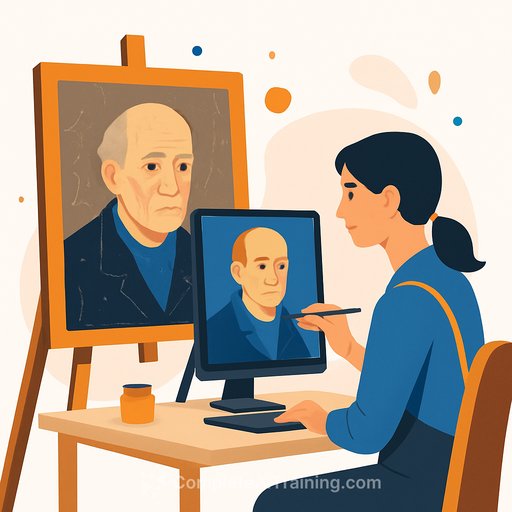
AI-Based Tool Restores Age-Damaged Artworks in Hours
Centuries take their toll on oil paintings, causing cracks, discoloration, and loss of pigment. Traditional restoration methods can demand years of skilled labor and substantial costs, limiting their use to only the most valuable artworks. A new AI-driven technique promises to cut restoration time from years to mere hours, making it possible to repair paintings that were previously too costly to conserve.
How the Technique Works
The process begins with a high-resolution scan of the damaged painting to map out the exact size, shape, and location of each damaged area. For one example, a late 15th-century oil-on-panel painting attributed to the Master of the Prado Adoration, which was visibly cracked and missing thousands of tiny paint specks, was selected for restoration.
Researchers identified over 5,600 specific sections needing repair. Using Adobe Photoshop, a digital mask was created to reconstruct missing paint, match colors, and correct damaged patterns by referencing intact portions of the painting. In some cases, missing features were replicated from other works by the same artist to maintain stylistic accuracy.
The completed digital mask was printed on a transparent polymer sheet, coated with varnish to protect the ink, and carefully placed over the original artwork. This overlay can be removed without damaging the painting, ensuring the original remains untouched.
Efficiency and Practical Benefits
In total, more than 57,000 colors were used to fill in damaged areas, improving the visual continuity of the piece despite minor alignment imperfections. The AI-assisted method reduced what would traditionally take around 200 hours of work to just a few hours, significantly lowering the time and cost involved in restoration.
This approach is best suited for varnished paintings with smooth surfaces where the polymer sheet can lie flat. It offers museums and galleries a practical way to restore and exhibit artworks that might otherwise remain in storage due to limited conservation budgets.
Ethical Considerations and Potential Impact
While promising, the method raises ethical questions about overlaying paintings with a film and whether this alters the viewing experience. Additionally, the use of copied features from other works prompts debate over authenticity and artistic integrity.
Experts suggest that this technique is most appropriate for lesser-known or lower-value paintings rather than famous masterpieces. However, it holds the potential to broaden public access to art by making more damaged works visible to audiences.
Further Reading
Your membership also unlocks: