AI is closing the gap between hotel marketing strategy and execution
Hotel websites lose 98% of their visitors without a booking. The problem isn't traffic. It's converting the visitors already there.
Hotel marketing teams have known this for years. They understand that direct bookings deliver better margins, richer guest data, and relationships built on the hotel's terms. The barrier has always been speed. Creating a personalized campaign used to take days-design briefs, copy drafts, targeting configuration, device testing. By the time a campaign went live, the demand window it was built for had often already closed.
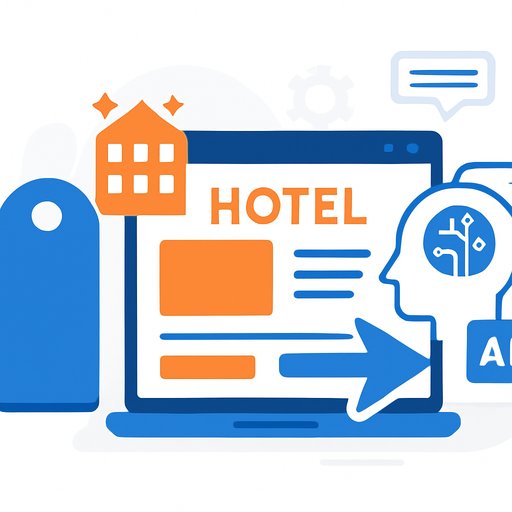
AI is removing that friction. Hotel marketers can now build targeted website campaigns in seconds instead of days, turning strategic intent directly into live campaigns without the traditional production cycle.
The execution gap that held back direct bookings
For the past decade, hotel marketing teams have built a solid case for direct bookings. A guest who books through your own website costs less to acquire than one from a third-party channel. You capture first-party data. The relationship starts before check-in.
Acting on that logic at speed proved harder. Meaningful website personalization-content that adapts in real time to each visitor's origin, intent, and booking stage-required developer involvement, significant lead time, and ongoing technical maintenance. Most marketing teams couldn't sustain it.
The constraint was never strategy. It was bandwidth. Teams knew what to do. They didn't have the resources to do it fast enough.
How AI moved into hotel marketing
AI didn't arrive as a single shift. It migrated gradually up the value chain.
It started in revenue management with dynamic pricing and demand forecasting. Then it moved into the distribution layer, helping hotels track rates against competitors in real time. More recently, AI benchmarking tools gave marketing teams visibility into how their direct channel performance compared to competitors at every stage of the booking funnel.
Instead of optimizing blindly, teams could now identify exactly where visitors dropped off, how their conversion rates compared, and which segments offered the biggest opportunity.
The most significant shift came when AI entered the personalization layer itself. Websites can now tailor content in real time based on each visitor's behavior. Low-intent users see targeted discounts and personalized offers. High-intent visitors see upselling messages and upgrade options instead, preserving margin while increasing average booking value.
AI now identifies the right visitor for the right offer and generates the message to deliver it. The copy, creative, and campaign logic all happen without a full production cycle.
Speed becomes a competitive variable
Hotel marketing teams are expected to do more with the same headcount. Seasonality shifts. Demand patterns change. Competitor moves happen without warning. The teams that respond fastest have a structural advantage.
When campaign creation takes hours instead of days, teams can run more tests, respond to demand signals more quickly, and keep websites working harder across more segments. Speed of execution has become a genuine competitive variable.
Teams investing in AI-powered message creation aren't cutting headcount. They're redirecting it toward strategy, creative direction, and optimization.
From prompt to live campaign
Modern hotel website personalization adapts in real time to who is on the site, where they came from, what they've browsed, and where they are in the booking journey. A visitor arriving via a paid campaign sees messaging tailored to that context. A returning guest is recognized and spoken to differently than a first-time visitor. A mobile user browsing at 11pm gets a different experience than a corporate traveler on desktop mid-afternoon.
The latest development in AI-powered campaign tools collapses the gap between strategic intent and live campaign. Instead of starting with a design brief, marketers start with a plain-language description of what they want to achieve: "Create a 15% discount campaign for this weekend with a summer theme."
The AI-driven process selects the appropriate campaign format, generates conversion-focused copy, designs the message to match brand guidelines, and applies intelligent targeting logic including audience, timing, and placement. The result is a fully editable, ready-to-launch campaign delivered in seconds.
What distinguishes this from generic AI tools is the training behind it. These systems are built on conversion data and personalization strategies from thousands of hotel properties worldwide. They generate hospitality-specific, conversion-optimized messaging grounded in what actually works for hotel websites.
Marketing teams remain in control. You can refine and iterate through natural dialogue, asking the AI to adjust tone, urgency, visual treatment, and see updates in real time before anything goes live.
The direct channel opportunity is expanding
The direct booking opportunity for hotels is as strong as it's ever been. What's shifting is the cost of capturing it-not in budget, but in time.
AI isn't replacing the strategic thinking that makes personalization work. It's removing the execution drag that slows it down. The gap between idea and live campaign is closing fast. For teams ready to move at the speed of the market, that's a real advantage.
Learn more about how marketing teams are applying AI for Marketing or explore an AI Learning Path for Marketing Managers.
Your membership also unlocks: