AI-Enhanced MRI Scans Deliver Clearer Images of Beating Hearts
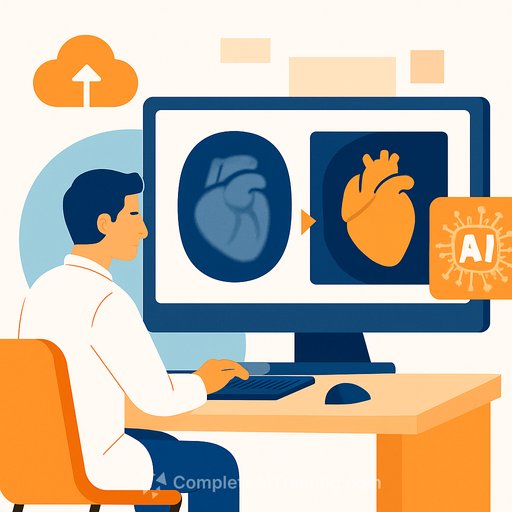
Researchers at the University of Missouri (Mizzou) have developed an AI-assisted model that transforms low-quality cardiac MRI scans into high-quality images. This breakthrough reduces heart scan times by approximately 90%, making the process faster and more comfortable for patients. Their findings were published in the journal Magnetic Resonance in Medicine.
Challenges with Traditional Cardiac MRI Scans
Cardiac MRI scans typically take between 30 and 90 minutes and provide critical insights into heart function and potential abnormalities. However, these scans often suffer from motion artifacts caused by the heart beating and breathing, leading to blurry or low-quality images.
Low image quality limits the ability to detect subtle details, which are essential for accurate diagnosis. This is especially true when evaluating heart muscle movement, as clarity is key to identifying dysfunction.
How TagGen Improves Cardiac Imaging
The AI model, named TagGen, enhances the sharpness of taglines—markers used to track muscle motion in the heart. Clearer taglines allow clinicians to pinpoint areas that may not be moving correctly or show signs of damage. With TagGen, even images affected by motion blur are restored to reveal these critical details.
- Reduces scan time by up to 90%
- Improves image sharpness and tagline clarity
- Allows patients to hold their breath for fewer heartbeats (around three instead of twenty)
- Enhances visualization of heart contraction and pumping
By cutting down the time patients need to hold their breath, TagGen minimizes discomfort and the risk of poor image quality caused by chest movement. This efficiency also has the potential to lower healthcare costs and streamline clinical workflows.
Implications for Clinical Practice
Sharper, faster cardiac MRI scans help doctors make more informed decisions by providing better visualization of heart mechanics. This improved imaging capability supports earlier detection of cardiac dysfunction and more precise monitoring of treatment progress.
The AI-assisted approach also benefits patients who struggle to hold their breath during lengthy scans, ensuring clearer images without prolonging the procedure.
Future Developments
The research team plans to refine TagGen further and extend its application to other cardiac MRI techniques, as well as computed tomography (CT) scans. They are also exploring its use in imaging other organs, including the brain, aiming to enhance motion tracking and image quality across various medical scans.
For healthcare professionals interested in how AI is transforming medical imaging, exploring ongoing advancements like TagGen can provide valuable insights into improving diagnostic accuracy and patient care.
Learn more about AI applications in healthcare and access specialized AI training at Complete AI Training.
Your membership also unlocks: