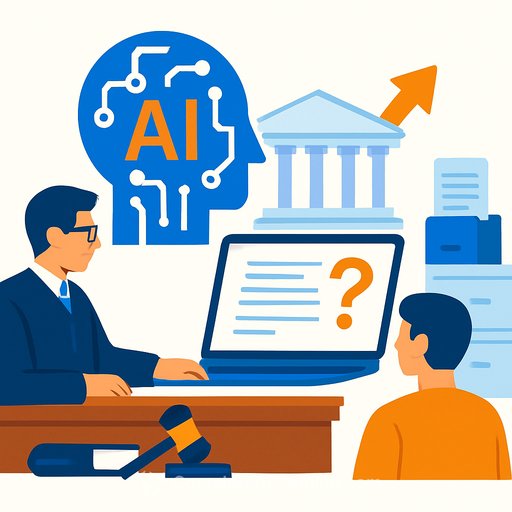
Legal Firms Report Rising AI Errors in Court Filings
Lawyers are increasingly using ChatGPT and similar tools to draft legal documents, leading to a pattern of fabricated citations, invented case law, and false quotes submitted to courts. Sullivan & Cromwell, one of the nation's top law firms, apologized last month after filing fictitious case names and fabricated quotes in a bankruptcy proceeding. The firm also cited incorrect statutes in the U.S. Bankruptcy Code.
The problem extends across jurisdictions. A 2025 High Court case in the U.K. involved a barrister who submitted 18 fictitious case-law citations out of 45 total. Another 2025 disciplinary case saw a barrister use AI for Legal work while attempting to mask fabricated citations. The 2023 Mata v. Avianca case became one of the first widely publicized examples of an attorney using ChatGPT to draft a filing that relied entirely on nonexistent judicial precedents.
Self-Represented Litigants Driving Caseload Increase
Research from MIT and USC reveals that pro se filings-cases handled by self-represented parties-have jumped significantly. The share of self-represented civil cases rose from 11% to 18% after generative AI became available, according to the study.
Researchers analyzed 1,600 randomly sampled filings over an eight-year period and found that AI-generated text in complaints rose from nearly 0% before generative AI to about 18% in early 2026. The researchers said they were surprised by the magnitude of the increase.
The rise in AI-generated content concentrated in simpler case types-contract disputes, employment matters, and basic civil claims-rather than technical areas like patent or securities law. This pattern suggests AI for Legal work is helping people file cases they would not have attempted without automated document generation.
What Drives the Errors
Generative AI systems produce plausible-sounding text that often contains false information. When lawyers use these tools without verification-particularly those unfamiliar with legal research methods-the fabrications make it into court filings.
The problem affects both experienced attorneys and inexperienced filers. Sullivan & Cromwell's error suggests that even sophisticated firms can fail to catch AI hallucinations when reviewing documents prepared with these tools.
Your membership also unlocks: