When AI Copies a Public Figure's Face, Who Pays the Price?
Generative AI adoption surged 890% in 2024. Most of that growth went toward practical applications: writing assistants, coding, customer support. But the technology has moved beyond utility into territory that raises hard questions about consent, identity, and who bears responsibility when a brand uses someone's face without asking.
Companies are now using AI to replicate the faces, voices, and personas of public figures in marketing materials-often without their knowledge or permission. The technology is precise enough to deceive audiences. That precision is the problem.
The creativity argument breaks down quickly
Generative AI does offer real creative value. It accelerates exploration of ideas, styles, and content variations. It can help with mood boards, storyboards, and visual mockups in a fraction of the time traditional methods require. That's legitimate creative work.
The boundary exists where that exploration shifts from fictional invention to replicating actual people. When an audience cannot tell whether a public figure genuinely endorsed a product or whether AI fabricated their involvement, creativity has crossed into misrepresentation.
Max Roza Natadjaya, Chief Creative Officer at SALVO, puts it plainly: "Physical attributes such as facial resemblance or voice are forms of identity, not free assets that brands can simply borrow. If the audience might mistake it for an endorsement or collaboration, but no permission was ever granted, such practices are clearly unacceptable."
The numbers suggest this is already happening
Deepfake content in Indonesia has surged 550% over the past five years, according to data from Sensity AI cited by Indonesia's Deputy Minister of Communication and Digital Affairs. Most of that content targets audiences with limited understanding of how AI works-exploiting human trust rather than technical vulnerabilities.
The impact extends beyond the individual whose likeness was borrowed. Distorted perceptions influence consumer decisions. Audiences begin to doubt even authentic content. The entire advertising industry's credibility suffers.
Consent isn't negotiable
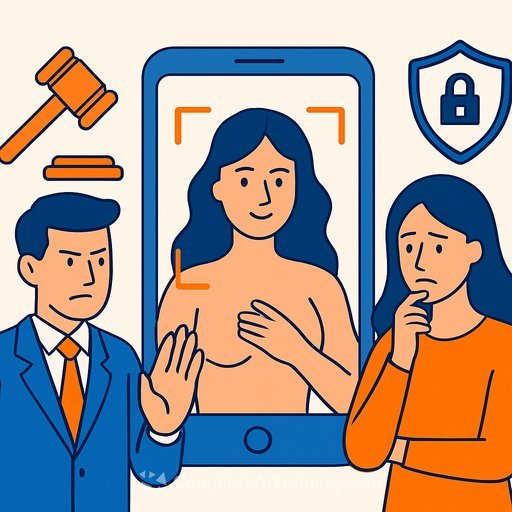
Asyana Eka Putri, a Certified AI Ethicist, is direct about the legal and ethical ground: "When a public figure's face, voice, or persona is replicated-especially for commercial purposes-this constitutes a violation of ethics and the law. Someone is being harmed in terms of their persona, reputation, and economic value, without their knowledge."
The GDPR classifies facial images as sensitive biometric data. The EU AI Act and UNESCO's AI Ethics guidelines emphasize transparency in AI usage. Denmark classified faces as intellectual property to prevent exactly this kind of misuse.
Indonesia has no specific AI regulations yet. But Copyright Law No. 28 of 2014 already protects economic rights to portraits. The 2020 Indonesian Advertising Code of Ethics explicitly prohibits displaying a person without consent-with no exception for AI-generated content designed to be identifiable. The framework exists. It hasn't been consistently enforced, but that doesn't mean it doesn't exist.
What agencies can do right now
Consent must be built into the process from the start, not added as an afterthought. Natadjaya outlines a workflow that treats AI as a tool within defined boundaries: use it for ideation, style exploration, mockups, and animatics. Don't use it to replicate faces.
Establish clear red lines before work begins. Document every decision. Layer approvals internally and with clients. Prepare disclosures so audiences know which elements used AI assistance.
The creative alternatives are just as strong. Fictional characters. Composite personas. Real talent with clear contracts. Visual metaphors. These approaches are legally sound and creatively powerful.
Four standards the industry should adopt
- Consent and rights from the outset. Any use of a person's face, voice, or identity requires valid consent-not assumptions or interpretations.
- Transparency about synthetic media. Audiences have the right to know when content was created or modified using AI. Honesty strengthens credibility rather than limiting it.
- Content provenance. A trail that records how content was created and modified. Every decision becomes traceable, enhancing accountability.
- Human accountability in risk decisions. AI can assist. The final decision must remain with a responsible human who understands ethics and context.
The parody exception is narrower than it seems
Indonesian law doesn't explicitly protect parody. But Copyright Law provisions allow for non-commercial use and modification in the context of criticism or commentary-provided the depicted party isn't harmed. That loophole is narrow.
Actors who resemble famous figures aren't new. Neither are similar-sounding voices. The legal line isn't drawn at "the audience recognizes who is being depicted." It's drawn much closer to "this is explicitly claimed to be that person."
Where exactly that line sits remains untested in Indonesian courts. AI-generated content complicates this further because it doesn't meet the definition of a photograph or traditional portrait. The legal terrain is unmapped, not settled. That uncertainty won't protect brands-it will expose them.
Responsibility spreads across the entire system
No single party can claim this isn't their problem. Creators design the systems and manage the data. Brands benefit from the campaigns and bear the legal consequences. Platforms act as gatekeepers and should detect misleading deepfakes. Regulators set boundaries and enforce them.
If this space remains unregulated, public trust in digital content will continue eroding. That damages not just the public figures whose identities are misused, but the entire industry that depends on audience confidence.
The technology will keep advancing. The question isn't whether AI can replicate a human face convincingly-it already can. The question is whether the industry will set its own standards before regulations force it to. Capability doesn't justify everything. Honesty about that distinction is what separates craft from shortcuts.
For creatives looking to work responsibly with these tools, AI Design Courses and Generative Art Training offer structured approaches to understanding both the technical capabilities and ethical boundaries of generative AI.
Your membership also unlocks: