
AI news ·
AI uses climate data to show what major cities could look like in 1,000 years
AI-generated images of six major cities show what climate data suggests they'll look like in 1,000 years: flooded streets, extreme heat, and reshaped coastlines. The projections draw from IPCC and NASA research, not speculation.
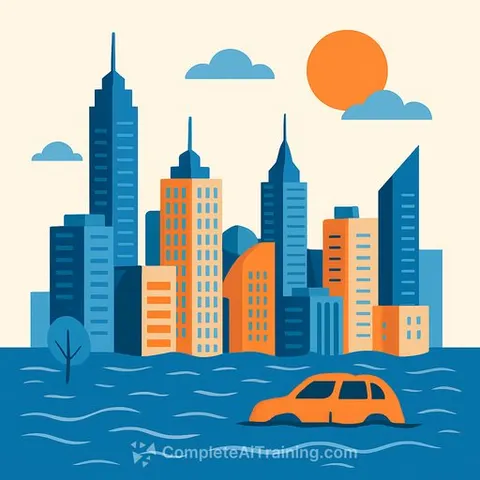
AI Generated Visions of Future Cities Based on Climate Data
An experiment using generative AI to project what Earth's largest cities will look like in 1,000 years reveals a consistent pattern: rising seas, extreme heat, and severe flooding will physically reshape urban centers worldwide.
The exercise asked ChatGPT to forecast future city landscapes using only established climate research, not speculation. The AI drew from the IPCC Sixth Assessment Report, NASA Sea Level Change Portal, Met Office Climate Change Overview, and World Meteorological Organization reports-sources that outline broad directional trends rather than specific outcomes for individual cities.
What the Data Shows
The AI focused on measurable forces already reshaping the planet: rising sea levels from warming oceans and ice loss, more intense rainfall and flooding, and increasingly extreme heat. These forces operate at the physical level that determines how cities function.
Six major cities were visualized: London, Shanghai, Mumbai, Paris, Lagos, and New York. Each projection reflects how these climate pressures will alter urban geography and infrastructure over centuries.
The Method and Its Limits
The experiment deliberately avoided science fiction predictions, specific future events, or invented scenarios. Instead, it grounded projections in long-term environmental trends already documented in peer-reviewed research.
AI systems can hallucinate or drift from their training data. The contradictions inherent in using energy-intensive AI to visualize climate futures weren't lost in the process.
Still, the exercise demonstrates how generative art and AI design tools can translate raw climate data into visual form-a technique creatives can apply to environmental communication, urban planning concepts, and scenario-based design work.