AI vs. Copyright: The New Creative Battleground
AI is acting like a bold teenager-fast, talented, and a bit reckless. That's exciting for output, but risky for rights. If you create for a living, you need a clear plan for ownership, consent, and brand safety.
Recent headlines point to one thing: rules are being tested in public. Courts are weighing data use, companies are pushing for exceptions, and brands are fighting impersonation at scale. Don't wait for a perfect rulebook-build a workflow that protects you now.
Where things stand (quick snapshot)
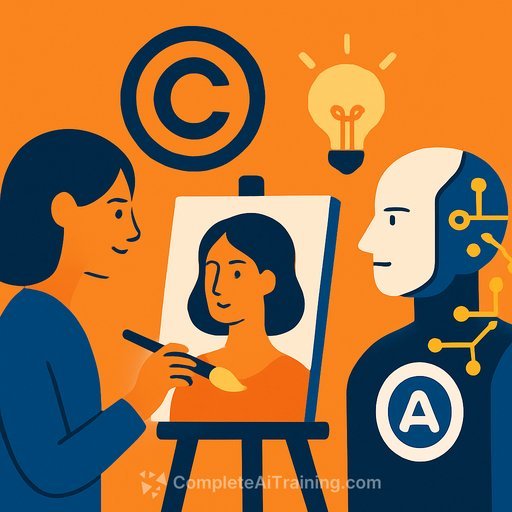
- Pure AI outputs may not qualify for copyright in some regions. Human direction and meaningful editing matter. See current guidance from the US Copyright Office: USCO on AI.
- Training data lawsuits and "text and data mining" exceptions are evolving. Expect mixed outcomes across jurisdictions.
- Brands are facing AI-on-AI battles-style copying, voice clones, and lookalike logos. Fast reaction and proof-of-authorship are now core skills.
The creative playbook (use this)
- Claim authorship with intent: Keep humans in the loop. Direct the concept, control the composition, and perform substantial edits. Save your prompt history and layer-based files as proof of contribution.
- Disclose and document: If you register work, follow local rules on AI material and disclosures. Keep a short log: model used, prompts, assets, edits, and dates.
- Use consent-first sources: Prefer models and libraries with clear licensing and published training policies. Check terms on indemnity, reuse, and data retention.
- Tag provenance: Add content credentials and metadata so clients and platforms can verify authorship. Learn about open standards like C2PA.
- Set "do-not-train" signals: Use metadata, platform settings, and licensing terms that prohibit model training on your uploads. Keep receipts.
- Protect your brand system: Register trademarks for names, logos, and key marks. Publish a style guide and watch for AI impersonations across marketplaces and social.
- Takedown muscle: Prepare templates for DMCA and platform reports. Capture URLs, timestamps, and screenshots. Move fast on high-traffic infringements.
- Tighten contracts: Add AI clauses to SOWs: allowed tools, training restrictions, attribution, ownership, warranties, liability, and prompt log retention.
- Guard client data: Don't feed confidential files to open tools. Use enterprise features, masking, or offline workflows. Get written approval for any dataset building.
- Pick the right model for the job: Favor providers with rights-focused modes, content filters, and enterprise audit trails. Separate experimental from production work.
What the headlines mean for you
- "AI vs copyright" isn't theory. It's contracts, court filings, and platform rules changing under your feet. Build a repeatable workflow now.
- "AI is an upstart teen." Treat it like a talented intern: give direction, set boundaries, and review everything.
- "Exceptions muddy protection." Some regions may allow broad data use for training. Your best defense is consented inputs, clear records, and fast enforcement.
- "AI fighting AI." Expect lookalike styles and brand confusion. Use provenance, watermarking, and takedown playbooks to protect your signature.
Creative checklist for your next project
- Write a one-paragraph intent: what you control, what the model aids.
- Log prompts, seeds, edits, and external assets in a shared folder.
- Use licensed inputs and rights-safe modes. Screenshot the terms page.
- Export layered files and add content credentials/metadata.
- Run a quick brand/style confusion check before delivery.
- Register key works where it makes sense. Prep a takedown template.
Team enablement
Give your team a simple rule: human-led concept, documented process, verifiable output. Review weekly, ship a playbook, and keep a one-page policy in your project hub.
If you want structured training by role, see these resources:
Bottom line
Creativity wins when you pair taste with proof. Lead the idea, show your work, and make rights a feature of your process-not an afterthought.
The tech will keep moving. Your workflow should still hold.
Your membership also unlocks: