Chinese court flags AI-forged evidence in lease dispute: practical takeaways for litigators
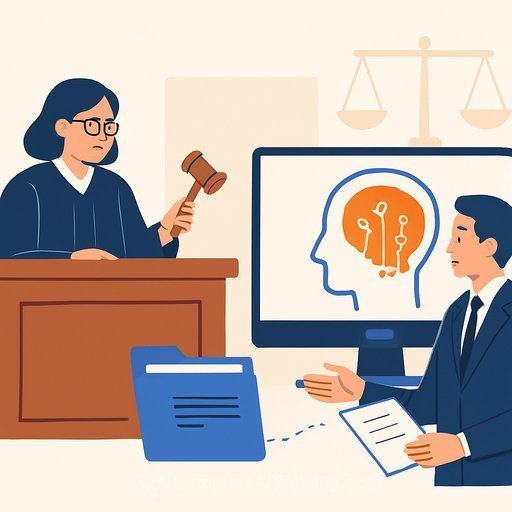
A county court in Hubei uncovered AI-generated "proof" in a rental case and issued a formal reprimand to the party responsible. The move signals a clear zero-tolerance stance on litigation fraud and a reminder that digital exhibits will face heightened scrutiny.
Case snapshot
In May 2024, Li leased a residence to Xiong with rent due for the latter half of the term by March 2025. After the lease ended, Li sued for six months' unpaid rent and utility charges, appointing his daughter, Dong, as litigation representative.
Pressed for proof of utility arrears, Dong promised "before and after" photos of the meters. What arrived instead: images bearing a visible "generated by Doubao AI" watermark, which immediately raised the judge's suspicions.
Under questioning, Dong's account shifted on a key fact: she first claimed the meters were exclusive to the leased unit, then admitted the building used a "one staircase serving two households" setup with shared water and power meters. She ultimately confessed to fabricating the initial images and later submitted authentic photos.
Court response and legal footing
The court made clear that submitting AI-generated images as evidence is fabrication of key facts and can obstruct proceedings. Under the Civil Procedure Law and relevant judicial interpretations, sanctions can include reprimands, fines, or detention; in serious cases, criminal liability may follow.
Because Dong confessed during the inquiry and corrected the misconduct, the court issued a formal reprimand and excluded the tainted images from review. The dispute will be decided on verified facts and authentic evidence.
Key legal basis: Civil Procedure Law of the PRC and the Supreme People's Court's evidence rules for civil cases. See the Civil Procedure Law (2023) and the Provisions on Evidence in Civil Proceedings.
Why this matters to your practice
- Digital exhibits are now high-risk items. Courts are prepared to question authenticity, chain of custody, and provenance-especially when AI fingerprints appear.
- Representatives (family members, managers, agents) can create exposure if they improvise evidence. Counsel should brief them on sanctions and set strict intake protocols.
- Shared-meter properties complicate allocation of utilities. If the lease doesn't resolve responsibility with objective measurement or apportionment terms, expect credibility fights and exclusion of weak proof.
- Judges will not hesitate to penalize fabricated "key evidence," even if the party later corrects course. Early correction may mitigate, but it won't cleanse fake exhibits.
Practical checklist for image evidence
- Collect originals, not screenshots. Preserve capture device details, time, and location; keep contemporaneous notes or a witness where possible.
- Compute and store a hash at intake; maintain an unaltered master file. If edits are necessary (cropping, redaction), document exact steps and tools used.
- Review metadata and look for AI tells: model watermarks, inconsistent lighting or textures, duplicated patterns. Use forensic tools and, if needed, third-party verification.
- Demand production of originals in discovery, plus device logs or source application data. Subpoena service providers when provenance is disputed.
- For shared utilities, require clear apportionment terms in the lease and gather independent corroboration (e.g., building manager statements, historical bills, or usage logs).
Policy moves for legal teams
- Adopt an evidence intake SOP that flags AI-involved content and mandates authenticity checks before filing.
- Train staff and client reps to never generate or "improve" exhibits with AI. Escalate any suspicious submission internally before it reaches the court.
- Update engagement letters and litigation holds to cover electronic data handling, image capture standards, and audit trails.
Courts are building muscle memory for spotting synthetic media. Expect tighter authentication demands and swifter sanctions for anyone who tries to slip fabricated files into the record.
If your team needs to build practical AI literacy and governance around evidence handling, consider starting with the AI Learning Path for Primary School Teachers as an accessible primer on AI concepts and risks that can inform internal policies.
Your membership also unlocks: