AI and Workforce Plan to Boost Michigan’s Economy and Job Market
May 29, 2025
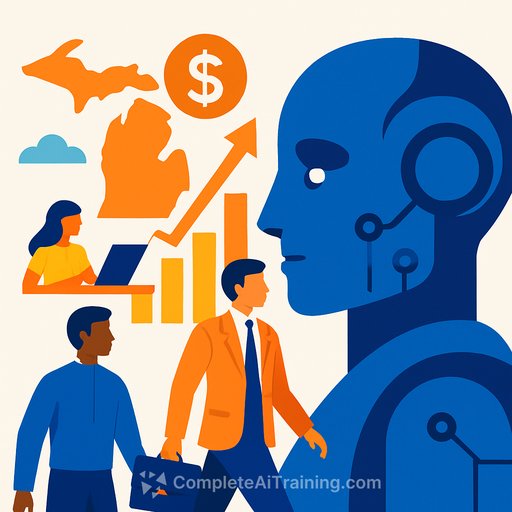
Michigan has unveiled a new AI and Workforce Plan that aims to create 130,000 good-paying jobs and generate up to $70 billion in economic impact. Over the next 5 to 10 years, artificial intelligence is expected to reshape as many as 2.8 million jobs across the state.
The plan builds on Michigan’s existing Statewide Workforce Plan and focuses on leveraging AI technology to drive economic growth and workforce development. The Department of Labor and Economic Opportunity (LEO) is leading the effort to position Michigan as a leader in AI strategy, infrastructure, and workforce training.
Preparing Michigan’s Workforce for an AI-Driven Economy
AI will transform how work is done in nearly every sector, especially manufacturing, which is a cornerstone of Michigan’s economy. Roughly 75% of manufacturing jobs will require new skills due to AI integration, even though full automation remains limited.
Lt. Gov. Garlin Gilchrist II emphasized the importance of preparing workers with the right skills and tools to thrive. By investing in workforce training and ensuring equitable access, the state aims to provide economic mobility and a stronger future for all Michiganders.
Key Pillars of the AI and Workforce Plan
- Invest in skill development for the AI economy. Embedding AI education into schools and training programs will help workers stay competitive. Accessible, real-world training will boost economic mobility and prepare Michigan for future job demands.
- Understand and guide the workforce landscape. AI changes how tasks are performed and how jobs evolve. Preparing workers with adaptable skills and clear career pathways will help Michigan lead this transition and ensure inclusivity.
- Support businesses adapting to AI. Many small and medium businesses lack resources to implement AI effectively. Providing technical assistance and shared tools will help these businesses innovate, grow, and contribute to job creation.
Building a Stronger, More Resilient Economy
LEO Director Susan Corbin highlighted the need for action now to maintain Michigan’s competitiveness. Modernizing training infrastructure and making education flexible and accessible will fuel long-term economic stability.
Michigan ranks first nationwide in adult credential attainment, third in helping adults find employment, and is among the top ten states for Registered Apprenticeships. These strengths provide a solid foundation for expanding AI-related workforce development.
Voices from Michigan’s Business and Education Leaders
Brian Calley, President & CEO of the Small Business Association of Michigan, stressed that effective AI strategies are essential for small business growth. AI opens new opportunities and can support the creativity and service small businesses provide to their communities.
Dr. Beverly Walker-Griffea, Director of the Department of Lifelong Education, Advancement, and Potential (MiLEAP), emphasized investing in education at every stage. From early STEM exposure to accessible postsecondary training, removing barriers to lifelong learning will help people secure good-paying, high-demand jobs.
Matt McCauley, Senior Vice President of Regional Development at the Michigan Economic Development Corporation (MEDC), noted Michigan’s history of adapting to new technologies. With recent investments like a $1.2 billion AI research facility near Ann Arbor, Michigan is positioned to lead in AI innovation and economic growth.
Opportunities for IT, Insurance, and Development Professionals
For professionals in insurance, IT, and development, the AI and Workforce Plan signals a shift in required skills and job functions. Upskilling in AI tools, data analysis, and automation will be essential to stay relevant and competitive.
To explore training programs and courses that align with these new demands, consider visiting Complete AI Training – Courses by Job. These resources provide practical AI skills tailored to your professional growth.
Looking Ahead
By weaving AI into education, workforce training, and business support systems, Michigan aims to prepare its workforce for the opportunities and challenges ahead. This approach will help people gain the skills necessary for today’s roles and the jobs of tomorrow.
Learn more about Michigan’s AI and Workforce Plan and how it might impact your industry and career.
Your membership also unlocks: