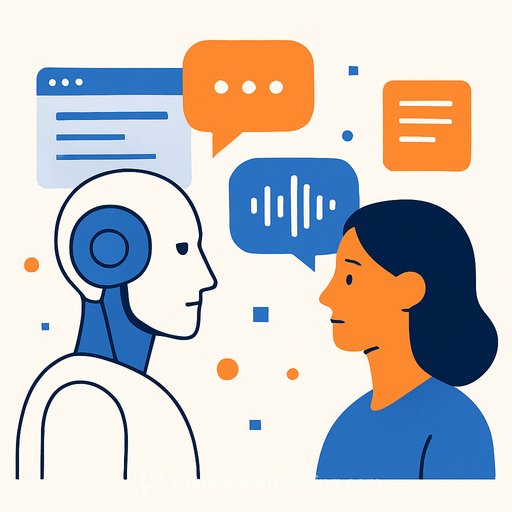
Writers vs. AI: How Your Voice Stays Valuable
Authorship is blurring. A recent study suggests that over half of web articles are now AI-generated. That sounds like a death knell for writers, but it isn't. The work simply shifts.
Most of what AI writes is low-stakes, formulaic content: news updates, how-to guides, product explainers, listicles, standard outreach. Useful, yes. Original, rarely.
It's not all or nothing
Decades ago, Umberto Eco drew a line between people who predict cultural collapse and those who celebrate every new medium. Both extremes miss the point. The value lives in how people use the tools.
Apply that lens to AI: it can flood the web with copy that fills space. It can also help you think, structure, and edit. The difference is the human behind it.
Where AI is already good (and where it isn't)
- Good: boilerplate, summaries, generic how-tos, keyword fillers, surface-level research
- Not good: fresh angles, lived experience, taste, reporting, risk-taking, cultural nuance, voice
If your income depends on the "good" column, rethink your offer. If your work lives in the "not good" column, double down and systematize it.
Authenticity isn't a badge - it's a process
As more text is co-written with AI, detecting whether something is AI-made will matter less than whether it's worth reading. The internet will lean to sameness. Your edge is the opposite.
One more tension: AI use can make writers feel more creative, yet outputs often collapse to the middle. Style flattens. Non-English voices get nudged toward English norms. Guard against that drift.
A practical workflow for co-writing with AI (without losing your voice)
- Create a "voice file." One page with your tone, banned phrases, sentence rhythm, and examples you've written. Feed this to the model before each session.
- Draft before you prompt. Write a messy 150-300 words first. Then ask AI to outline, expand, or reorder - not to "write it from scratch."
- Constrain aggressively. Give structure: "Keep paragraphs under 4 sentences. No clichés. Use concrete nouns. Preserve first-person anecdotes."
- Inject texture manually. Add specifics AI can't know: dates, prices you paid, names, locations, screenshots, your mistakes, and what changed your mind.
- Run the "read-aloud test." If you wouldn't say it out loud, it's filler. Cut or rewrite until it sounds like you.
- Anti-sameness pass. Replace vague claims with examples, swap abstractions for numbers, and collapse fluff into verbs.
Prompts that actually help
- "Rewrite this to keep my voice. Short sentences, high signal, no platitudes. Keep every specific detail intact."
- "Identify clichés and generic claims in this draft. Suggest sharper replacements with concrete examples."
- "List 5 contrarian angles a well-read editor might explore on this topic. No repeats, no obvious takes."
- "Summarize my draft into a 7-point outline I can rearrange. Don't add new ideas."
What to double down on now
- Reporting and proof. Call people. Quote them. Use numbers you verified. AI can't interview your source.
- Point of view. Take a stance. Tie it to lived experience or data, not vibes.
- Cultural specificity. Keep your dialect, idioms, and references. If you write in another language, draft there first, then translate.
- Rewrites and endings. Most AI drafts sag in the middle and fizzle at the end. Your job: restructure and land the plane.
On deepfakes, trust, and what readers believe
People overestimate their ability to spot synthetic media and underestimate how it nudges trust. During the 2024 cycle, deepfakes amplified polarization but didn't clearly decide outcomes. The lesson for writers: cite, link, and show your work. Credibility compounds.
Protect your originality from model drift
- Keep a human-only portfolio. Longforms, essays, newsletters. Treat them as training data for your future self - not for a model.
- Save your corpus. Store your best work, notes, voice file, and sources. This is your personal dataset.
- Publish fewer, better. If the web floods with sameness, scarcity moves to quality and voice.
A simple content system
- 1. Collect: ideas, quotes, data, and stories in one place (daily)
- 2. Distill: 10 bullet insights per topic (weekly)
- 3. Draft: 1-2 anchor pieces and 3-5 riffs (weekly)
- 4. Edit: structure pass, clarity pass, voice pass (separate sessions)
- 5. Distribute: email, socials, partners - lead back to one flagship asset
The bet
If AI keeps improving (and it will, with plateaus), originality, voice, and rigor get more valuable, not less. The internet doesn't need more words. It needs writers who say something worth reading.
Next steps for working writers
- Define your category edge: what you do that AI can't (yet) - interviews, analysis, field notes, niche expertise
- Productize your skills: editorial audits, ghostwriting with reporting, thought leadership with point of view
- Systematize your workflow with AI - without outsourcing your taste
Helpful resources
Bottom line: Collaborate with AI to work faster. Use your voice, taste, and proof to stand apart. That mix is hard to imitate - and that's the point.
Your membership also unlocks: