
AI news ·
Aigc compliance becomes material risk in entertainment industry transactions
Entertainment companies seeking financing or listings now face deal delays as banks and regulators scrutinize AI-generated content risks. Lawyers urge immediate adoption of granular risk controls, warning that weak IP and data compliance can directly stall a funding round or regulatory review.
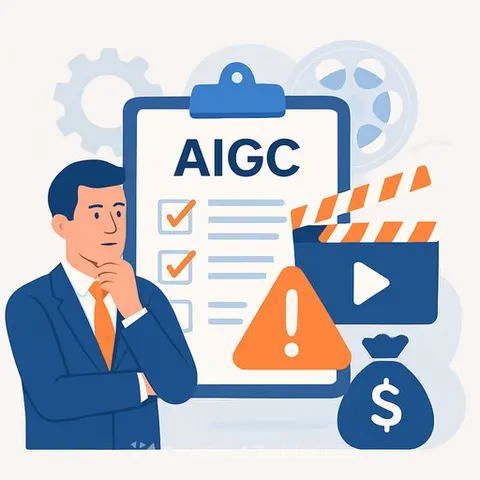
Entertainment companies pursuing financing, listings or other transactions face a new due diligence hurdle: the legal risks tied to artificial intelligence-generated content (AIGC). As AI becomes more deeply embedded in scriptwriting, soundtrack production and digital human development, weaknesses in intellectual property and data compliance are drawing scrutiny from investment banks and regulators, potentially delaying capital markets activity.
Contract terms and internal controls drafted before AIGC tools became widespread often fail to address new use cases. Personality rights, copyright, data provenance and platform compliance are now material risks for day-to-day operations and deal-making alike. Lawyers at Jingtian & Gongcheng argue that companies must move quickly toward "digitalised and granular risk control systems" to keep pace.
Contractual governance
Talent management and performance agreements should include dedicated AI clauses. These clauses need to state clearly whether production teams or third parties may collect and use an artist's voice, facial expressions and body movements for database building and model training.
Where such use is authorised, the contract must define the permitted scenarios for any digital replica - for example, post-production dubbing for the same project or promotion of specified spin-off products - as well as the term, territory and revenue sharing arrangements. An "artist exit" mechanism is also recommended, allowing an artist to revoke consent for use of an AI replica if defined ethical concerns or a major reputational crisis arise. That helps balance technology commercialisation with personality right protections.
Commissioned works agreements - for screenwriting, scoring and outsourced production - require representations and warranties on AI-assisted creation. External teams should be required to disclose whether AIGC tools were used, to what extent, and which parts of the deliverables were AI-generated. Strong indemnity obligations must follow: if infringement results from a contractor's improper use of AIGC tools, all direct and indirect losses should be borne by the contractor. For music and similar works tied to personal creative identity, the contract should also specify how authorship or attribution will be reflected when AI-generated content is involved.
Compliance controls
Producers need detailed internal rules governing AIGC tool use and a periodically updated whitelist of approved systems. Three screening criteria matter most: the legality and transparency of the training data underlying the tool; whether the vendor offers copyright infringement indemnity; and whether user terms clearly grant commercial-use rights while prohibiting the vendor from using enterprise inputs for further model training.
Ex ante controls are essential to prevent staff from using open-source models of uncertain provenance - or tools without adequate copyright safeguards - in commercial projects. Copyright clearance should also be brought forward into the content development stage, with human review and comparison procedures to identify whether AI-generated outputs are substantially similar to well-known IP or existing protected works. Enterprise-grade commercial AI tools that offer contractual indemnities should be prioritised during procurement.
Virtual persona assets and data traceability
When multi-channel network agencies incubate virtual idols or produce AI-generated short-form video, the IP in a virtual character is often entangled with the personality rights of the performer behind it. Those rights should be separated by contract at the outset. The key is to stipulate clearly that ownership of the virtual persona and rights to its subsequent operation belong to the agency. This prevents a creator who leaves from taking the digital asset or later asserting voice-related infringement claims - and it protects early-stage investment from becoming a sunk cost.
On the data side, foundational model providers must establish lawful and compliant data acquisition mechanisms, giving priority to public domain material, properly licensed commercial databases, or revenue sharing arrangements negotiated with rights holders. Platforms should strengthen content filtering and watermark tracing measures, including digital watermarking, to improve the identifiability and traceability of generated content and reduce the risk of deepfakes or infringing outputs.
"AIGC has not altered the basic logic of rights allocation; it has primarily multiplied the settings in which rights conflicts can arise," the Jingtian & Gongcheng analysis notes. Data sourcing legality and the strength of IP compliance in AIGC workflows "have become issues of direct concern to investment banks and regulators, and may directly impact its capitalisation process."
Why this matters for legal professionals
Pre-IPO and transactional due diligence now routinely probes a company's AIGC-related contractual hygiene, data provenance and liability allocation. Legal teams must update template agreements, refine procurement policies and establish ex ante clearance procedures before AI tools are deployed in creative workflows. The work is not just about avoiding litigation - it directly affects whether a deal clears a regulator's review or a funding round closes on schedule.