AIIMS Jammu to Strengthen Healthcare Innovation with AI Global Hub
Published: 30 Dec 2025
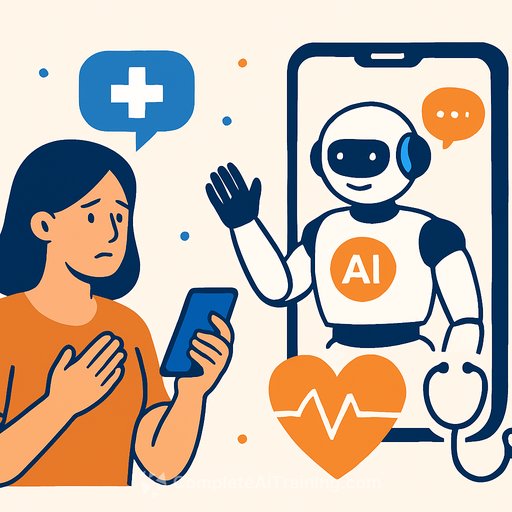
AIIMS Jammu has announced a Global Center for Artificial Intelligence in Healthcare. The goal is straightforward: improve patient outcomes and clinical efficiency by putting practical AI tools into care delivery, education, and research.
What's being built
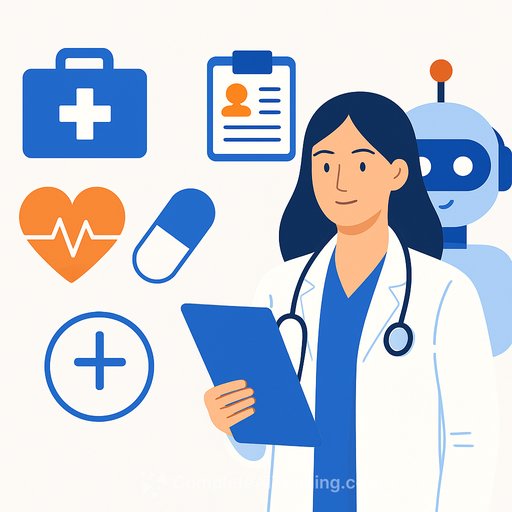
The center will focus on real clinical use, not just prototypes. Teams will apply AI to disease prediction, diagnosis, and treatment planning while embedding these tools into everyday workflows.
Given AIIMS Jammu's large and diverse patient load, the institution has the data depth and clinical expertise to develop models that are relevant, reliable, and clinically useful-when governed well.
Why this matters at the bedside
- Faster, more precise decisions through analysis of clinical notes, labs, and imaging.
- Earlier risk detection for complex and high-acuity cases to reduce delays.
- Decision support at the point of care to standardize quality and reduce variation.
Where AI will plug in first
- Radiology and pathology: Prioritization, image triage, and error reduction.
- Cardiology and neurology: Risk scoring, event prediction, and timely interventions.
- Endocrinology and oncology: Personalized treatment planning and response monitoring.
- Advanced surgery: Pre-op risk assessment, workflow optimization, and post-op surveillance.
- Emergency and referrals: Triage support, capacity planning, and referral routing.
Training the workforce
The center will serve as a training ground for clinicians, researchers, and students. Expect practical tracks in clinical AI literacy, data stewardship, model evaluation, and safe deployment.
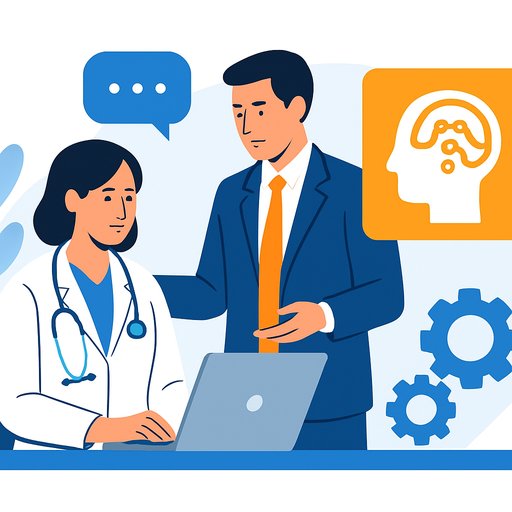
Multidisciplinary teams-clinicians, data scientists, biomedical engineers, and IT-will be key. The focus: build tools that fit clinical reality, not the other way around.
Data use, safety, and trust
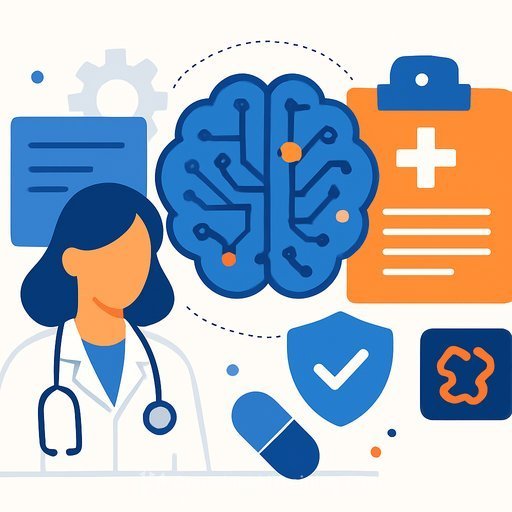
AIIMS Jammu's daily volume generates valuable data that, when de-identified and governed with strict controls, can fuel model development and validation. Ethical use, transparency, and bias monitoring must be baked in from the start.
- Clear consent and privacy safeguards.
- External validation before clinical use, plus ongoing monitoring.
- Clinician oversight with audit trails and explainability where possible.
For reference, see guidance from the World Health Organization on AI for health ethics and governance and India's clinical AI guidelines.
Part of a broader build-out
The AI center sits within a larger expansion plan. AIIMS Jammu is developing Centers of Excellence in robotics, telemedicine, oncology, trauma care, and predictive medicine.
Infrastructure upgrades are underway: state-of-the-art labs, a catheterization lab, a modern blood center, and strengthened rural health units. These investments create the clinical and operational backbone needed for AI to add real value.
Impact for patients in Jammu & Kashmir and nearby regions
Access improves when advanced services are available closer to home. Faster diagnosis, coordinated care pathways, and decision support can reduce transfers and delays-especially for time-sensitive conditions.
This builds on AIIMS Jammu's work in genomics and precision medicine, plus digital services like patient navigation and tech-enabled hospital operations.
What healthcare teams can do now
- Identify high-impact use cases: Start with bottlenecks-imaging backlogs, sepsis detection, readmission risk, referral triage.
- Set data and evaluation standards: Define metrics, bias checks, and clinical acceptance criteria before pilots.
- Pilot with tight feedback loops: Short cycles with frontline clinicians. Track outcomes, safety events, and workflow fit.
- Plan for integration: EHR interoperability, alert fatigue controls, uptime SLAs, and change management.
- Upskill your team: Baseline AI literacy for clinicians and advanced training for data/IT leads.
What success looks like
- Better outcomes in defined pathways (e.g., stroke door-to-needle, oncology staging accuracy).
- Measured gains in speed, cost, and clinician workload.
- Clear governance, transparent reporting, and zero-tolerance for unsafe drift.
- Education pipelines that produce clinicians comfortable working with AI tools.
Bottom line
AIIMS Jammu is positioning AI where it matters-at the bedside, in the workflow, and in the classroom. With strong governance and clinician leadership, this can raise the standard of care across specialties while expanding access for the region.
Upskilling resources
If your hospital or department is planning an AI skill path for clinicians and data teams, explore these curated resources:
Your membership also unlocks: