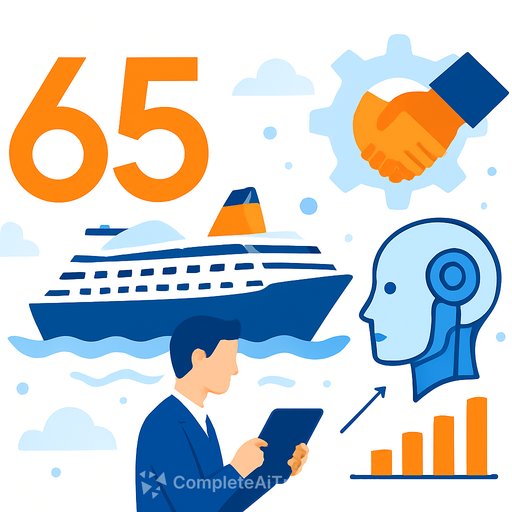
AIM Group Marks 65 Years as AI Reshapes Cruise Industry Events
AIM Group International, which has managed cruise industry conferences for nearly seven decades, faces a fundamental question: which aspects of relationship-building can artificial intelligence handle, and which require human judgment?
The organization's anniversary arrives as predictive analytics now inform port scheduling, machine learning optimizes passenger routing, and chatbots handle routine inquiries. Yet the cruise industry's most valuable relationships-between port authorities and cruise executives, between destination planners and onboard directors-cannot be reduced to data feeds.
The Data Problem That Creates New Challenges
A single mega-ship generates terabytes of passenger information: booking patterns, spending habits, cabin preferences, excursion selections. Five years ago, destination marketing organizations relied on quarterly reports and annual strategy sessions to process this data. AI systems now identify trends in real time.
This capability transforms what industry events are supposed to accomplish. When data about passenger preferences becomes widely available through analytics platforms, the traditional value of conferences-exchanging anecdotal intelligence about which excursions appeal to different demographics-diminishes.
Yet the paradox is real. Data availability does not solve the cruise industry's core challenge: building lasting partnerships between decision-makers who understand context, share values, and commit to long-term strategy rather than transaction optimization.
Why Human Judgment Still Matters
AIM Group's institutional memory cannot be replicated by algorithms. When a port faces operational disruption, when a destination experiences political instability, or when a cruise line redesigns its itinerary strategy, experienced professionals at industry events provide immediate context about historical precedents and likely consequences. This knowledge lives in conversation.
Passengers themselves reveal the limits of pure automation. They expect frictionless digital experiences-mobile check-in, AI-powered service requests, personalized dining recommendations. Yet satisfaction increases when they encounter genuine human connection: a crew member who remembers a preference, a guide who shares local knowledge with passion, an executive who addresses concerns with empathy.
The cruise industry projects carrying over 32 million passengers annually by 2028. That volume cannot be managed by algorithms alone. Differentiation-distinguishing one cruise line from competitors, one port from alternatives, one destination from rivals-depends on relationships between professionals who understand their markets.
How Events Are Adapting
AIM Group's response is repositioning its conferences as spaces where human decision-making takes priority. Forums increasingly focus on case studies where relationship-based problem-solving produced outcomes that pure data analysis would have missed. Workshops explore how cruise personnel can identify passengers whose preferences have evolved beyond what booking history reveals.
Port innovation illustrates this principle. Miami's evolution as a cruise hub requires managing relationships with over a dozen major cruise lines, coordinating with hospitality partners, navigating community concerns about environmental impact, and competing against Caribbean and Mediterranean alternatives. These relationships cannot be managed by algorithms optimizing for individual transaction efficiency.
Cruise lines are discovering that destination relationships require active cultivation. Longer itineraries and fewer days at individual ports mean each visit must deliver exceptional value. A Caribbean island developing eco-tourism credentials requires different relationship investment than a Mediterranean port focused on cultural heritage.
For hospitality and events professionals, the implication is clear: AI tools can handle operational efficiency, but strategic partnerships still depend on the contextual judgment that only experienced professionals provide. Understanding AI's strategic role means recognizing what it cannot do-build trust, navigate nuance, or commit to long-term value creation.
Your membership also unlocks: