
AI news ·
Airbnb to hire workers replaced by AI-with one catch: people-facing roles only
Airbnb wants to hire AI-displaced workers in a people-first services marketplace-think chefs, guides, and photographers. AI runs ops; humans deliver the moment.
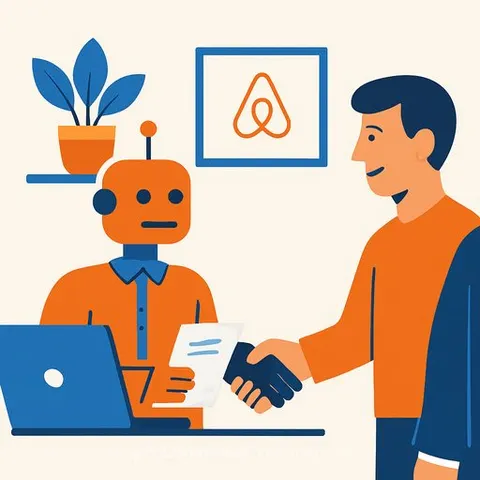
Airbnb's "Everything App" Vision: Jobs for AI-Displaced Workers - With a Condition
Airbnb CEO Brian Chesky says he wants to offer work to people displaced by AI. The condition: those jobs live in a people-first marketplace as Airbnb expands into an "everything app" for services like private chefs, massages, and photography.
Translation for product teams: this is a bet on human-led experiences where AI does the back office, not the front-of-house.
What Chesky actually said
"I hope that if AI displaces a lot of jobs, I hope we could be a place for at least some of those jobs to expand to. And I think a lot of people are going to come to us," Chesky said.
He drew a line between industries already absorbing AI at scale and hospitality. "I still think when people go to Bordeaux and they drink a bottle of wine, I don't think they want that to be an AI-driven experience. When they go to Lake Como, I don't think they want a robot answering the door for them."
On automation in transport, he added: "I doubt humans are driving cars at some point in the future, and so all those drivers that are driving for money will probably have to do something else."
The condition for these "new jobs"
These aren't office roles. They're service roles inside a growing marketplace: hosts, chefs, guides, photographers, wellness providers, and on-site support.
Chesky's view: hospitality stays human for the next five to ten years. AI will compress white-collar tasks, but people-led experiences will keep their value - and need product infrastructure that makes them safe, consistent, and bookable.
Why this matters to product development
If you build marketplaces, this is your signal. The next wave isn't pure software; it's software that operationalizes human service at scale.
- Shift from "features" to "service SKUs." Define bookable services with clear scope, timing, pricing, and quality gates.
- AI backstage, humans onstage. Use AI for matching, pricing, scheduling, support triage, and fraud detection. Let people deliver the moment.
- Trust systems as a core feature. Verification, background checks, insurance, reviews, rebooking flows, and dispute resolution need product ownership.
- Supply acquisition is a product. Onboarding, training, certification, and incentives for service providers are part of the experience, not an ops afterthought.
- Local compliance is a blocker or a moat. Bake permits, tax handling, and policy changes into your platform logic.
What a practical roadmap could look like
- 0-90 days: Define the initial verticals (e.g., chefs, photographers, wellness). Ship v1 service SKU models, booking flows, and provider onboarding. Add identity verification and basic insurance.
- 90-180 days: Launch AI-assisted matching, dynamic pricing, and scheduling. Roll out provider quality scorecards and standardized service kits.
- 6-12 months: Bundle stays + services, add cross-sell in pre-check-in flows, expand coverage to top markets, and introduce fast rebooking with guarantees.
Implications for talent and org design
- Hire for "experience ops" and service quality, not just software delivery. Treat these teams like product pillars.
- Create an on-ramp for AI-displaced workers: clear onboarding, training modules, certification, and transparent pay structures.
- Instrument everything. Track fulfillment rate, NPS/CSAT per service SKU, incident rate, rebook time, provider retention, and margin.
Risks to manage early
- Consistency: Standardize service playbooks and enforce them with checklists and photo/video confirmations.
- Safety: Background checks, insurance, secure messaging, on-site verification, and escalation paths.
- Quality drift: Continuous audits, mystery shopping, and incentives tied to outcomes, not only volume.
If you're building a similar "everything app"
- Start with one or two high-frequency, high-NPS services. Nail them before expanding.
- Define what the human does that AI can't, then productize everything around that moment.
- Treat regulation as product requirements, not legal footnotes.
Context beyond Airbnb
Experts warn that entry-level white-collar roles are exposed as AI scales, while trades and hands-on services remain harder to automate due to physical manipulation challenges. That's the opening for marketplaces that make human work easier to find, deliver, and guarantee.
Level up your team's AI capability
If you're retooling your product org for AI + human services, curated learning tracks can speed it up. See role-based options here: