2026: AI redraws work, life, and education
2025 gave us a clear signal: AI is the economic engine that kept growth alive despite tariffs and trade barriers. In China, "dark factories" run by robots made headlines. In the US, an AI-fueled stock surge and roughly US$500 billion in investments kicked off a new tech race.
But 2026 will feel different. AI will create distance between winners and everyone else. That split-screen effect will show up in classrooms, staff rooms, and student outcomes.
The new pecking order is already here
AI has been building champions quietly for two decades. Take Nvidia. What started with better gaming graphics evolved into chips used to run complex math at speed. The bet that general-purpose CPUs would hit a wall paid off, with the company's valuation touching US$5 trillion in 2025.
On the other side: disruption, layoffs, and uncertainty over the future of work. Global firms will centralize roles. Countries are debating who controls data. Individuals worry about being replaced and what skills still matter.
As writer Gwee Li Sui put it in The Straits Times: "Our tendency to overprize brainwork has led us time and again to forget that the brilliant among us may not embody best what makes our kind unique."
What this means for education
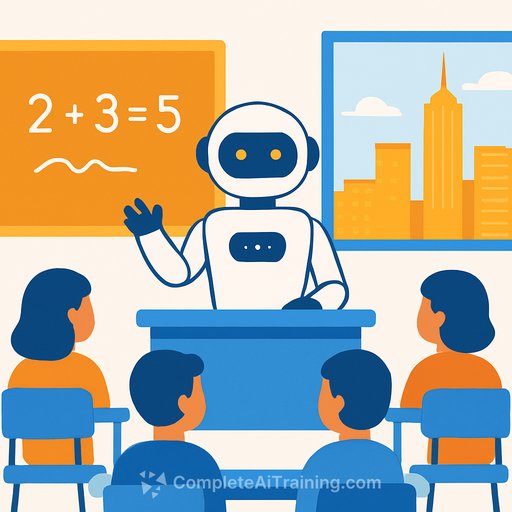
The students in front of you are the most exposed to AI's shifts. The question is blunt: Is school still fit for purpose?
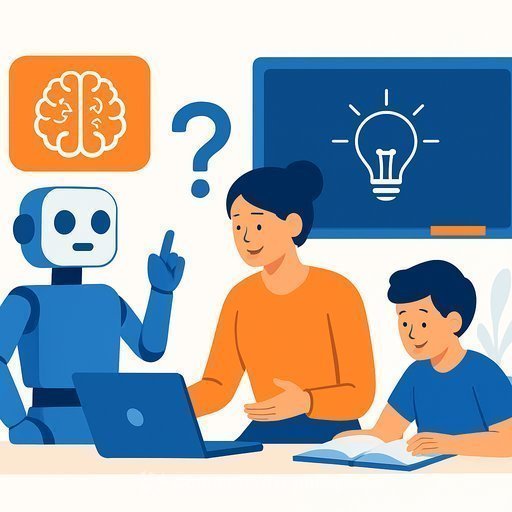
Here's the headline answer: Trusted teachers are the differentiator. Not more apps. Not more dashboards. Students follow people they respect and stay engaged with teachers who hold attention and set clear standards.
Your role in 2026: less content, more human advantage
- Presence over perfection: Short, live explanations. Frequent checks for understanding. Calm confidence. Students copy what you model.
- Judgment over recall: Shift from "What's the right answer?" to "How did you get there, and can you defend it?"
- Community over isolation: Group work with clear roles, time boxes, and peer critique. Real teams beat solo crammers.
Practical moves you can make this term
- Rewrite outcomes: Test for transfer with projects, oral defenses, and live problem-solving, not just essays.
- Adopt AI-in-the-loop: Allow AI for brainstorming, outlining, language help, and examples-but require citations, version history, and a short reflection on how it was used.
- Protect assessment: Do more graded work in class. Use process evidence (drafts, screenshots, edit logs). Add brief viva-style checks.
- Teach AI fluency: Prompt Engineering, asking better questions, verifying sources, spotting bias, reading model output like a critic, and simple automation logic.
- Keep a lean tool stack: Pick two or three tools for planning, feedback, and differentiation. Standardize prompts/templates. Cap usage time.
- Run weekly teacher labs: 45 minutes. One workflow demo. One shared template. One practice task. Publish wins for the staff.
- Clarify policy up front: Post your AI use policy, acceptable tools, citation format, and consequences. Show examples of good and poor use.
- Real-world work: Micro-internships, community briefs, and build weeks where AI is part of the toolkit. Assess the outcome and the process.
Data, privacy, and trust
AI tools mean student data moves faster and farther. Treat privacy as non-negotiable. De-identify uploads. Prefer tools with clear data policies and local or compliant hosting. Teach students to guard their own information.
What to teach more of (starting now)
- Human strengths: Attention, discernment, initiative, and collaboration under pressure.
- Thinking in public: Debate, storytelling, and visual explanation. Make students stand up, explain, and revise on the spot.
- Systems basics: How information flows, where errors creep in, and how to set checks that catch them.
- Make-and-ship habits: One useful thing per week: a memo, a prototype, a dataset cleanup, a tutorial. Small wins compound.
Why this matters
AI will keep raising the ceiling for those who can direct it-and lower the floor for tasks that can be automated. Schools that double down on trust, judgment, and live performance will send graduates into 2026 ready, not scared.
The first tenet stands: trusted teachers who command attention and respect. Everything else builds on that.
Next steps
- Pick one assessment this month to convert into a live defense.
- Set a simple AI use policy and teach it in 10 minutes tomorrow.
- Choose two AI tools and standardize your prompts for planning and feedback.
If you want structured, up-to-date training, explore curated AI courses by job or browse the latest AI courses for educators.
Your membership also unlocks: