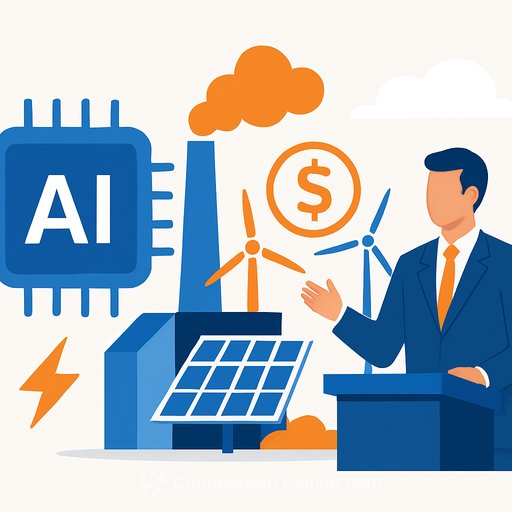
Energy In An AI World: What Finance Needs To Price In Now
At Abu Dhabi Finance Week, the New Energy Finance Forum centered on a simple fact: AI is pushing electricity demand higher, faster, and for longer than most models assumed. That turns power into a core input risk for every growth case tied to data, compute, and digital infrastructure.
If you manage capital, this isn't a side note. It changes capex cycles, risk premia, and where alpha hides in energy and infrastructure for the next decade.
Why AI Changes The Math
- Data centers don't just need more megawatt-hours - they need higher uptime, tighter power quality, and more firm capacity. That rewards assets and technologies that are dispatchable or paired with storage.
- Corporate offtakers are shifting from simple annual RECs to 24/7 clean power coverage. That tilts value toward portfolios that blend solar, wind, storage, hydro, nuclear, and demand response.
- Grid congestion and interconnection queues become the bottleneck. Transmission, transformers, and HVDC matter as much as generation.
- Forecast error widens. Treat electricity like a strategic commodity in your models, not a line item that inflates at CPI.
IEA analysis signals a sharp rise in electricity use from data centers and AI. Expect region-by-region divergences based on grid mix, permitting speed, and policy support.
Where Capital Likely Flows Next
- Firm, clean capacity: Storage (4-12 hour), hydro upgrades, nuclear life extensions, and gas with CCS in select markets. SMRs remain a watch list item until timelines and costs are proven.
- Grid and equipment: Transmission buildout, substations, transformers, HVDC, grid software, and interconnection services. Lead times drive pricing power.
- Data center power systems: On-site generation, UPS and fuel cells, liquid cooling, and heat reuse. Expect higher attach rates for storage behind the meter.
- Renewables, but packaged: Solar and wind paired with storage and firming contracts, structured for 24/7 delivery rather than merchant exposure.
- Flexibility markets: Demand response, virtual power plants, and capacity markets that monetize availability, not just energy.
Investment Angles For 2025-2027
- Listed equities: Suppliers of transformers, cables, switchgear, grid software, utility-scale storage, and thermal management for data centers. Watch order backlogs and pricing discipline.
- Infrastructure/PE: Transmission development platforms, renewable-plus-storage portfolios with long-dated offtake, flexible peakers in constrained nodes, and behind-the-meter power at hyperscale campuses.
- Credit: Green ABS for residential/commercial solar+storage, project finance for interties, sustainability-linked loans with generation availability KPIs.
- Commodities: Copper, aluminum, and silver exposure tied to grid and solar demand. Uranium remains cyclical-position sizing matters.
- Contracts: Corporate PPAs designed for hourly matching and congestion risk. Look for clauses that address curtailment and basis.
Risk Checklist (Price It Before It Prices You)
- Policy and permitting: Interconnection backlogs, local opposition, and shifting subsidies can change IRRs overnight.
- Equipment bottlenecks: Transformers and HVDC components have multi-year queues; delay risk = capex creep.
- Merchant exposure: Cannibalization in high-renewable periods hurts unhedged assets. Storage helps, but duration and cycle life assumptions must be realistic.
- Water and thermal constraints: Data center siting runs into cooling and water limits; regulators will respond.
- Counterparty quality: Stress-test offtakers beyond headline credit. Look at margin resilience under higher power costs.
What To Do In The Next 90 Days
- Map portfolio exposure to electricity price and availability by node, not just region. Re-rate assets sensitive to basis risk.
- Run scenarios with higher baseload prices, wider volatility, and delayed interconnections. Adjust WACC and debt tenor accordingly.
- Build a pipeline of 24/7 clean energy contracts. Pair variable renewables with storage and firming sources to stabilize cash flows.
- Prioritize assets and vendors with guaranteed delivery slots for critical grid equipment. Availability beats a low headline quote.
- Create a data center energy playbook: on-site power options, curtailment clauses, and heat reuse economics.
- Upgrade internal skills on AI and energy analytics to cut decision time and model risk. A practical starting point for finance teams is a curated set of AI tools for finance.
Bottom Line
AI demand is rewriting the cost of electricity and the value of flexibility. The winners will treat power as a core competency, secure firm supply early, and own the bottlenecks others ignore.
If you're updating 2026-2028 theses, move power and grid from appendix to page one.
Your membership also unlocks: