
AI news ·
AI's predictive power challenges philosophical case for scientific truth
AI models predict phenomena without theories, challenging the link between prediction and truth. Researchers now must validate opaque AI outputs differently.
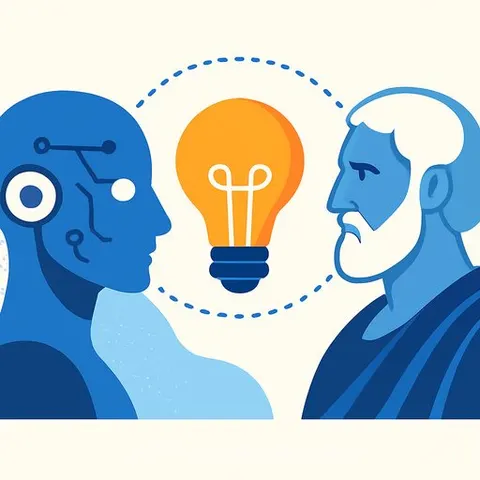
Philosophers of science are confronting a new challenge from artificial intelligence: if machine learning models can predict novel phenomena without relying on scientific theories, does that weaken the longstanding argument that predictive success indicates a theory's truth? The debate, outlined in a recent opinion piece, strikes at the heart of how researchers justify confidence in scientific knowledge.
The No Miracles Argument and Predictivism
For decades, the No Miracles Argument has been a pillar of scientific realism. It holds that the extraordinary predictive and explanatory success of our best theories would be a miracle if those theories weren't at least approximately true. The fact that planes fly, diseases are cured, and chemical reactions are reliably controlled seems to demand some correspondence between theory and reality.
This argument is closely tied to predictivism, the idea that novel predictions carry special evidential weight. Philosopher Karl Popper observed that when competing theories explain existing data equally well, scientists tend to favour the one that makes successful new predictions. Mendeleev's periodic table is a classic case: several 19th-century classifications accommodated known elements, but only Mendeleev's version predicted undiscovered ones, sealing its acceptance.
AI Challenges the Value of Prediction
AI models now routinely make accurate predictions in chemistry, from catalyst performance to molecular properties, often without being trained on explicit theory. Many are fed experimental data with minimal or no theoretical constraints. Some, like the University of Bristol's Impression system, use data computed from quantum chemical models, but others rely purely on measurements.
This capability creates a dilemma. If an AI can match or exceed theory-driven predictions while knowing nothing of the underlying principles, then novel prediction may not be the reliable sign of theoretical truth that philosophers supposed. Either the traditional link between predictive success and truth is mistaken, or the argument for scientific realism loses a key piece of evidence.
Opacity and the Future of the Debate
The situation is complicated by opacity-the AI black box problem. We don't fully understand how these models arrive at their outputs, so it's hard to know whether they are implicitly reconstructing theoretical relationships that humans already codified. Effort is underway in Explainable AI to open that box, but for now, the inner workings remain largely mysterious.
Many researchers working in AI for Science & Research are already confronting these questions. As machine learning models are deployed more widely for discovery, the philosophical stakes become practical: should we trust predictions that come without a clear theoretical rationale?
Why this matters for Science and Research professionals
For scientists and research managers, the philosophical debate has direct implications. Relying on AI predictions for experiment design, material synthesis, or drug discovery means grappling with the same trust that the No Miracles Argument once gave to theory. If a model's success rate is high but its reasoning is opaque, decisions based on it require a different kind of validation-likely a tighter coupling with experimental feedback and a clear-eyed view of what predictive accuracy does and doesn't guarantee about truth. The coming years will demand protocols that balance AI's speed against the need for mechanistic understanding.