Akara brings AI and thermal sensors to coordinate operating rooms
Hospitals don't lose time in the OR during surgery. They lose it in the handoffs: manual scheduling, mixed signals between teams, and guessing when a room will be ready again. Those gaps add up to tens of hours every week and ripple across the entire surgical schedule.
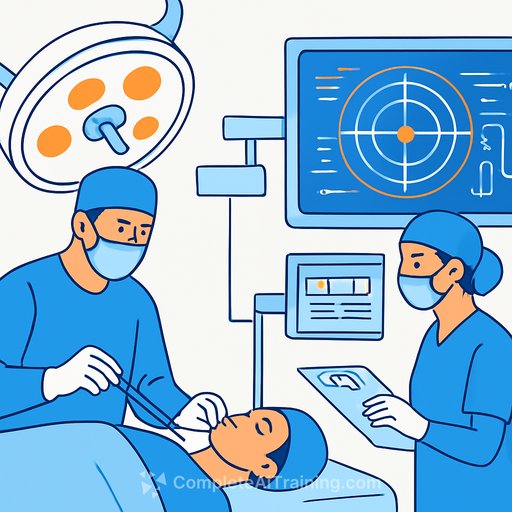
Akara is tackling that problem with AI and thermal sensors that act like real-time air-traffic control for operating rooms. The aim is simple: tighter coordination, faster room turnover, and fewer preventable delays.
Where the time actually disappears
Most OR slowdowns aren't about the surgeons or the procedures. They're about coordination-cleaning cycles, case prep, staff movement, and unclear readiness signals. Akara targets these in-between moments to reduce downtime and improve predictability.
Why ambient sensing beats single-purpose robots
Akara moved away from focusing on cleaning robots and leaned into ambient sensing across the OR environment. A single robot improves one step. A sensing and coordination layer improves the flow across every step.
That shift reframes automation from buying new equipment to upgrading the system that orchestrates people, rooms, and tasks.
How thermal sensors protect privacy
Thermal sensors track motion and activity without recording identifiable visuals. They detect heat signatures and patterns-who's in the room, what stage a process is at-without capturing faces or detailed imagery.
Paired with AI, this creates a live picture of progress and readiness signals while keeping patients out of view. It's visibility without exposure.
From NHS checks to U.S. hospitals
Validation in NHS environments helped Akara prove the approach under stringent standards before moving into U.S. systems. That foundation matters for clinical trust, safety, and integration.
For hospital leaders, it shows the model can travel: start with clear protocols, earn confidence, then scale.
The real bottleneck isn't hardware-it's infrastructure
Medical robotics often hits a ceiling because the surrounding infrastructure can't keep pace. The limiting factor is coordination: who needs to be where, when, and what's ready right now.
Akara's bet is that better sensing and scheduling unlock more value from the equipment you already have.
Staffing pressure changes the automation mandate
Forecasts suggest up to 40% of medical staff could leave the field within five years. That's a serious signal for operations planning. Automation has to reduce cognitive load, not add to it.
Systems that remove uncertainty, shorten turnover, and tighten communication help teams do more with less-without burning out the people who remain.
What this could mean for your OR
- Shorter turnovers: Clear readiness signals and faster handoffs cut idle time between cases.
- More reliable schedules: Real-time data helps schedulers set accurate start times and reduce cascading delays.
- Better use of staff: Fewer status checks and fewer "is the room ready?" moments.
- Privacy-first monitoring: Thermal sensing captures activity, not identities.
Practical next steps for hospital leaders
- Audit your turnovers: Map where minutes are lost-case close to room clean, clean to room ready, ready to wheels-in.
- Define readiness signals: Agree on the exact triggers that move a room from one phase to the next and who owns each handoff.
- Pilot in one service line: Start with a high-volume area, set baseline metrics, and measure room readiness, on-time starts, and staff pages/calls.
- Align privacy and IT early: Involve compliance and security from day one to address data handling for thermal feeds and event logs.
- Close the loop: Feed live OR state into scheduling so planners work from current conditions, not assumptions.
Operating rooms that are predictable by default
The promise here is operational clarity. With ambient sensing and AI, hospitals can track progress in real time, respond faster to changes, and bring rooms back to ready status with fewer delays. For patients, that means fewer schedule shifts. For teams, less friction and more time on care.
As covered by TechCrunch, the approach treats infrastructure as the main lever for improvement-where better coordination, not more hardware, moves the needle. That's a practical path to steadier ORs and a more resilient workforce.
If your team is building skills around AI for hospital operations, explore role-based learning paths at AI Learning Path for Production Planners, the AI Learning Path for Supply Chain Managers, or the AI Learning Path for Training & Development Managers at Complete AI Training.
Your membership also unlocks: