Allianz taps Anthropic to scale AI across operations - with a clear focus on efficiency and control
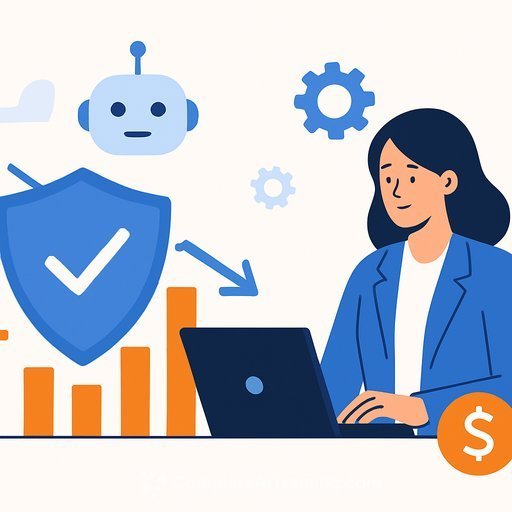
Allianz SE has entered a global partnership with Anthropic to push AI deeper into the insurer's day-to-day operations. The work centers on supporting employees, streamlining processes, and setting accuracy and audit standards that hold up under regulatory scrutiny.
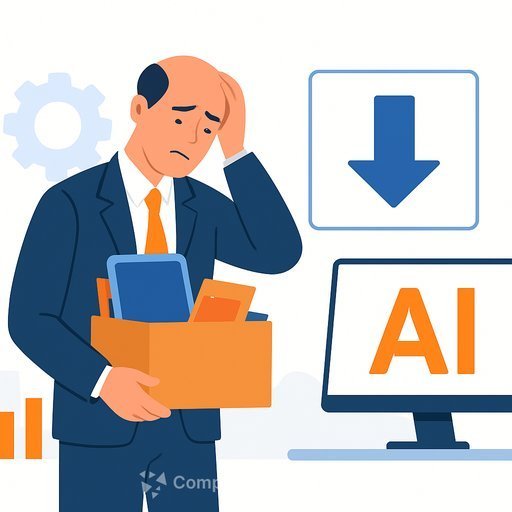
At the same time, Allianz plans to reduce 1,500-1,800 roles within its travel insurance operations over the next 12-18 months as AI reshapes customer and claims workflows. That's roughly 6.6%-8% of Allianz Partners' workforce, signaling a shift toward automation with targeted human oversight.
"A decisive step to address critical AI challenges in insurance," said Oliver Bäte, CEO of Allianz SE, noting Anthropic's focus on safety and transparency. Anthropic CEO Dario Amodei added that insurance decisions "can affect millions of people," underscoring the stakes of safe deployment.
What the partnership covers
- Employee-wide AI access: Anthropic's Claude models will be integrated into Allianz's internal AI platform for all employees. Claude Code is already in use by thousands of Allianz developers globally.
- Workflow automation: Custom AI Agents & Automation will handle multi-step tasks like intake documentation and claims processing in motor and health. Allianz will keep a human-in-the-loop for sensitive cases.
- Audit-grade traceability: Co-developed systems will log every decision, rationale, and data source to meet regulatory requirements and simplify audits.
Why this matters for insurers
Most carriers are still chasing measurable ROI from AI. Early returns are showing up in practical, efficiency-first use cases-faster quotes, improved renewals, shorter claims cycle times-rather than sweeping reinvention. Allianz's approach leans into that reality: embed safe models, automate repeatable work, and prove accuracy with end-to-end logging.
Practical implications for carriers and teams
- Governance by design: Treat decision logs and data lineage as non-negotiable. Build audit trails upfront, not as an afterthought.
- Human-in-the-loop for edge cases: Use AI for volume and speed, but route complex and high-impact claims to experienced handlers.
- Data readiness: Tighten document standards, coding taxonomies, and source-of-truth systems. Bad inputs multiply downstream errors.
- Pilot with hard KPIs: Time-to-quote, FNOL handling time, claim cycle time, severity leakage, and rework rates. Track cost-to-serve per policy.
- Reskilling at scale: Upskill claims, underwriting, and ops on prompt patterns, review protocols, and exception handling. Developers should standardize on secure AI coding workflows.
- Security and vendor risk: Lock down PII flows, set retention rules, and stress-test model behavior under adversarial inputs.
Metrics Allianz and peers will watch
- Quote turnaround time and bind rates
- First-contact resolution and FNOL handling speed
- Touchless rate with controlled exceptions
- Claims severity leakage and recovery rates
- Rework/appeal frequency and cycle-time variance
- Regulatory audit readiness and time-to-evidence
Strategic take
This is a pragmatic blueprint: broad employee access, targeted automation where rules and documents dominate, and rigorous logs to satisfy regulators. If you're planning similar moves, start with contained, document-heavy flows, enforce human review on sensitive paths, and make audit trails the backbone of your platform.
Related resources: Learn more about Anthropic's models via the official overview here. For teams skilling up on Claude in enterprise settings, see this practical certification track here.
Your membership also unlocks: