
AI news ·
Allianz partners with Anthropic to scale AI across operations, plans up to 1,800 job cuts
Allianz is partnering with Anthropic to bring AI into core workflows, from claims to coding, with audit trails and human review. The shift includes cutting 1,500-1,800 travel roles.
Allianz taps Anthropic to scale AI across core operations
Allianz SE has entered a global partnership with Anthropic to push AI adoption across the insurer's operations. The work centers on employee enablement, workflow automation, and accuracy standards-areas where operators can move the needle on cost, speed, and control.
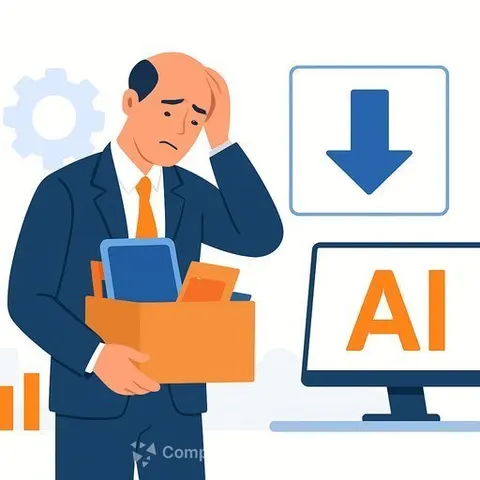
The shift is paired with workforce changes. Allianz plans to reduce 1,500-1,800 roles in its travel insurance unit over the next 12-18 months as AI reshapes customer and claims processes, or roughly 6.6%-8% of Allianz Partners' headcount.
Oliver Bäte, CEO of Allianz SE, called the move a decisive step in addressing critical AI challenges in insurance and pointed to safety and transparency as non-negotiables. Anthropic CEO and co-founder Dario Amodei underscored the stakes: insurance decisions affect millions of people.
What the partnership delivers
- Enterprise AI access: Anthropic's Claude models integrated into Allianz's internal AI platform for all employees. Claude Code is already in use by thousands of Allianz developers.
- AI agents for workflows: Custom agents to automate multi-step tasks like intake documentation and claims handling in motor and health lines. Human-in-the-loop remains for sensitive cases.
- Decision logging and auditability: Co-developed systems to record every decision, rationale, and data source to meet regulatory requirements and strengthen oversight.
Why operations teams should care
Most firms still haven't seen measurable ROI from AI, according to an MIT analysis. Where value is showing up first: efficiency plays such as faster quoting, stronger renewal performance, and shorter claims cycle times-not wholesale reinvention.
This partnership targets those exact wins and is a strong example of AI for Operations, combining workflow automation with governance and KPI tracking to drive measurable outcomes.
Expected operational impact
- Throughput and cycle time: Faster intake, triage, and document processing; shorter time to decision and settlement.
- Quality and consistency: Standardized reasoning, fewer handoffs, and reduced rework.
- Compliance confidence: Full decision trails for auditors and regulators.
- Workforce mix: Fewer repetitive roles; growth in reviewer, exception-handler, and workflow designer positions.
- Cost to serve: Lower unit cost as automation rate and first-pass accuracy improve.
Implementation guardrails for ops leaders
- Human-in-the-loop by default for high-impact and sensitive decisions.
- Data governance: Clear PII handling, retention, and redaction policies; isolate sensitive data.
- Prompt and model risk controls: Abuse testing, restricted tools, and monitored prompts.
- Decision logging: Record inputs, outputs, rationale, data lineage, and overrides.
- Bias and fairness monitoring: Test by segment; set thresholds and escalation paths.
- Resilience planning: Vendor SLAs, fallback models, and rate-limit strategies.
- Change management and training: Role-based enablement and clear SOPs.
- KPIs upfront: Baseline before pilots; report weekly during rollout.
Practical next steps for your team
- Map the top 5 repetitive workflows (volume x variability x risk). Start with claims intake, document classification, and policy Q&A.
- Stand up a 60-90 day pilot with defined success criteria: cycle time, first-pass yield, cost per case, and override rate.
- Integrate into existing systems (CRM, claims, knowledge base) instead of creating a separate tool island.
- Introduce "AI reviewer" queues for exceptions and set SLAs for turnaround.
- Build playbooks: prompts, failure modes, escalation paths, and retraining loops.
- Communicate workforce impact early; create reskilling paths and new role definitions.
Metrics that matter
- Average handling time (AHT) and total cycle time
- First-pass accuracy and rework rate
- Claim leakage, appeals, and complaint rates
- Agent containment and automation rate by step
- Model override rate (and reasons)
- NPS/CSAT and SLA adherence
- Cost per claim/policy event
Workforce planning signals
Allianz's planned reduction of 1,500-1,800 roles in travel insurance is a clear signal: repetitive front-line and back-office tasks will compress. Expect growth in exception handling, quality assurance, and AI operations.
If you lead operations, model your own exposure and create reskilling paths now. Prioritize roles that can shift to reviewer, workflow designer, or data quality analyst.
Tech notes
- Claude models for broad employee access; Claude Code already used by Allianz developers.
- Custom agents orchestrate multi-step workflows with clear handoffs to humans for edge cases.
- End-to-end decision logging to satisfy audit and regulatory needs without slowing throughput.
Level up your team
If your roadmap involves Claude-based workflows, consider structured upskilling. This AI Learning Path for Business Unit Managers focuses on safe deployment, prompts, and human-in-the-loop operations.