Precision education with data and AI: AMA invests $12M to boost physician training
The AMA has launched the Transforming Lifelong Learning Through Precision Education Grant Program, committing $12 million over four years to build individualized learning pathways for medical students, residents, and practicing physicians. The first round awarded $1.1 million to 11 institutions working with 80+ partner organizations, extending more than a decade of progress from the ChangeMedEd® Initiative.
"Technology and AI have the potential to reshape how physicians learn, practice, and care for their patients, and these grants will help bring that potential to life," said AMA CEO John Whyte, MD, MPH. "As new tools emerge, we have an opportunity to build learning environments that are more engaging, more adaptable, and better aligned with the realities of practicing medicine."
Why this matters for education leaders
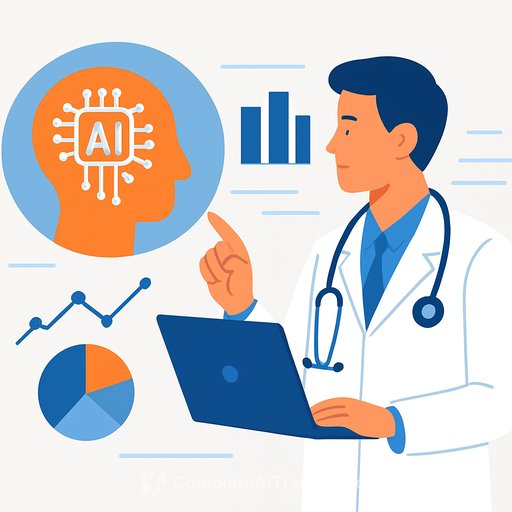
Precision education uses big data and augmented intelligence (AI) to give each learner a focused path to progress. Systems like this surface gaps early, give feedback in real time, reduce wasted effort, and increase learner agency.
"We curated a rich mix of projects, spanning all levels of learners, multiple clinical disciplines and a variety of technological approaches," said Kimberly D. Lomis, MD, the AMA's vice president for medical education innovations. Teams will address data security, protections, and how to monitor for error and bias-especially when sharing data across sites and specialties.
Several projects apply ambient AI to clinical encounters so trainees get feedback on communication and reasoning, with others building on-demand tools to practice critical skills. The AMA also launched the Center for Digital Health and AI to give physicians a strong voice in how AI and digital tools are used to improve the patient and clinician experience.
How the program works
Funds will support innovation across medical school (UME), residency (GME), and continuing medical education (CME), with a focus on competencies tied directly to patient care. Sanjay Desai, MD, MACP, the AMA's chief academic officer, said the team engaged leaders across industries and saw a timely opening to fix legacy pain points in training.
"We can develop tools leveraging data and technology, including AI, to personalize education, increase learner agency, and reduce unnecessary friction in the system," he said. "We believe these new systems of precision education are the future of lifelong learning."
What the 11 awardees are building
- University of Cincinnati College of Medicine: Use ambient data-capture and AI to deliver continuous, personalized feedback on clinical reasoning and communication. Pilot across ~600 trainees, scale from simulation to live encounters, and test a heads-up display that provides in-encounter insights.
- University of Illinois College of Medicine: Build and scale an AI-Based Precision Learning UME-GME System. Use big data to identify which assessments best predict early GME performance, then automate personalized feedback and goal setting to improve readiness for residency.
- Louisiana State University Health Sciences Center: Launch "Compassion in Motion," a virtual communication coach with AI-generated guidance and virtual patient characters that travel with learners across settings.
- University of Hawaii John A. Burns School of Medicine: Deliver an AI-enhanced, culturally responsive precision education and coaching program that prepares students for rural practice and addresses Hawaii's physician shortage.
- Georgia Academy of Family Physicians: Implement a residency navigation tool across 12 programs that links EHR-derived performance and quality measures to individualized learning plans, with AI insights and real-time data to guide coaching.
- Mount Sinai Morningside/West: Deploy an outpatient precision education system using ambient listening and NLP to give residents personalized, two-way feedback on communication tied to EHR-derived outcomes, while surfacing teaching effectiveness for faculty.
- Perelman School of Medicine at the University of Pennsylvania: Combine ambient listening with EHR data to assess clinical reasoning in the moment-individual decisions, team interactions, and across settings-then deliver contextualized feedback over time.
- Meritus School of Osteopathic Medicine: Build an integrated data platform to support learning for a new school. Evaluate how precision strategies find and remediate gaps across diverse learner profiles.
- University of Michigan: Use the Multicenter Perioperative Outcomes Group registry across 36 anesthesia programs to create resident dashboards that show training progress, prompt master adaptive learning, and support progressive autonomy with data-informed coaching.
- University of Wisconsin School of Medicine and Public Health: Improve vascular surgery training by mapping early-career outcomes and performance gaps to program characteristics and assessment practices, then feed insights back into program design.
- Stanford University: In partnership with the American Board of Surgery and the American Board of Medical Specialties, expand mobile sensor tech to quantify procedural competency and mastery beyond what human observation can capture, enabling data-driven coaching.
Practical moves for deans and program directors
- Define a short list of outcomes that matter most in your setting (communication, reasoning, procedural skill, safety) and align assessments to them.
- Instrument your learning environment: start with ambient listening in simulations, then progress to real clinical encounters with consent and clear privacy guardrails.
- Build a data governance plan early-access controls, audit trails, de-identification, and bias monitoring. The NIST AI Risk Management Framework is a helpful reference.
- Equip faculty to coach with data. Train on feedback delivery, interpretation of dashboards, and how to avoid over-reliance on any single metric.
- Close the loop: set goals with learners, track progress over time, and update learning plans automatically based on performance signals.
If you're upskilling faculty and staff on AI, here are role-focused starting points: AI Learning Path for Training & Development Managers, AI Learning Path for CIOs (Chief Information Officers), and AI Learning Path for Regulatory Affairs Specialists.
The bottom line
Precision education makes learning more personal and more useful for the realities of care. With $12 million over four years-and an initial $1.1 million awarded to 11 teams-the AMA is pushing medical education toward systems that give learners clearer signals, faster feedback, and a fairer shot at growth.
Your membership also unlocks: