Amazon MGM bets on AI to cut production costs - and says creatives stay in charge
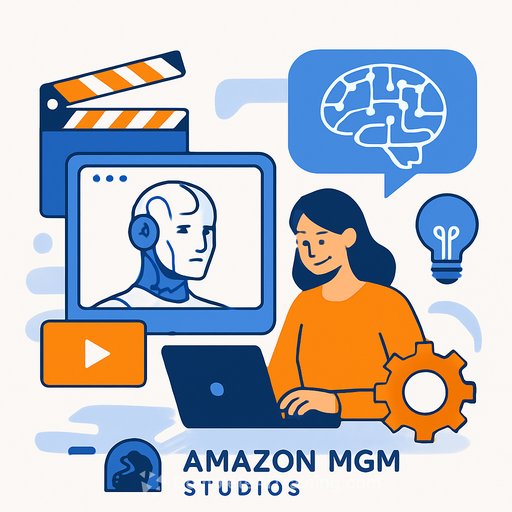
Amazon MGM Studios is building an internal AI Studio to speed up film and TV production for Prime Video. The focus: shaving time and cost from the pipeline while keeping writers, directors, actors, and designers at the center of every decision (see Design).
A beta starts in March with select industry partners, and early findings are expected by May. The move comes as budgets tighten across Hollywood and teams look for ways to protect creative risk without blowing up schedules.
Inside the AI Studio
The project is led by Albert Cheng, Amazon's head of television. He describes the AI Studio like a startup inside the company, staffed by engineers and scientists focused on practical tools for large-scale productions.
Cheng's stance is clear: "We fundamentally believe that AI can accelerate, but it won't replace, the innovation and the unique aspects that humans bring to creating the work."
What this promises - and what it doesn't
Amazon says AI will assist with parts of production that strain time and budgets - the repetitive, logistical, and technical steps that slow down creative momentum. Think streamlining workflows, not outsourcing taste.
Creative calls stay with the people making the story. The company emphasized human involvement at every stage, positioning AI as an assistive layer rather than an autonomous creator.
Early collaborators
The AI Studio is experimenting with established names, including producer Robert Stromberg and his company Secret City, actor Kunal Nayyar's Good Karma Productions, and former Pixar and Industrial Light & Magic animator Colin Brady.
Why it matters if you create for the screen
- Budgets are tight. If AI trims overhead, studios may greenlight bolder ideas.
- Workflow shifts are coming. Expect new tooling across pre-production, production, and post.
- Credit and authorship remain hot buttons. Clear agreements will matter more than ever.
- Speed becomes a competitive edge. Teams that deliver faster without drowning quality will win the calendar.
Practical moves for creatives right now
- Map where AI can help without touching your voice: scheduling, breakdowns, shot lists, continuity, asset tagging, versioning.
- Put guardrails in writing: human sign-off on story, performance, casting, visual style, and final cut.
- Pilot small. Test a tool on one sequence or episode deliverable before scaling to your full slate.
- Document approvals and changes. Keep a clear trail of who decided what and when.
- Protect your references and dailies. Set rules on data use, privacy, and model training.
- Upskill the team. A shared baseline speeds adoption and keeps the craft standard high. See curated options for creative roles at Complete AI Training.
What to watch next
Results from the beta program (due by May) should reveal which use cases move the needle and which tools actually survive the set. Pay attention to feedback from the early partners - their workflows often set the tone for broader adoption.
Bottom line: AI may cut friction, but taste still decides what gets made and what breaks through. Keep the craft in front, and let the tools do the heavy lifting behind it.
Your membership also unlocks: