Amazon vs. Perplexity: The legal playbook for agentic AI and platform control
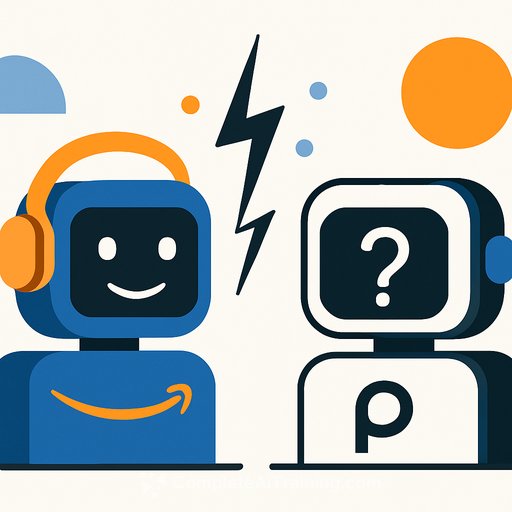
Perplexity says Amazon used legal threats to force its Comet browser to stop letting AI agents shop on Amazon for users. Amazon says it's protecting customers and service quality, and that third-party agents must operate transparently and respect businesses' choices about participation.
Underneath the PR, the issue is simple: who controls the interface and the transaction when an AI acts "as the user"? That question puts contract law, the Computer Fraud and Abuse Act (CFAA), competition rules, and consumer protection on a collision course.
Platform control vs. AI autonomy
Perplexity frames "user agents" as assistants that operate with the same permissions as the human user-no more, no less. Amazon frames Comet as a third-party application that degrades the shopping and service experience and must comply with platform rules.
Analysts see a power struggle. "The legal threat shows that the future of agentic AI is not as seamless as the industry perceived," said Lian Jye Su at Omdia. Forrester's Leslie Joseph called it "an opening salvo in a broader fight for control of the interface," where agentic browsers strip out ads, recommendations, and pricing tactics that fund platforms.
What's really at stake
- Who sets the rules for access: platform terms or user consent granted to an AI agent.
- Whether an AI acting "as the user" is treated as the user-or as an automated third party with separate obligations.
- How far platforms can go in restricting bots to protect ad revenue, service quality, and their own AI projects.
Key legal questions for counsel
1) Contract and terms-of-use enforcement
Most platforms prohibit automated access that bypasses the intended UI, ads, or recommendation layers. If Comet automates shopping flows or aggregates data, expect claims based on terms-of-use, API license boundaries, and anti-bot provisions.
Litigation posture will pivot on evidence of assent, notice, and any technical measures bypassed. Drafting and operational discipline matter more than press statements.
2) CFAA and access rights
The CFAA risk turns on "authorization." Courts have narrowed some theories-see the Supreme Court's interpretation in Van Buren-yet automated access after clear, technical gating can still invite claims. Public versus gated data and the presence of blocks (CAPTCHAs, token checks) will be pivotal.
Van Buren v. United States constrained "exceeds authorized access," but it did not grant a free pass to bots that defeat access controls. Prior scraping battles (e.g., hiQ v. LinkedIn; eBay v. Bidder's Edge) show how fact-specific these disputes are.
3) Antitrust and interface control
Perplexity positions Amazon's stance as self-preferencing to protect ad and first-party AI products like "Buy For Me" and "Rufus." The legal test will be harsher: does the conduct foreclose competition in a relevant market, or reflect a legitimate, neutral policy applied across agents?
In the EU, gatekeeper obligations under the Digital Markets Act could color the analysis of interoperability and access. The fit is not automatic, but expect regulators to scrutinize strategic blocks that entrench closed interfaces.
EU Digital Markets Act overview
4) Consumer protection and disclosure
If an agent makes purchases, returns, or warranty claims, who is responsible for errors, misrepresentations, or unauthorized transactions? Expect pressure for clear disclosures, auditable consent, and PCI/identity controls that keep users in the loop.
Agents that obscure the source of recommendations or manipulate basket composition invite UDAP scrutiny. Transparency and audit logs are not optional.
Operational takeaways for legal teams
- Map agent behaviors: Identify all flows that automate account login, cart actions, checkout, returns, and customer-service interactions. Document where the agent impersonates a user versus uses an API.
- Terms alignment: Reconcile each partner's ToS, API license, and robots.txt with agent behavior. Where conflicts exist, pursue formal partnerships, sandboxes, or API scopes instead of gray-zone automation.
- Authorization controls: Implement strong authentication, delegated consent (OAuth-style), and revocation. Record proof of consent and session provenance for every transaction.
- Data minimization: Limit collection to what's needed for the user's instruction. Log data lineage, retention periods, and downstream sharing. Flag ad-tech conflicts early.
- Disclosures and receipts: Provide user-facing confirmations for agent-initiated purchases, returns, and support actions. Make it easy to dispute or unwind mistaken transactions.
- Fallback and redress: Define SLAs for agent errors, chargebacks, and merchant disputes. Allocate responsibility with vendors in writing.
- Antitrust hygiene: If you're the platform, apply bot/agent policies consistently, document pro-consumer justifications, and separate enforcement from revenue targets. If you're the agent provider, avoid exclusive flows that foreclose competing storefronts without user choice.
- Monitoring and kill switches: Continuous policy compliance checks, anomaly detection, and immediate shutdown paths for abusive or non-compliant behaviors.
Implications for policy and standards
Analysts expect new frameworks around access controls, user authentication, data exchange, and revenue-sharing between agents and platforms. As Omdia's Su notes, monetization models vary widely, so a single template is unlikely to satisfy all verticals.
Open protocols (MCP, A2A) can help, but they won't override platform incentives to keep direct traffic. Legal clarity will come from a mix of negotiated access, regulatory guidance, and a few hard lawsuits.
What to do this quarter
- Run a ToS/CFAA risk review on any feature that automates third-party shopping or support flows.
- Stand up an "agent transparency" spec: user consent UI, audit logs, merchant attribution, and human-in-the-loop checkpoints for payment and returns.
- Propose or refresh partner agreements to cover automated interactions, service quality, chargebacks, and data usage.
- Prepare an antitrust memo on interface control and self-preferencing if your product strategy depends on suppressing third-party agents-or on bypassing platform UI layers.
The bottom line
This dispute is not about one browser. It's a test of whether AI can act as your user across closed platforms without tripping contract, CFAA, or antitrust wires. Legal teams that get ahead on authorization, disclosure, and partner terms will keep products shipping while others get stuck in stand-offs.
Resource: If your team needs practical upskilling on AI product risk and compliance, see curated programs by role at Complete AI Training.
Your membership also unlocks: