
AI news ·
Amazon warehouse managers override staffing algorithm as company plans stricter enforcement
Amazon managers override AI staffing tools, delaying a rollout that could save hundreds of millions of dollars. The company plans hard enforcement by 2026 to end manual overrides.
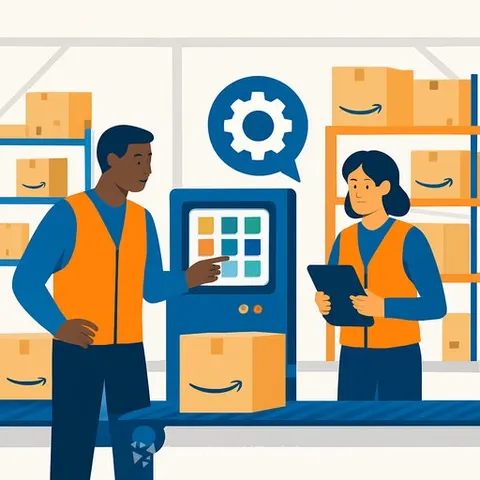
Amazon managers are routinely overriding AI staffing recommendations in fulfillment centers, internal documents show, slowing a rollout that could save the company hundreds of millions of dollars a year. The pushback has been sharp enough that Amazon concluded recommendations alone won't cut it - "without system-enforced guardrails, manual overrides and habits erode even the best science," the company wrote in one document reviewed by Business Insider.
The stakes are large. Amazon plans to expand these labor-management systems across dozens of North American facilities. The tools, which mix machine learning and computer vision, calculate staffing plans and suggest where to move workers. They started as advice. But now, Amazon views manager discretion as the obstacle rather than the safeguard.
Why managers keep overriding the algorithm
The friction comes down to trust. Some managers told colleagues the software overreacted to brief slowdowns in package volume and recommended cuts that didn't match real conditions on the floor. One complained that automated changes sent packages looping through the warehouse instead of getting processed, and asked to "disable the system until it gets fixed." Another questioned whether the software understood that a tall, strong worker chases packages better than a much older, much smaller colleague.
At one test site shortly after enforcement launched, a manager wrote, "Please turn it off now and I will explain." A product manager replied within minutes that they'd disable it. For managers accustomed to making staffing calls on instinct, the AI for Management tools felt like a threat to their domain expertise.
Amazon's enforcement roadmap
Amazon isn't backing off. Internal roadmaps call for tighter controls, including limits on how far managers can stray from the algorithm, with hard enforcement named as the 2026 goal. The company's own success metrics list a reduction in manual staffing interventions. One line from the documents stands out: "Enforcement is our highest-leverage mechanism and we're doubling down."
An Amazon spokesperson told Business Insider the technology is only being piloted at a small number of US sites and that managers still make the calls. The quotes, the spokesperson said, came from early planning notes that don't reflect how the system works now. Nonetheless, the AI for Operations push is accelerating, and the company is building guardrails to limit human overrides.
Why this matters for management
Amazon's experience signals a broader shift for managers in operations-heavy industries. The move from advisory AI to enforced algorithmic decisions will redefine the manager's role - from decision-maker to exception-handler. The tension isn't about technology accuracy alone; it's about who gets final say when local knowledge clashes with a model trained on aggregate data. For managers, the takeaway is that the era of AI as a polite suggestion is ending. The systems that survive will be the ones that leave little room for override.