
AI news ·
AMD trails Nvidia on revenue but closes gap in AI chip market share
AMD's MI300 chips now directly compete with Nvidia's H100 and H200, giving enterprises an alternative they didn't have two years ago. Nvidia still leads in revenue, backed by its CUDA software ecosystem.
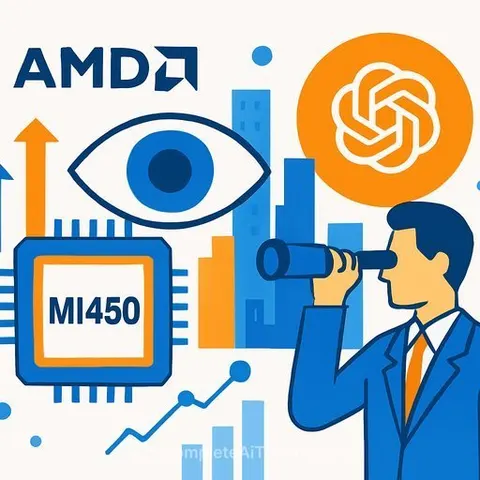
AMD Gains Ground on Nvidia in AI Chip Competition
AMD and Nvidia are locked in a direct battle for dominance in AI computing, with AMD closing the gap through aggressive product development and market expansion. The competition has intensified as enterprises build out AI infrastructure and demand alternatives to Nvidia's dominant position.
Stock performance reflects the stakes. Both companies have posted significant gains, though Nvidia maintains a substantial revenue lead. The gap between them narrows when measuring growth rates rather than absolute figures.
Revenue and Market Position
Nvidia's AI-related revenue significantly outpaces AMD's, a result of years spent building customer relationships and software ecosystems. Data center sales-the core AI market-remain Nvidia's fortress.
AMD is attacking this advantage through price competition and product performance gains. The company's MI300 series chips target the same workloads as Nvidia's H100 and H200, offering customers a choice they lacked two years ago.
Different Business Models
Nvidia controls both chip design and software through CUDA, its programming platform. This vertical integration creates switching costs: customers who invest in CUDA struggle to move workloads elsewhere.
AMD pursues a more open approach, supporting industry standards like ROCm and OpenCL. This strategy appeals to enterprises concerned about vendor lock-in, though it sacrifices some software optimization advantages.
What's Next
Both companies are investing heavily in next-generation architectures. Nvidia's roadmap extends years ahead, while AMD is accelerating its release cycles to keep pace.
The outcome matters beyond these two companies. Customer choice in AI infrastructure reduces costs and prevents any single vendor from controlling the industry's technical direction. Executives evaluating AI infrastructure should track both players' product announcements and customer wins closely.
For deeper context on how these developments affect strategy, see AI for Executives & Strategy and Generative AI and LLM.