One-Third of Americans Get Health Information From Social Media, But Few Trust Its Accuracy
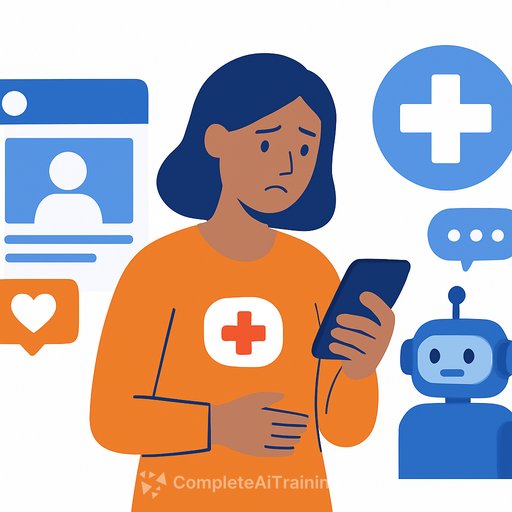
About 36% of U.S. adults turn to social media at least sometimes for health information, while 22% use AI chatbots for the same purpose, according to a Pew Research Center survey of 5,111 adults conducted in October 2025. Both sources trail far behind health care providers (85%) and major health websites (60%), but they represent growing channels for health information among certain demographics.
The findings reveal a clear gap between convenience and credibility. Users consistently rate social media and AI chatbots as convenient and easy to understand, but express skepticism about accuracy and personalization.
Social Media: Convenience Over Accuracy
Four in ten social media health information users say the content is extremely or very convenient to access. Yet only 7% rate it as highly accurate, compared with 65% who say health care providers deliver highly accurate information.
About half of social media health information users (47%) say the information they encounter is not too or not at all accurate. Three in ten find it easy to understand, while 59% say it lacks personalization.
Age matters significantly. Adults under 30 are far more likely than those 65 and older to get health information from social media-52% versus 21%. Younger users also view the content more favorably, with 46% of those under 30 calling it highly convenient compared with 31% of older adults.
Frequent users-those accessing health information on social media often or extremely often-hold notably more positive views. About 68% of heavy users call the information highly convenient, and 24% rate it as highly accurate, compared with just 3% of less frequent users.
Lower-income Americans and those without health insurance are more likely to get health information from social media. White adults are notably less likely than other racial and ethnic groups to use social media for this purpose.
AI Chatbots: Split Verdict on Accuracy
About 48% of chatbot health information users say the technology is highly convenient. But when asked about accuracy, users are divided: 23% say the information is not too or not at all accurate, while 18% say it is highly accurate.
Chatbot users find the information easier to understand than social media users do-41% say it's extremely or very easy to understand. However, only 23% say the information is highly personalized.
Younger adults are more likely to use chatbots for health information. About 32% of those ages 18 to 29 access health information from chatbots at least sometimes, compared with 10% of those 65 and older. Asian Americans, Black adults, and Hispanic adults are more likely than White adults to use chatbots for health information.
Uninsured Americans are more likely to use chatbots for health information than insured Americans, even after accounting for age, income, and other factors.
Heavy chatbot users rate the technology more favorably across all dimensions. Among those who use chatbots for health information often or extremely often, 45% say the information is highly accurate and 50% say it is highly personalized-far higher than the 13% and 17% rates among less frequent users.
The Overlap Between Platforms
Most people who use chatbots for health information also use social media for the same purpose. A majority (61%) of chatbot health information users also get health information from social media at least sometimes.
What Users Actually Want
Americans generally prioritize medical expertise, transparency, and understandability in health information sources. However, frequent social media health information users are more likely than the general population to value likeability (33% versus 23%) and physical fitness content (38% versus 27%).
For researchers and professionals working in health, technology, or data analysis, these findings highlight a critical disconnect: digital-first health information sources are meeting demand for convenience and accessibility, but not for accuracy or personalization. The variance between heavy users and occasional users also suggests that familiarity with these platforms may increase confidence in their output, regardless of whether accuracy actually improves.
Your membership also unlocks: