Why the Bay Area is key to the new U.S. push to win the international AI race
The Genesis Mission is a multibillion-dollar federal effort to accelerate U.S. AI research, compute, and chip development - with Bay Area national labs at the center. The aim is straightforward: double the productivity and impact of American science and engineering within a decade while countering fast-moving advances in China.
Bay Area labs are the backbone
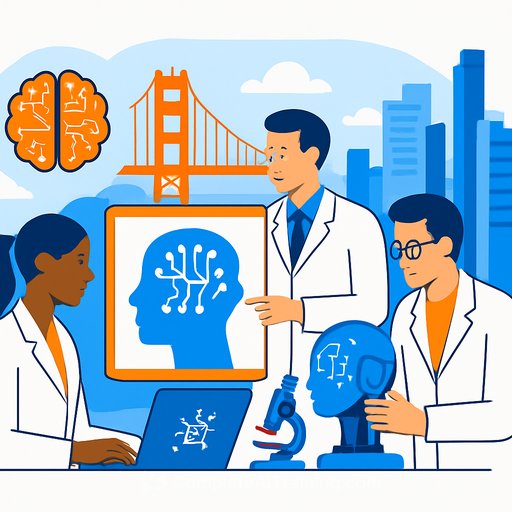
Lawrence Berkeley National Laboratory (LBNL), Lawrence Livermore National Laboratory (LLNL), and SLAC National Accelerator Laboratory are being mobilized to build, test, and deploy AI systems at scale. The mission pairs national lab expertise with industry models and hardware to move from theory to results faster.
LLNL's "aiEDGE for Innovation Day" in March 2025 brought more than 3,200 employees together with OpenAI and Anthropic. The goal: equip staff to integrate AI into daily work - from simulation pipelines to experiment planning and data analysis - not as a side project, but as core workflow.
What the Genesis Mission changes (and why it matters)
"China has fired their starter pistol," said Brian Spears, technical director of the Genesis Mission and LLNL's AI Innovation Incubator. "This is our answer to that." The mission creates a central, focused effort across labs to turn AI into scientific output - not demos.
With AMD-powered systems, El Capitan at LLNL is now the world's speediest supercomputer, accelerating work in nuclear security, fusion energy, climate modeling, and drug discovery. Supercomputing plus frontier models is the new stack for high-impact science.
There's precedent here. In the 1940s, Bay Area labs helped drive the Manhattan Project. The U.S. invested the equivalent of roughly $30 billion. Today's push is similar in spirit: concentrate talent, compute, and engineering to solve hard national problems.
Productivity: orders of magnitude, not increments
Jonathan Carter of LBNL expects AI to lift the productivity of scientists by at least a factor of 10 - and possibly 1,000. The warning is clear: if the U.S. doesn't move fast enough, it could fall behind in just a few years.
At SLAC, Chris Tassone notes that no human can keep up with today's data rates. AI is becoming the next essential tool - like microscopes and observatories in previous eras - to decide which experiments to run and how to run them.
Safety and governance are built in
Concerns about AI "getting loose" are addressed head-on. National labs operate models in closed-loop environments with strict controls, designed to prevent "breaking containment" and unintended internet transfer. As Spears put it, these labs have deep experience managing high-risk, high-consequence work.
The U.S.-China race flows through the Bay Area
China's public research output is neck-and-neck with the U.S., but American AI companies - OpenAI, Anthropic, Google - are estimated to be months ahead of China's private sector. The Bay Area's tight handshake between national labs and companies makes it the natural hub for this race going forward.
"The Genesis Mission is there to build out the entire U.S. AI ecosystem - public and private - and put the U.S. at the front of this global race," Spears said. The Bay Area is playing a leadership role on both sides.
What scientists and research leads can do now
- Map AI to bottlenecks. Identify where inference or generative modeling can remove wait time: hypothesis generation, experiment design, surrogate modeling, uncertainty quantification, or review automation.
- Prepare your data. Prioritize clean, well-labeled datasets with lineage and access policies. Build retrieval and curation pipelines that are HPC- and MLOps-ready.
- Target compute wisely. Match workloads to the right tier: CPU/GPU clusters for training, accelerators for inference, supercomputers for massive simulation-to-model loops.
- Instrument for reproducibility. Log prompts, seeds, checkpoints, datasets, and environment configs. Treat LLM workflows like experiments you may need to re-run under scrutiny.
- Adopt safety-by-default. Enforce isolated networks, role-based access, and red-teaming for model failure modes and misuse. Keep humans-in-the-loop for decisions with real-world consequences.
- Co-design with engineers. Pair domain scientists with systems and chip teams early. Performance wins come from end-to-end co-optimization, not just model swaps.
- Engage with the labs. Watch for Genesis Mission pilot opportunities and cross-lab programs that provide compute, models, and integration support.
Useful references
For context on the compute and lab programs, see LLNL's El Capitan resources and DOE AI initiatives:
Upskilling your team
If you're building AI capability inside a research group or lab program, curated training can speed adoption without derailing ongoing projects. Explore practical tracks organized by role:
Complete AI Training - Courses by Job
Your membership also unlocks: