Ant Group's "MaYi A Fu" AI Health App Goes Viral - What Healthcare Leaders Should Do Next
Published: December 24, 2025 * Reading time: 2 minutes
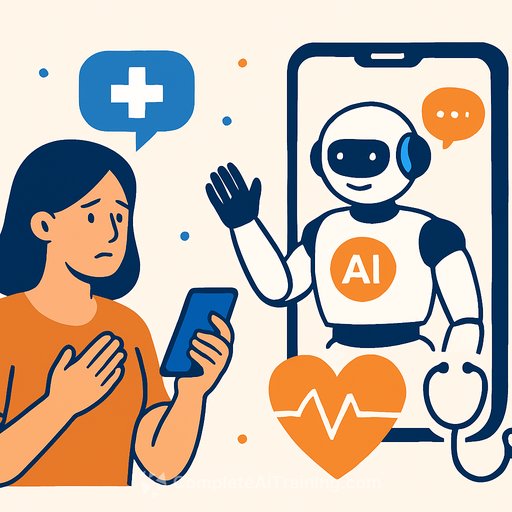
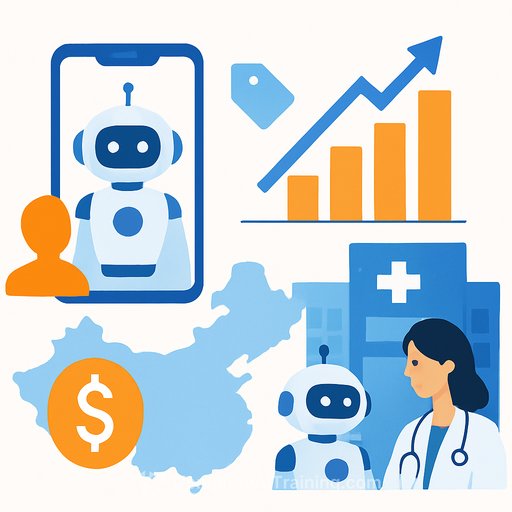
Ant Group's upgraded AI health app, MaYi A Fu, has broken out since its December 15 release. It reached #3 on Apple's App Store, crossed 15 million monthly active users, handles 5+ million daily health queries, and posted an 83% Q3 MAU growth rate versus an industry average of 13.5%.
Healthcare leaders should review strategic implications for delivery, operations, and partnerships: AI for Executives & Strategy.
The momentum isn't just consumer buzz. The Wind AI Healthcare Index rose for three straight sessions after launch. As of December 23, Huakang Jieyi jumped 34%+, Jiahe Meikang 14%+, and Chutian Technology 8%+.
Why this matters for care delivery
MaYi A Fu centers on AI health companionship, Q&A, and services; see practical use cases and deployment patterns in AI for Healthcare. With Ant's payments and insurance rails, it points to a practical medical + pharma + insurance closed loop that can route users from chat to transaction to follow-up.
This shifts AI from a single feature to a front door for consumer health: intake, triage, adherence, and chronic condition support-then handoff to offline care when needed. For health systems and payers, it's a new access channel with measurable conversion and cost metrics.
Signals you should track
- Hospital infrastructure: China's top 100 hospitals have deployed large models; vendors like Yunzhisheng and iFlytek Medical are embedding AI across full diagnostic workflows.
- AI drug discovery: Insilico Medicine targets a Hong Kong listing on December 30; its platform has 20+ clinical-stage assets. Insilico Medicine
- Brokerage views: Everbright Securities highlights AI companionship as a new path to commercialization via Ant's payment/insurance stack. CITIC Securities notes expansion from single products to full scenarios, reaching grassroots clinics and individuals.
Practical moves for providers and payers
- Integration path: Explore partnership/APIs with MaYi A Fu to route triage, scheduling, and pharmacy orders. Define handoffs to your call centers, clinics, and care teams.
- Measure what matters: Track cost per resolved query, escalation rate to clinicians, wait time reduction, no-show impact, and adherence uplift.
- Device connectivity: Prioritize home devices with stable data pipelines (BP cuffs, glucometers, wearables). Use readings to trigger nudges and virtual follow-ups.
- Data governance: Enforce explicit consent, PHI segregation, model performance review, and audit trails. Maintain human-in-the-loop for high-risk cases.
- Coverage and billing: Map benefits where Ant's payment/insurance stack can shorten prior auth, co-pay collection, and reimbursement cycles (see AI for Insurance).
Moves for pharma and retail health
- Traffic capture: Build condition paths from AI chat to pharmacist chat, e-Rx, and local pickup. Optimize for refill adherence and care gaps.
- Evidence and safety: Use AI-first cohorts for real-world evidence, education, and pharmacovigilance. Keep content medically reviewed and timestamped.
Where investors see opportunity
- Home medical devices integrated with MaYi A Fu.
- Offline physical exam providers (e.g., Meinian Health) supplying structured data into AI flows.
- Pharmaceutical retail and internet medical platforms converting AI traffic to paid services.
Analysts still view AI healthcare as early-but with meaningful upside as usage turns into clinical outcomes and revenue.
What to watch next
- Conversion from MAU to paid services, pharmacy orders, and insured claims.
- AI performance in tier-2/3 cities and grassroots settings.
- Regulatory guidance on data use, safety, and marketing claims.
Resources
- Ant Group
- AI courses by job roles (for healthcare teams)
Your membership also unlocks: