Anterior Raises $40M to Speed Up Prior Authorization and Cut Admin Load
New York-based Anterior raised $40 million to tackle one of healthcare's most frustrating bottlenecks: administrative clinical work inside health plans, especially prior authorization. The round brings total funding to $64 million since the company's 2023 launch, with backing from Sequoia Capital, NEA, FPV and Kinnevik.
For decades, patients and clinicians have waited days or weeks for care approvals. The drag on care, costs and staff morale is well documented, and regulators are pushing for faster decisions and better interoperability across payers and providers. See the latest from CMS on prior authorization timelines and data exchange requirements for payers: CMS prior authorization final rule.
The pitch: last-mile AI for Operations
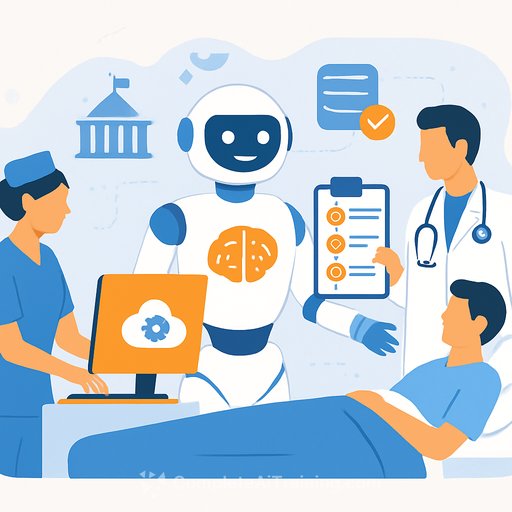
Anterior's focus is the "last mile" that makes Generative AI & LLM usable in day-to-day health plan work-accuracy, safety, integration and auditability. "Clinicians become supervisors of AI rather than processors of paperwork," said CEO Abdel Mahmoud. He estimates that, with clinical oversight, AI can automate roughly 90% of administrative tasks inside payer workflows.
General-purpose models can help, but they often miss the reliability and system hooks required for routine use in healthcare. Anterior embeds engineers and clinicians with customers to fit the tech to existing workflows, validate outputs and help teams use it in production.
- Read and structure data from faxes and unstructured documents
- Interpret medical records against clinical guidelines
- Convert policy PDFs into executable decision logic
Evidence from the field
In a deployment with Geisinger Health Plan, Anterior reports that its system is approving cancer care in about 155 seconds-down from weeks. That means many patients can get approvals while still in the consultation room, and plans see lower admin costs from fewer handoffs and less manual review time.
How it's priced
Pricing is tied to value created and varies by use case. It can also include task-based fees, such as per auto-approved prior authorization.
Where it fits in a crowded market
Mahmoud frames competitors in two groups. First, point solutions that automate a specific workflow inside a health plan. Second, Big Tech model providers. Anterior's goal is broader: a clinical AI reasoning layer that spans prior authorization, care management, payment integrity and risk adjustment-working "co-petitively" with model providers like Anthropic and OpenAI as partners rather than direct rivals.
What healthcare leaders should watch
- Implementation quality matters more than model buzz. Integrations, audit trails and clinical sign-off decide whether the tech actually ships.
- Start with high-volume, rule-heavy workflows (e.g., prior auth for common procedures) to show early wins and fund expansion.
- Measure end-to-end outcomes: approval time, denial rates, appeals, clinician touch time and member impact.
- Governance is non-negotiable. Build controls for guideline drift, policy updates, PHI handling and explainability for audits.
- Upskill teams. Clinical reviewers, UM leaders and IT need shared fluency in AI-enabled workflows to avoid rework and bottlenecks. If your team needs a quick primer, explore role-based AI upskilling: Courses by job.
What's next
The new funding will expand deployments with health plans, deepen integrations and grow the joint engineer-clinician teams that implement and monitor the technology. For plans under pressure to meet faster decision standards and reduce cost, solutions that pair AI with clinical oversight-and slot cleanly into existing systems-are moving from pilots to production.
For broader context on the burden prior authorization places on care teams, the AMA maintains ongoing data and resources: AMA prior authorization resources.
Your membership also unlocks: