
AI news ·
Anthropic and the U.S. government dispute export controls on AI models
Export controls blocking foreign access to Anthropic's AI models remain unchanged. The standoff shows government reliance on just 200 private engineers.
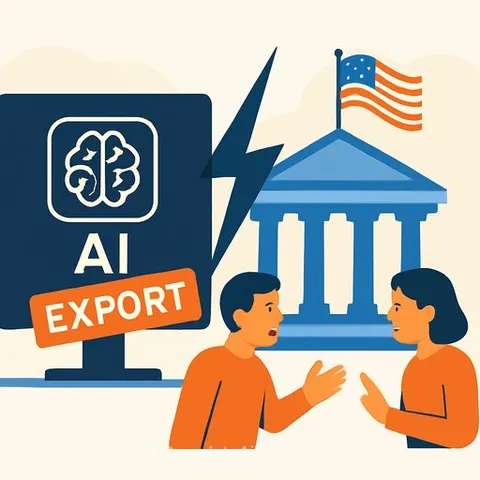
This week's White House meeting between artificial intelligence firm Anthropic and the Trump administration ended without change to export controls that forced the company to disable access to its newest models for foreign nationals. The standoff shows the tightrope federal agencies now walk: needing to restrict potentially dangerous technology while also gaining access to that same technology for national defense.
On June 12, the administration barred foreign nationals from using Anthropic's Mythos 5 - released only to vetted organizations - and Claude Fable 5, a public model with extra safeguards. Anthropic complied by disabling both. The company said in a public statement that the government hadn't specified the exact concern, but Anthropic assumes it relates to a user's ability to bypass the model's built-in cybersecurity protections, an issue it calls minor and already present in other publicly available models.
The conflict over Mythos highlights a growing national tension over how much the government should intervene when a private company's product affects national security. The Trump administration initially took a hands-off approach to AI development, but signed an executive order calling for major AI companies to voluntarily submit their frontier models for a 30-day government review. "The frontier AI labs in the United States have enormous power and influence, but so does the U.S. government," said Michael Horowitz, senior fellow at the Council on Foreign Relations.
A new playing field
For decades, the government allowed technologies like the internet to develop with minimal oversight. But AI's direct relevance to national security has changed that calculation. James Pethokoukis, a senior fellow at the American Enterprise Institute, said the argument for a hands-off approach "is now lost." The real question, he added, is not whether the government should intervene, but how much.
That shift has accelerated the pace of government action. Emily Kilcrease, director of the Energy, Economics, and Security program at the Center for a New American Security, said the typical problem with defense policy is that it moves too slowly. "What happened over this past week with Anthropic was interesting to see that the government moved very quickly," she said. "They are not afraid to move swiftly and do the cleanup later."
The expertise gap
The government wants to keep advanced AI out of the hands of countries like China while also using the same technology to improve cyber defenses. Susan Ariel Aaronson, a professor at George Washington University, called the situation a "catch-22." The dynamic gives developers unusual bargaining power, because only a small number of engineers truly understand how frontier models work. Kilcrease estimates the number globally at around 200 - and they are not working for the government.
Anthropic's relationship with federal agencies has been rocky. The Pentagon labeled the company a supply chain risk in March after it refused to give the government unrestricted access to its models for defense. Yet the two sides continue to collaborate. After the Mythos release, government officials met with Anthropic to discuss its capabilities, and the company worked with officials to test safeguards before releasing Fable 5.
Why this matters for government professionals
For public servants working at the intersection of national security and emerging technology, the Anthropic case reveals how quickly policy terrain can shift - and how dependent the government has become on private-sector expertise. Staying current on AI's technical and regulatory dimensions is no longer optional. Programs such as AI for Policy Makers offer frameworks for assessing risks and crafting governance strategies, while AI for Government helps agencies build the in-house knowledge needed to engage with developers on equal footing.