
AI news ·
Anthropic CEO Dario Amodei meets White House officials to discuss AI safety
Anthropic CEO Dario Amodei met with White House officials to discuss responsible AI development, per the Wall Street Journal. The talks covered risks from advanced AI systems, job displacement, and how companies should govern model capabilities.
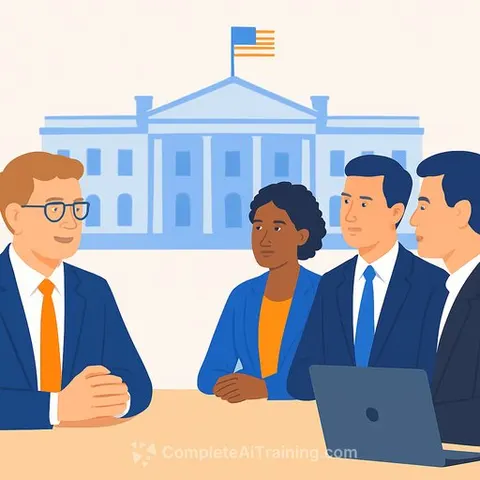
Anthropic CEO Meets White House Officials on AI Safety
Dario Amodei, CEO of AI safety company Anthropic, met with White House officials to discuss how advanced AI systems should be developed and deployed responsibly. The Wall Street Journal first reported the meeting, which reflects growing concern among policymakers about the risks posed by large language models.
Amodei co-founded Anthropic in 2021 after serving as Vice President of Research at OpenAI. The company develops generative AI and LLM systems, including Claude, and focuses on safety research.
What the White House Is Doing
The Biden administration is actively seeking input from AI industry leaders, researchers, and other stakeholders to shape policy. These conversations cover job displacement, algorithmic bias, and potential risks from increasingly capable systems.
The White House engagement signals that policymakers view AI safety as a foundational issue, not just a problem to solve for specific applications. The focus has shifted from academic discussions to how companies should govern the core capabilities of their models.
The Regulatory Debate
There is no consensus on how to regulate AI development. Some researchers and policy experts argue for strict oversight and limits on the most advanced models. Others prefer a flexible approach that addresses specific risks as they emerge rather than imposing broad restrictions.
Anthropic has developed Constitutional AI, a technique designed to train models to follow ethical principles. By making Amodei's White House visit public, the company positions itself as willing to work with government on safety standards.
What This Means for Development Teams
These government discussions will likely shape how companies approach AI development, testing, and deployment over the next few years. Regulatory decisions could affect research priorities, go-to-market strategies, and how teams implement safety practices.
For engineers and developers working with AI systems, understanding prompt engineering and safety considerations is becoming more relevant as companies face greater scrutiny on how their models behave in production.
The White House's direct engagement with AI companies suggests policymakers are serious about establishing a framework that allows innovation while preventing misuse. The outcome of these conversations will likely influence how the industry operates globally.