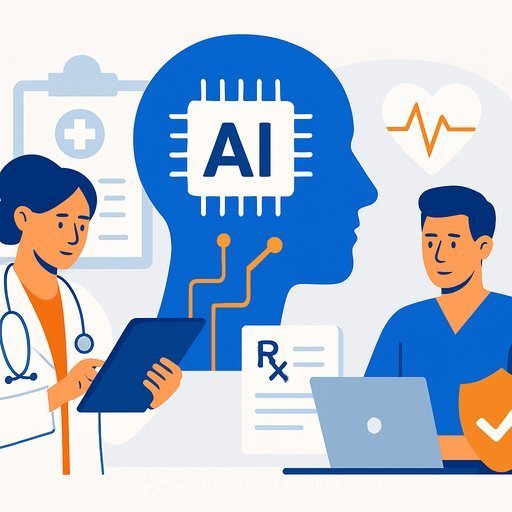
Anthropic Joins OpenAI: New AI Tools for Healthcare
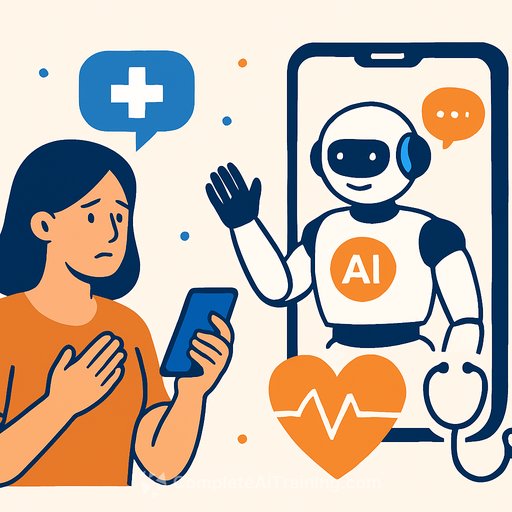
Anthropic has stepped deeper into healthcare with new AI tools built on Claude, joining OpenAI in pushing AI into clinical and operational settings. The focus is clear: safety, accuracy, and practical support for real teams. For hospitals dealing with staff shortages, rising costs, and data overload, this isn't theory - it's workflow relief.
Why now? Administrative work takes 30-40% of a clinician's day, pulling attention from patients. Anthropic says its tools support clinical decision-making, research, patient communication, and operations - with clinicians in full control.
The Healthcare AI Shift
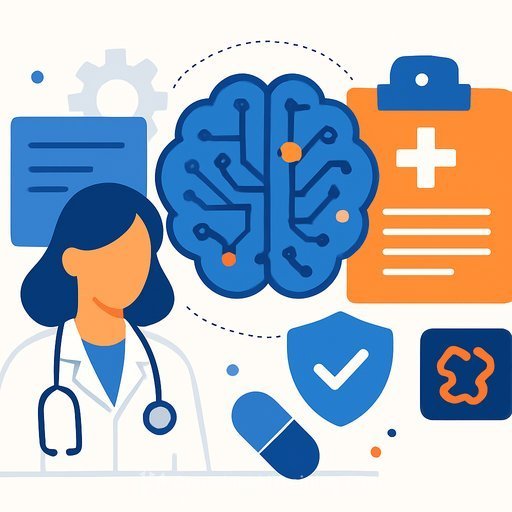
Big tech is moving into healthcare, but Anthropic is taking a safety-first route. Claude is built for careful responses and lower hallucination rates, which matters when small errors carry high risk. The company is clear: these tools don't replace clinicians - they support them.
Industry analysts expect AI in healthcare to exceed $180B by 2030, driven by automation, diagnostic support, and personalized care. Anthropic's "Claude for Healthcare" targets providers, insurers, and life sciences teams with HIPAA-ready capabilities. For context on HIPAA, see the U.S. HHS overview: HIPAA Privacy Rule.
What Anthropic Is Bringing
Anthropic's tools tackle practical jobs: reviewing literature, drafting clinical notes, summarizing records, and supporting research workflows. Early pilots are running with providers and research groups under strict guardrails. The company is also working closely with life sciences teams to improve medical language handling - teams in biochemistry and related fields can follow an AI Learning Path for Biochemists to get started.
What's different this time: newer models handle long documents and nuanced context far better than earlier systems. That matters for discharge notes, trial protocols, and meta-analyses.
Key Areas of Support
Clinical Documentation and Workflow Support
Summarize visits, structure notes, and reduce repetitive writing. The payoff is time back and lower burnout risk.
Medical Research and Literature Review
Scan studies, extract key findings, and support early hypothesis formation - practical capabilities you can learn through targeted AI Research Tools Training. High value for drug discovery and trial teams moving through large evidence bases.
Patient Communication and Education
Draft clear, plain-language explanations for complex conditions and treatments. Clinicians can review and approve before sharing.
Operational Efficiency
Support scheduling, reporting, and compliance workflows with strict data controls. The goal is fewer manual steps and more consistent documentation.
Benefits of Anthropic AI Tools in Healthcare
- Improved efficiency for doctors and nurses by reducing paperwork
- Better use of medical data through accurate summarization
- Support for research teams analyzing large datasets
- Enhanced patient communication with simpler explanations
- Strong focus on safety and responsible AI use
Risks and Challenges of AI in Healthcare
- Dependence on data quality and accuracy
- Need for strict human oversight in clinical decisions
- Privacy and data security concerns
- Regulatory uncertainty across regions
- Risk of overreliance on automated systems
How Anthropic Compares With OpenAI in Healthcare
Both companies are building healthcare capabilities. OpenAI is leaning into broad platform integrations, while Anthropic is opting for controlled deployment with a heavy emphasis on safety and explainability. That direction lines up with expectations from U.S. and EU regulators, especially around transparency and accountability.
Investor Outlook and Market Impact
Investors see healthcare as a long-term proving ground for AI. Anthropic is private, but its partnerships still influence sentiment across the sector. Real-world deployments, not benchmark scores, will drive valuation strength and enterprise contracts over the next cycle.
Role of AI Stock Analysis and Trading Tools
Professional investors are tracking healthcare AI news with AI-driven research platforms, parsing earnings calls and partnership updates. Trading desks are watching volatility around product launches. AI isn't just part of the story - it's inside the tools used to study the story.
Ethics, Safety, and Trust
Anthropic stresses limits, transparency, and human oversight. Claude is built to say "I do not know" when uncertain - essential in clinical contexts. Any scaled deployment must meet strict requirements for data protection and clinical responsibility.
Future Outlook for Anthropic in Healthcare
Expect more provider and life sciences partnerships, tighter EHR connections, and better support for diagnostic workflows as guardrails mature. Most hospitals will treat AI as a standard support layer within five to seven years - useful, measured, and supervised.
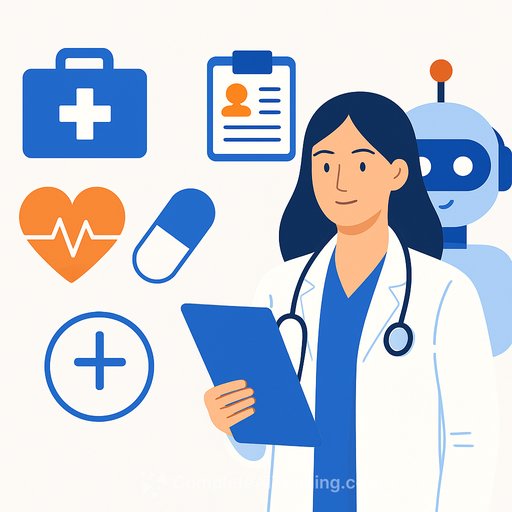
Will AI replace doctors? No. It can reduce busywork and support analysis, but judgment, context, and accountability stay with clinicians.
Practical Next Steps for Healthcare Leaders
- Pick two high-friction workflows to pilot first: note drafting and literature review.
- Set up governance: access controls, PHI handling, human-in-the-loop review.
- Measure outcomes: time saved, documentation quality, clinician satisfaction, error rates.
- Train teams on prompts, edge cases, and escalation paths.
FAQs
What new healthcare AI tools has Anthropic launched?
Anthropic introduced healthcare-focused tools built on Claude to support clinical documentation, medical research, patient communication, and operational workflows, with clinicians maintaining full control.
How is Anthropic's healthcare AI different from other AI tools?
It emphasizes safety, accuracy, and responsible use. The models are built to handle complex medical language, reduce errors, and clearly signal uncertainty instead of guessing.
Will Anthropic's AI replace doctors or healthcare workers?
No. The tools assist professionals by reducing administrative load and supporting decision-making. Final clinical decisions remain with qualified clinicians.
Why is Anthropic entering the healthcare sector now?
Workloads are rising while staffing is tight. AI can cut administrative time and improve information flow, giving clinicians more space for patient care.
What does this mean for investors and the AI industry?
Healthcare adoption is a meaningful indicator of real-world reliability. Companies that prove value and safety in clinical settings are more likely to win long-term contracts and stronger valuations.
Helpful References
- Physician time spent on EHR and desk work (Annals of Internal Medicine)
- HIPAA Privacy Rule overview (HHS)
Further Learning
If your team is planning structured AI upskilling, explore our Claude-focused programs: Claude AI Courses and Training.
Conclusion
Anthropic's move into healthcare sits at the intersection of safety, accuracy, and daily clinical work. For providers, the near-term value is clear: less paperwork, faster synthesis, and tighter workflows - with humans firmly in charge. Trust will decide the winners, and healthcare sets a high bar.
Disclaimer
The content shared by Meyka AI PTY LTD is solely for research and informational purposes. Meyka is not a financial advisory service, and the information provided should not be considered investment or trading advice.
Your membership also unlocks: