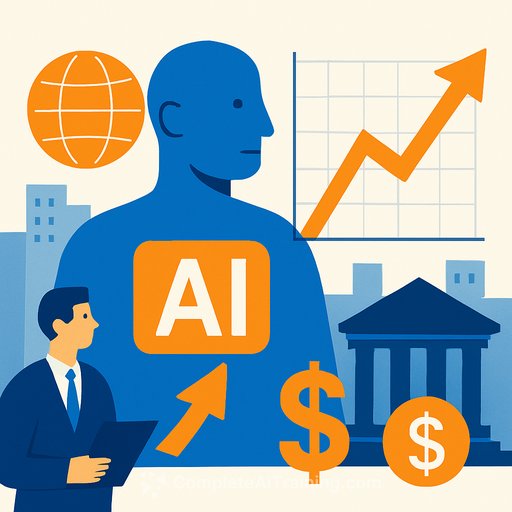
AI Shockwaves Hit Finance: What Anthropic's Claude 4 Means for Your P&L
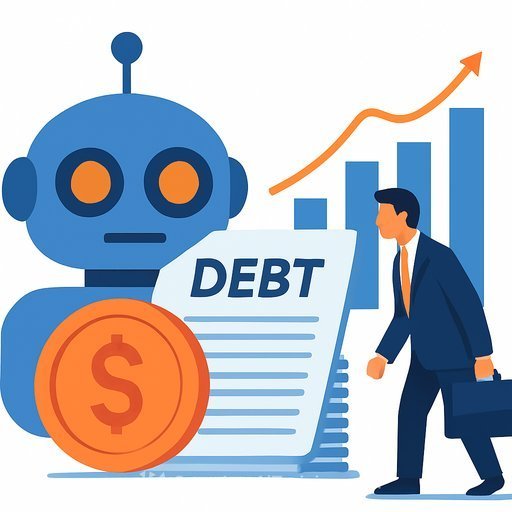
AI sent another shock through Wall Street this week. Anthropic rolled out the Claude 4 family, and finance names flinched. Investors re-priced how soon AI can compress costs and rewire workflows across banking, insurance, and asset management. As reported by The Information, the selloff clustered around firms most exposed to automation.
Claude 4: A Practical Step-Function in Capability
Anthropic's new models - including Claude Sonnet 4 and Claude Opus 4 - show clear gains in coding, reasoning, and agentic task completion. Think multi-step workflows: data review, structured analysis, draft generation, and quality checks. That's the daily work of junior analysts, compliance teams, and back-office operations.
With enterprise reliability front and center, Claude is pressing into territory long held by OpenAI's GPT-4o and Google's Gemini. Backed by billions from strategic investors and growing enterprise demand, Anthropic is positioned squarely in the tools finance teams actually ship to production.
Why Financial Stocks Took a Hit
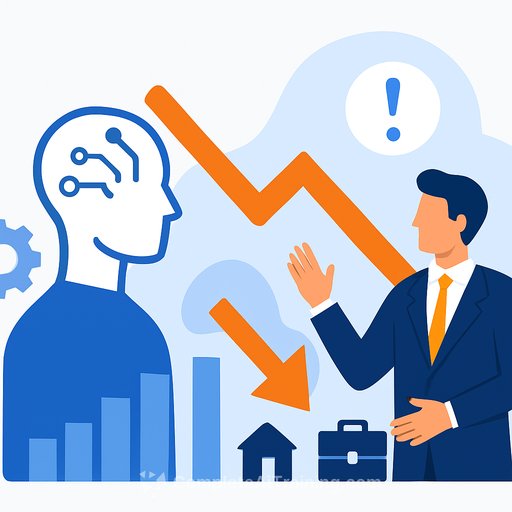
This wasn't a "sell the headline" move. The market is repricing how quickly AI can take over cognitive tasks that drive fee revenue and headcount. Equity research, risk assessment, regulatory documentation, underwriting support, and customer service can now be handled by systems that parse huge datasets, reason across them, and output clean work product.
The pressure point is unit economics. If a model can handle 80% of a junior analyst's workload at a fraction of the cost - and do it in minutes - margins and staffing plans change. Insurers, advisory shops, and data providers with human-heavy offerings felt it first.
The AI Arms Race Tightens the Timeline
OpenAI pushes reasoning models. Google is baking Gemini into cloud and productivity stacks. Meta is scaling open-source approaches. Each release raises the bar and shortens the window for incumbents to adapt.
Large banks - JPMorgan Chase, Goldman Sachs, Morgan Stanley - are investing in AI infrastructure. The question isn't "if" AI will refactor workflows. It's whether incumbents can execute fast enough while AI-native entrants go straight for high-margin niches.
From Pilots to Production: Agentic AI Arrives
The shift isn't chatbots. It's agentic systems that plan, execute, and iterate on complex tasks with light oversight. In finance, that means drafting regulatory filings, diligence summaries, underwriting workups, policy endorsements, and portfolio commentary.
Enterprises are moving beyond POCs. With better reasoning and reliability, deployments tied to real SLAs are accelerating. Expect more displacement of repetitive work and more human roles moving to review and exception handling.
What to Do in the Next 90 Days
- Pick 3 high-yield workflows: KYC/AML case narratives, claims triage notes, credit memos, client servicing emails.
- Stand up a safe sandbox: masked data, retrieval-augmented prompts, human-in-the-loop checks, full logging.
- Benchmark models: Claude Sonnet 4 vs Opus 4 vs your current baseline. Track task accuracy, exception rate, latency, cost per task, and error taxonomy.
- Define roles and controls: model does X, analyst reviews Y, manager approves Z. Document decision boundaries.
- Tighten data guardrails: PII minimization, DLP, prompt-injection tests, output filtering for prohibited content.
- Lock in procurement basics: usage caps, SLAs, audit rights, fallback model plans, incident playbooks.
6-12 Month Roadmap
- Graduate pilots to production for regulatory drafts, underwriting summaries, claims correspondence, and portfolio commentary with clear KPIs.
- Adopt an orchestration layer for tool use (search, RAG, calculators), job routing, and retries; avoid hard coupling to a single model.
- Redesign roles: shift analysts from first-draft creation to reviewer/decision roles. Stand up an AI enablement team and evaluation pipelines.
- Make a build vs. buy call per workflow. Compare TCO, data sensitivity, vendor risk, and model-switching costs.
- Automate compliance evidence: model/agent logs, versioning, prompts, citations, and rationale captured for audit.
- Harden security: threat models for prompt injection and data exfiltration; continuous red-teaming; dependency inventory.
Regulatory Reality Check
Expectation is shifting toward documented controls, explainability, and auditability - especially for credit decisions, pricing, and advice. Align with established frameworks and prepare artifacts regulators will ask for.
- NIST AI Risk Management Framework for governance, measurement, and monitoring.
- EU AI Act overview to map risk classes, data/record-keeping duties, and transparency requirements.
Investor Lens: The Two-Sided AI Trade
Capital keeps flowing into AI infrastructure and model developers. The flip side is pressure on sectors where AI can compress costs and reprice work. Finance is squarely in that crosswind.
Public companies that show credible AI adoption - with cost, speed, and quality targets - get the benefit of the doubt. Those that stall face multiple compression. Your next earnings call should include a clear AI roadmap and measurable productivity goals.
Metrics That Matter
- Throughput: time-to-quote, time-to-file (SAR, claims letter), cycle time per case.
- Quality: exception/appeal rates, accuracy vs. human baseline, adverse action dispute rates.
- Unit cost: cost per document/case, rework hours, human touches per item.
- Risk: model drift, data-leak incidents, audit findings cleared on first pass.
Team Skills: Upskill Fast
Re-skill analysts and underwriters on prompt patterns, evaluation, and agent oversight. Train managers on reviewing AI outputs and setting acceptance thresholds. Move quickly from curiosity to competence.
- AI for Finance to map use cases to tooling.
- AI Learning Path for Vice Presidents of Finance for leadership-focused adoption and measurable KPIs.
Bottom Line
Anthropic's Claude 4 family raises the ceiling on what can be automated in finance right now. The market reaction made the message clear: delay is expensive. Pick concrete workflows, measure ruthlessly, and build the controls regulators expect. Those who move from experiments to owned capabilities will set the cost curve - and everyone else will have to match it.
Your membership also unlocks: