Pentagon's Anthropic Ban Exposes Rifts Over AI Control and Governance
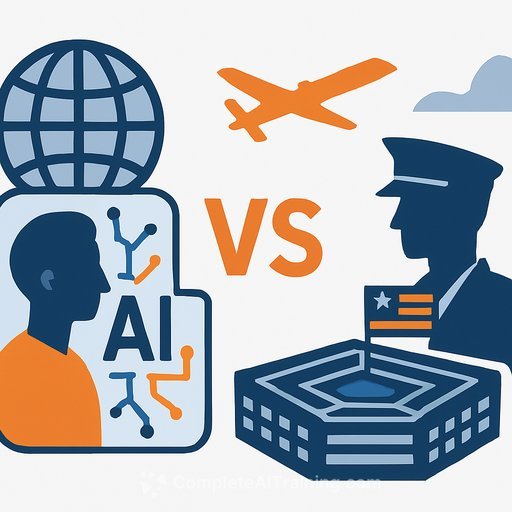
The U.S. Department of Defense has designated Anthropic as a "supply chain risk," effectively blocking the company's AI models from use in defense systems. President Trump later ordered all federal agencies to stop doing business with Anthropic. That decision is under preliminary injunction but has already shifted how government and industry view AI deployment.
The dispute centers on Anthropic's restrictions on how its models can be used-particularly in mass surveillance and autonomous weapons. The company argues these limits reflect both ethical concerns and technical constraints. Anthropic Chief Executive Dario Amodei said frontier AI systems are "simply not reliable enough to power fully autonomous weapons."
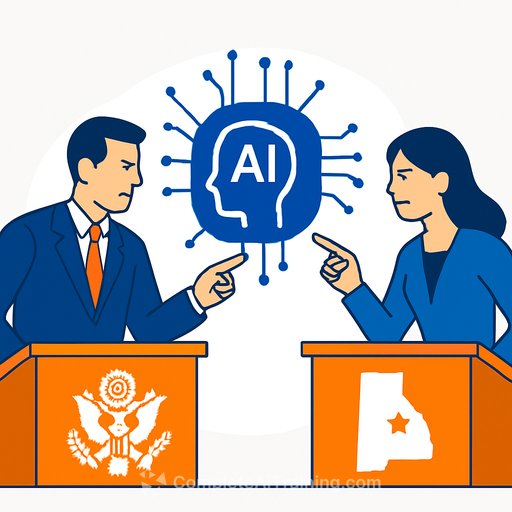
The Pentagon frames this as a security issue. But experts say it's actually a governance problem. David Linthicum, a cloud and AI subject matter expert, said: "If a company says it does not want its AI used for certain military or domestic surveillance purposes, that is a policy and governance issue."
The Broader Question: Who Controls AI?
The conflict raises a fundamental question: Should private companies define ethical boundaries for technologies with national security implications?
Carlos Montemayor, a philosophy professor at San Francisco State University, views the Pentagon's move as punitive. "The government is punishing Anthropic for not following orders," he said. He argues the designation signals other AI providers to align with federal expectations.
Others support Anthropic's right to set restrictions. Valence Howden, an advisory fellow at Info-Tech Research Group, said organizations "have a responsibility to define the ethical boundaries and use cases of their technologies," particularly as AI systems take on more autonomous roles.
But not everyone agrees. Montemayor argues that allowing companies to set their own ethical frameworks is "unacceptable and dangerous." He called for international regulation grounded in human rights principles, warning that current approaches create "too much uncertainty about the future of this technology."
Enterprise Disruption and Technical Debt
A Gartner report noted that the episode exposes how deeply embedded AI models have become in software systems. "Anthropic's exclusion underscores how quickly embedded model dependencies can convert into structural technical debt," the firm wrote.
Replacing a model is not simple. It often requires requalifying entire workflows, retraining systems and recalibrating performance benchmarks. Gartner recommends that engineering leaders treat "provider volatility as an immediate continuity risk" and design systems for portability and modularity.
This creates a paradox: Organizations that optimize heavily around one model achieve higher productivity but face greater disruption if policy forces a switch.
Trust as Competitive Advantage
Despite potential losses from government contracts, some experts believe Anthropic's stance could strengthen its position in the enterprise market.
Marc Fernandez, chief strategy officer at Neurologyca Science & Marketing, said holding the line on restrictions will be expensive short-term. But "clear boundaries can signal reliability in high-stakes environments," he said. "Over time, that kind of reliability becomes a massive competitive advantage."
Linthicum agreed. "A lot of enterprise customers want to know that a vendor has clear values and will stick to them under pressure," he said. Anthropic's position could make it "more attractive to many customers, not less," provided policies are clearly defined and consistently applied.
A Governance Gap
David DeSanto, Chief Executive of Anaconda Inc., said the Pentagon appears to treat AI like "the next version of Microsoft Excel - a tool you buy, own and use however you want." That misses what AI actually is.
Unlike spreadsheets, AI systems are capable of "judgment and autonomous action," requiring new governance frameworks that can't fit existing procurement models. That gap exists not only in government but across enterprises, where leaders assume they can "bolt AI onto existing infrastructure and figure out the hard stuff like governance responsibilities later."
Steve Croce, Field Chief Technology Officer at Anaconda, warned against "normalization of deviance"-the tendency for organizations to lower their guard as systems function without obvious failures. Enterprises need "AI sovereignty," or the ability to define and enforce their own guardrails, rather than relying on external providers.
The outcome of this dispute will likely shape how competing priorities-national security, corporate responsibility and societal values-are balanced in AI governance for years ahead.
Learn more: AI Learning Path for Policy Makers covers AI governance, policy analysis, and decision-making frameworks for government leaders.
Your membership also unlocks: