Anytime AI 2.0: 'Talk to Teddy' and Agentic Workflows Built for Plaintiff Firms
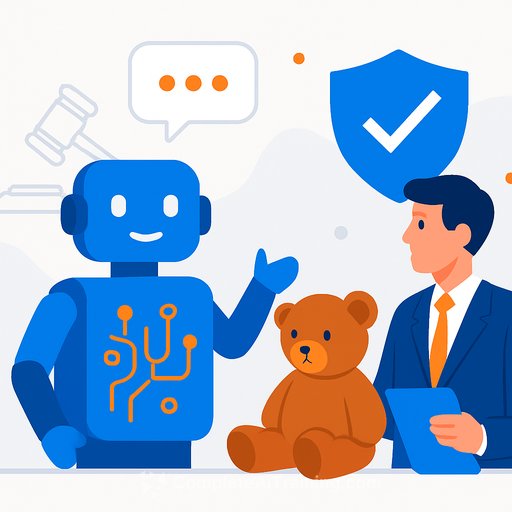
Anytime AI has released 2.0, a major upgrade centered on "Talk to Teddy" - a unified chat interface that handles case work from intake through settlement. It ties internal document analysis to real-time web research in one place, without exposing client data.
The goal is simple: fewer clicks, faster outcomes, higher-quality work product. If you run a plaintiff-side practice, here's what actually matters.
Enterprise-Grade Security & Privacy
Litigation demands confidentiality. Anytime AI 2.0 runs in a fully encrypted, closed environment built for sensitive data.
- HIPAA-compliant architecture (learn more)
- 256-bit encryption end to end
- Firm data stays siloed; it is never used to train public models
- Secure internal analysis with controlled access and auditability
"Talk to Teddy": Effortless Intelligence in One Hub
This chat-driven interface acts like a skilled teammate that knows your files and the law. You ask. It reasons, searches, drafts, and cites.
- Identify case value fast: Enter a plain-English prompt. The system expands it into specialized queries and surfaces the likely value drivers instantly.
- Bridge internal and external research: Combine file analysis with up-to-date web insights, removing the need for risky, unencrypted third-party tools like ChatGPT or Claude.
Agentic Workflows Built for High-Stakes Litigation
Anytime AI 2.0 introduces AI Agents that run multi-step tasks end to end. It's specialized for Personal Injury, Nursing Home Negligence, and Medical Malpractice.
- Medical chronologies and care-gap identification
- Demand letters in your firm's voice
- Discovery requests, responses, and objections
- Legal research and document drafting with citations
- Settle faster: Cut response latency and document turnaround.
- Settle higher: Use data-backed insights to strengthen liability and damages.
- Optimize costs: Reduce manual, repetitive work so your team focuses on strategy and advocacy.
What This Looks Like in Practice
Drag in thousands of pages of medical records. Get a clean chronology, gaps in care, and treatment summaries in minutes. Spin up a demand letter consistent with your style guide, then auto-generate targeted discovery with objections pre-drafted.
Need authority? Ask for a citation-backed memo and get pinpoint references alongside draft complaints, motions, and deposition outlines. The output reflects your firm's preferences and voice.
Executive Perspective
"Our goal with 2.0 was to remove the 'clicks' and focus on the results," said Teddy Wu, CEO and Co-Founder. "By combining a secure, closed environment with the power of agentic workflows and skills, we are providing plaintiff attorneys with a decisive competitive advantage unlike any time before."
Why Firms Are Adopting It
- Single source of truth: One interface to query files, research the web, and draft documents.
- Confidential by default: Encryption, HIPAA alignment, and data isolation.
- Faster ramp-up: Dedicated onboarding and training to integrate with your intake-to-settlement process.
Key Capabilities at a Glance
- Analyze thousands of medical records in minutes with precise summaries
- Generate detailed chronologies and highlight missing or conflicting care
- Draft demand letters, discovery, and objections in your firm's style
- Review large document sets with granular accuracy
- Create citation-backed research memos - see AI Research
- Draft complaints, motions, depositions, and 10+ other document types
Getting Your Team Ready
Adoption sticks when workflows are clear and training is structured. Map your top five repetitive tasks, standardize prompts/templates, and pilot with one practice group before scaling.
Want a practical starting point for firmwide AI upskilling? Explore role-based training options and firm-focused instruction at AI for Legal.
The bottom line: Anytime AI 2.0 gives plaintiff firms a secure, high-performance system that moves work forward with less friction and more precision. Intake to settlement, in one place.
Your membership also unlocks: