AI Can Help Close India's Healthcare Workforce Gap, Says Preetha Reddy
India's healthcare system is growing fast, but the supply of trained professionals isn't keeping pace with demand. Preetha Reddy, Vice Chairperson of Apollo Hospitals, says artificial intelligence can help close that gap by giving clinicians timely support where staffing is thin.
The pressure is most visible in emergency care, where speed and accuracy decide outcomes. When patient volume outstrips available manpower, decision-support systems can keep teams moving without sacrificing clinical rigor.
Apollo's Clinicians Intelligence Engine: What It Does
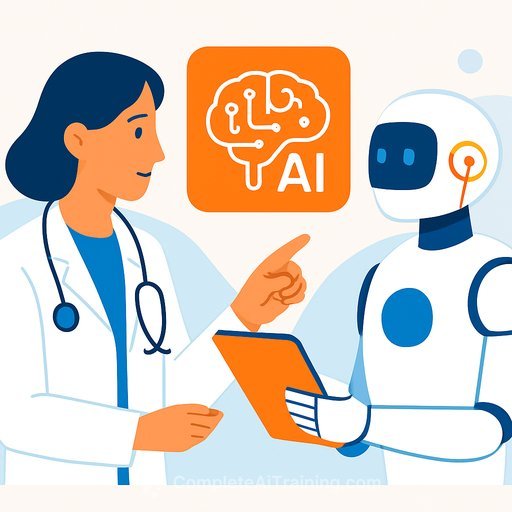
Apollo Hospitals has built the Clinicians Intelligence Engine, a technology-driven decision-support platform that helps doctors and medical staff make faster, more informed calls. It currently includes about 260 clinical pathways to guide real-time decisions in emergency and acute care settings.
The goal is simple: improve accuracy, consistency, and speed so clinicians can focus on complex cases and high-value tasks. By automating parts of the workflow and surfacing relevant guidance at the point of care, the tool reduces reliance on manual lookups and fragmented processes.
Why It Matters for Care Teams
- Faster triage and stabilization with pathway-driven prompts in high-pressure scenarios.
- More consistent care through standardized protocols across shifts, sites, and teams.
- Lower cognitive load by cutting repetitive, manual steps and reducing variability.
- Better escalation: routine steps are handled quickly, freeing specialists for complex decisions.
Operational Guardrails That Healthcare Leaders Should Put in Place
- Clinical validation: vet pathways with local experts and compare outcomes before and after deployment.
- Human-in-the-loop: AI suggests; clinicians decide. Keep clear override and documentation flows.
- Interoperability: integrate with existing EHR/LIS/RIS to avoid duplicate work and data silos.
- Data governance: set standards for data quality, audit trails, and model performance monitoring.
- Safety and ethics: address bias, consent, and patient privacy; align with published guidance.
- Training: prepare clinicians, nurses, and admins with concise, role-specific onboarding.
Beyond Private Hospitals
Reddy notes that once systems like this are fully integrated, they can help standardize care in public hospitals as well. That consistency could narrow gaps in access and quality between urban centers and underserved regions.
Practical Steps to Get Started
- Pick high-impact use cases first: emergency triage, sepsis bundles, chest pain, stroke protocols.
- Run a time-boxed pilot with clear metrics: time-to-decision, adherence to pathway, LOS, readmissions.
- Form a multidisciplinary governance group: clinicians, nursing, quality, IT, legal.
- Embed change management: brief workflows, quick reference guides, and at-the-elbow support.
- Measure, iterate, and scale: expand pathways as outcomes and clinician feedback support it.
Learn More
Bottom line: AI won't replace clinicians, but it can remove friction, reduce variability, and help thinly stretched teams deliver safer care-especially where every minute counts.
Your membership also unlocks: