
AI news ·
Appeals court sanctions attorney, law firm $10,500 for AI-fabricated citations
A New York appeals court ordered attorney Michael Sanders and his firm to pay $10,500 for filing a brief fabricated by AI. The panel also flagged possible further discipline.
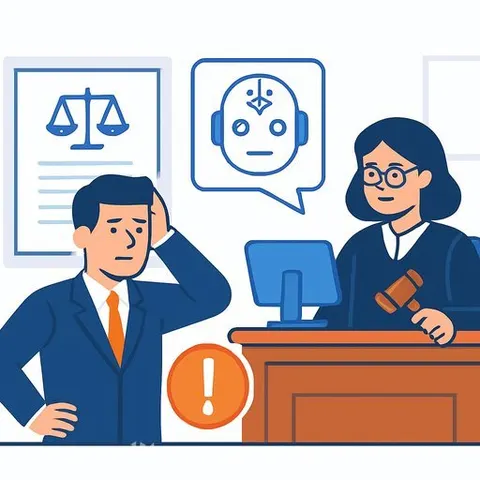
A New York appeals court has sanctioned attorney Michael Sanders and his law firm a total of $10,500 after he filed a brief with fabricated case citations generated by artificial intelligence. The ruling, handed down by the Appellate Division Second Department, forces Sanders to pay $8,000 and the firm $2,500 to the Lawyers' Fund for Client Protection, while also flagging the possibility of further disciplinary action.
Sanctions and the court's finding
Presiding Justice Hector D. LaSalle wrote that the brief was "prepared with the assistance of generative artificial intelligence, containing citations to nonexistent cases, fictitious purported Court of Appeals quotations wholly contrary to actual law, and misrepresentations about what certain real cases actually held or decided." The court limited its review to whether monetary sanctions were warranted, but LaSalle added, "Whether disciplinary action is also warranted may be a matter for the Attorney Grievance Committee."
The plaintiff sued after tripping on a sidewalk adjacent to private property, seeking damages from the owner and the city of New York. In December 2024 a trial-level judge granted summary judgment dismissing the case, and the Second Department affirmed that decision in early June. The sanctions stem from the brief Sanders submitted for the appeal.
How the AI-generated errors came to light
During oral argument on May 20, panel members pressed Sanders on the fictitious citations and misrepresented holdings. Sanders told the court he was not ready to discuss the cases and declined an offered 15-minute recess. The panel then directed all parties to submit arguments on potential sanctions.
What the attorney and firm acknowledged
In his affirmation, Sanders said he took "full responsibility for the deficiencies identified by the Court" but did not name the specific AI tool he used. He believed the nonexistent citations originated during AI-assisted research "which he negligently failed to verify," the decision states. Sanders also admitted he violated the firm's own policy requiring lawyers to personally review and confirm AI-generated output. When the court asked where the fabricated cases came from, he said he should have acknowledged they were hallucinated by artificial intelligence.
The firm's general counsel, Stacey Haskel, submitted an affirmation noting Sanders had an unblemished record since joining in 2024 and that the firm "has made it unequivocally clear that any future deviation from these standards will be met with immediate disciplinary action." Neither defendant sought costs, so the court did not award them.
Why this matters for legal professionals
For lawyers, the decision is a stark reminder that AI can introduce fabricated law that sounds plausible. Failure to verify every citation and quotation can expose an attorney and the firm to financial penalties and a referral for potential ethics discipline. The case reinforces that internal policies on AI for Legal research are meaningless unless practicing attorneys follow them every time they file a document with a court.