Apple's AI leadership reset: what it signals, what to expect, and how to respond
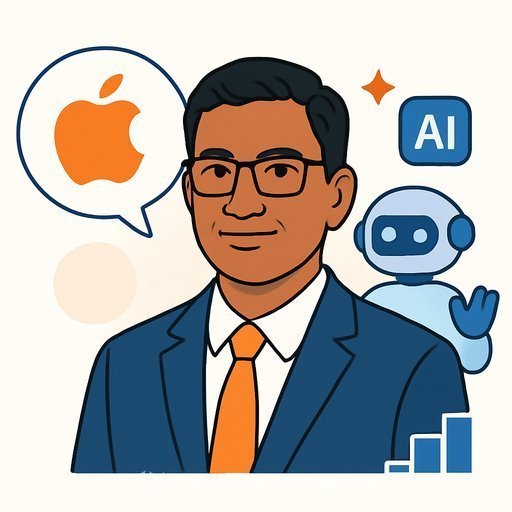
On December 1, 2025, Apple announced a major leadership change in AI. John Giannandrea will step down and retire in spring 2026, with Amar Subramanya stepping in to lead AI. This isn't a reshuffle for optics. It's Apple declaring a new pace for getting AI into products that matter.
What changed-and why it matters
Giannandrea built Apple's AI base since 2018: foundation models, search and knowledge, ML research, and core infrastructure. He'll advise through spring 2026, but the operating model is changing now.
Amar Subramanya, coming from Microsoft and previously Google, becomes Vice President of AI and reports to Craig Federighi. He'll own foundation-model development, core ML research, and AI safety and evaluation. Parts of the old org-AI infrastructure and search/knowledge-shift to Sabih Khan and Eddy Cue. That's a structural reset aimed at faster delivery and clearer accountability.
Where Apple stands today
Apple's "Apple Intelligence" push promised smarter, more personal features across iPhone, iPad, and Mac. Execution has lagged. Siri upgrades slipped while Apple reiterated its quality bar and privacy standards.
Critics say Apple trails Google in generative AI and advanced assistants. The counterpoint: avoiding messy rollouts protects the brand. Still, patience has limits. Users and investors expect visible progress, not just demos.
What to expect under Subramanya
- Faster movement from research to shipped features-especially a meaningfully smarter Siri by 2026.
- Heavier investment in foundation models to power system-wide intelligence, not just voice commands.
- Stronger AI safety and evaluation practices embedded in product lifecycles, not bolted on at the end.
Net result: less talk, more product. Apple will aim to prove value on-device and in iCloud while keeping trust intact.
Product outlook: 2025-2026
- Siri: context-aware, multi-step tasks, tighter app control, and higher reliability across languages and accents.
- System intelligence: summarization, proactive suggestions, and content creation features tuned to user intent.
- Privacy posture: on-device inference where possible, with secure handoff to the cloud for heavier tasks.
For background, see Apple's Apple Intelligence overview here and current Siri positioning here.
Risks and friction points
- Execution risk: delivering durable improvements vs. shipping thin features to check a box.
- Trust risk: scaling AI speed without tripping privacy, bias, or reliability issues.
- Competitive pressure: Google and others iterate faster; Apple must close the gap without sacrificing its brand promise.
Signals executives should watch
- Org moves: where AI infra lives, who owns evaluation, and how quickly teams align to release trains.
- Quality metrics: task completion rate, latency, failure modes, and guardrail coverage shared at events or in documentation.
- Developer hooks: APIs, intents, and tooling that let third-party apps tap Apple's foundation models.
- Regional rollout: how quickly features move beyond the initial English/US window.
Implications for your 2026 plans
- Product: plan for tighter OS-level AI features; prioritize Siri integrations and on-device workflows where it reduces friction.
- Data: assume stricter privacy constraints; design for least data necessary and clear consent models.
- Ops: evaluate device fleets for on-device inference readiness; budget for hardware refresh cycles where needed.
- Vendor mix: expect more Apple-native capabilities; reassess overlapping third-party tools to avoid redundancy.
- KPIs: measure productivity wins (time-to-complete, error reduction), not just usage counts.
Practical next steps for leaders
- Set a 90-day plan to identify 3-5 Siri or system-intelligence use cases that remove real user friction.
- Stand up an AI evaluation checklist (safety, bias, latency, fallback paths) and require it for every feature.
- Create a cross-functional review (legal, security, product) for AI releases to avoid late-stage rework.
- Upskill teams on Apple-first AI patterns and constraints. If you need structured learning by role, see our curated tracks here.
Why this reset matters
Apple is moving AI from back-office research to front-line experience. With Subramanya at the helm and a reworked org, the mandate is clear: ship meaningful upgrades, protect trust, and accelerate the pace.
If Apple executes, users get smarter, more helpful tools across the stack. If not, the leadership change will read as theater. The next 12-18 months will tell us which it is.
Disclaimer: The content shared by Meyka AI PTY LTD is solely for research and informational purposes. Meyka is not a financial advisory service, and the information provided should not be considered investment or trading advice.
Your membership also unlocks: