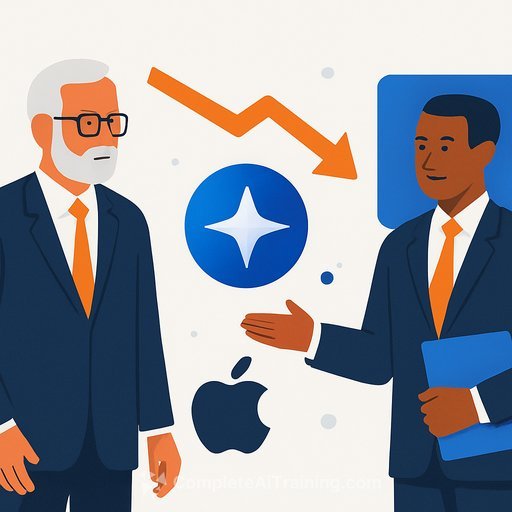
Apple taps former Microsoft AI VP to reboot its AI push
Apple is reshuffling its AI leadership. John Giannandria is stepping down as SVP of machine learning and AI strategy, transitioning to an advisor role through spring 2026. Amar Subramanya, previously a corporate VP of AI at Microsoft and a 16-year Google veteran who led the engineering team behind Gemini Assistant, steps in.
Subramanya will report to Craig Federighi. His mandate: Apple Foundation Models, core ML research, and the safety and evaluation pipelines that gate real features for users.
The org changes signal a product-first AI strategy
Several of Giannandria's teams are moving closer to the action: operations under Sabiha Khan and services under Eddy Cue. Translation for product builders: platform AI stays centralized, while feature delivery gravitates to the teams that own hardware and services outcomes.
Tim Cook reiterated that AI has been a core part of Apple's strategy. The leadership shift is a public bet that Apple can speed up shipping - especially across Apple Intelligence and a more personal Siri - while the pressure from Microsoft and Google intensifies.
What this means for product teams
- Split responsibilities clearly: a platform group for foundation models and safety, product groups for integration and user outcomes.
- Make safety and evaluation a first-class product function with its own roadmap, tooling, and decision authority.
- Shorten the research-to-feature loop: weekly demos, user-in-the-loop evaluation, and feature flags for fast rollout control.
- Integrate AI into existing surfaces instead of spinning up disconnected "AI features" that fragment UX.
- Hire leaders who have shipped at consumer scale and know how to translate model advances into consistent product wins.
Why Apple's move matters now
Apple has faced criticism for a slower AI cadence compared to rivals. Bringing in an exec who has shipped AI across large consumer products is a push to close that gap. Expect tighter alignment between core models and visible features, with Siri as the proving ground.
Reports also point to a significant iPhone refresh ahead - across design, features, and even launch timing. That stacks the stakes: AI improvements need to land on schedule and feel meaningful to users, not just impressive in demos.
Action checklist for product leads
- Define the "contract" between your foundation models team and product teams: SLAs, eval gates, and integration APIs.
- Stand up an evaluation stack that measures quality, safety, latency, and cost per experience - and tie it to ship criteria.
- Plan for fallbacks: graceful degradation and clear guardrails when the model is uncertain.
- Set a monthly "AI to feature" review that forces model progress to show up in shippable UX.
- Prioritize a single marquee user outcome (e.g., a smarter assistant task) and ship depth over breadth.
What to watch next
- How quickly Siri gains reliable, day-to-day utility improvements.
- Changes in Apple's product org that bring AI engineers closer to hardware and services roadmaps.
- Visible upgrades to Apple Intelligence across iPhone, iPad, and Mac that feel cohesive, not one-off.
If you're building product and need a structured AI upskill path, explore focused picks by role here: AI courses by job.
Your membership also unlocks: