Apple's AI Reset: Giannandrea Out, Subramanya In
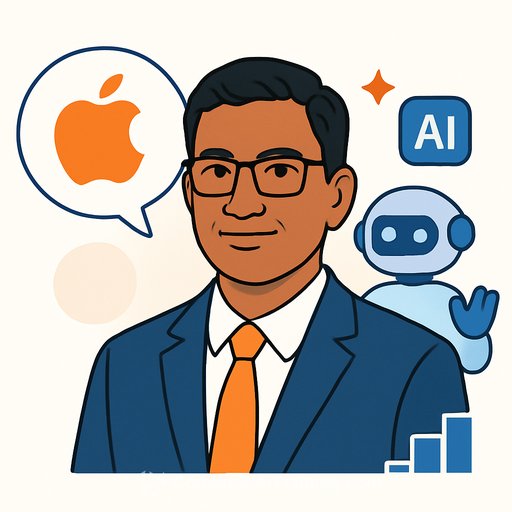
Apple just confirmed a major change: John Giannandrea, its AI chief since 2018, is stepping down and will advise through spring. His replacement is Amar Subramanya, a veteran Microsoft leader with 16 years at Google, most recently running engineering for the Gemini Assistant. It's a practical move-he knows how Google and Microsoft build and ship AI.
Why this happened
Apple Intelligence, launched in October 2024, stumbled out of the gate. Reviews skewed negative, and the notification summary feature pushed false headlines that drew public complaints. The BBC flagged two high-profile errors: falsely reporting that Luigi Mangione had shot himself and that Luke Littler won a darts title before the final began. Credibility took a hit.
Siri's missed launch-and internal fallout
A Bloomberg investigation in May detailed how new Siri features failed in late-stage testing on Craig Federighi's own phone, forcing an indefinite delay. That pause led to class-action lawsuits from iPhone 16 buyers over missed AI promises, per Bloomberg. By then, Giannandrea had already been sidelined; Tim Cook moved Siri under Vision Pro lead Mike Rockwell and pulled a secretive robotics effort from Giannandrea's scope. The picture: misaligned teams, budget friction, and leadership drift. Source coverage.
Competitive pressure-and a humbling twist
The report also described talent losses to OpenAI, Google, and Meta, and noted Apple is leaning on Google's Gemini to power the next Siri. For a company that's fought Google across phones, app stores, browsers, maps, and more, that's a stunning concession. Subramanya now steps into this context with a mandate to steady the ship and ship useful AI.
Apple's AI approach: privacy first, with trade-offs
Apple is betting on-device AI can be fast, private, and good enough for most tasks. Apple Silicon handles local inference, and more complex requests go to Private Cloud Compute with temporary processing and immediate deletion. The cost: smaller models, tighter capability ceilings, and less real-world training data. That gap shows up in reliability and breadth of features.
What Subramanya inherits
He now owns AI strategy, ML infrastructure, and Siri-reporting to Federighi-with a clear brief: close the capability gap without abandoning Apple's privacy stance. His edge: deep experience with Google-scale systems and a direct view into how the Gemini Assistant is built and deployed. Expect faster decision-making, tighter integration across teams, and a sharper focus on shippable features.
What this means for leaders, IT, and developers
- Plan for a moving target: Siri's roadmap will change. Avoid hard dependencies until Apple publishes stable APIs and timelines.
- Adopt a multi-model strategy: Design your AI layer to switch between providers (Apple on-device, plus cloud models) for accuracy, latency, and cost.
- Data governance first: Classify requests (PII, regulated, sensitive) and route on-device by default. Use cloud only with explicit guardrails and logging.
- Reliability over novelty: Notification summaries and assistant features can hallucinate. Keep human-in-the-loop for high-risk surfaces and add automatic rechecks.
- Edge vs. cloud architecture: If you support Apple devices at scale, test quantized, smaller models for on-device features and keep heavy tasks server-side.
- Procurement reality check: Budget for both GPU/TPU cloud capacity and device upgrades. M-series hardware can do meaningful on-device inference, but not everything.
- Talent and upskilling: Expect higher demand for prompt engineering, evaluation pipelines, and privacy-centric ML. If your teams need a fast ramp, consider practical training resources like AI courses by job role.
What to watch next
- Whether Apple formally integrates a third-party LLM into Siri-and how it discloses that to users.
- Announced vs. delivered features at Apple's next major software event and any public beta timelines.
- Performance of on-device features versus cloud fallbacks in real usage, not demos.
- Key hires (and rehires) under Subramanya across research, infra, and product.
Bottom line: Apple is resetting its AI leadership to ship dependable, privacy-safe features after a rough year. If you lead product or platforms, design for flexibility now-so you can plug into whatever Apple ships next without rearchitecting later.
Your membership also unlocks: