Exclusive research: How ready is the insurance industry for AI?
Across conferences, boardrooms, and underwriting floors, AI is the headline topic. A recent survey of roughly 100 insurance professionals, the AI Readiness Survey 2025 from Digital Insurance, puts numbers to what many leaders are sensing: adoption is underway, but the smartest teams are moving with intention, not hype.
The signal is clear-AI is already changing how work gets done. The question is how to implement it without breaking processes, trust, or margins.
Top findings at a glance
- Companies are ready to adopt AI into their processes
- Insurers and brokers are in various stages of adoption
- AI will streamline some job functions while elevating the role of human expertise
Cultural readiness comes first
Buying tools is easy. Getting people to use them well is the hard part. The survey shows 38% of respondents mostly believe their firms encourage sandboxes and experimentation, and 15% totally agree. But a quarter mostly or totally disagree-meaning cultural resistance is still a real blocker.
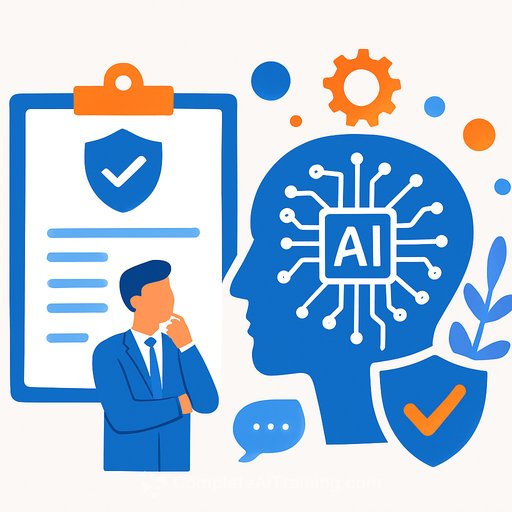
Guardrails, training, and hands-on practice are non-negotiables. Teams need clarity on what's allowed, what's off-limits, and where experimentation is encouraged. Without that, adoption stalls or creates risk.
Pace of adoption: slow is smooth, smooth is fast
Both carriers and brokers are largely taking a measured approach (43%), with just 4% going aggressive. That restraint is strategic. As one leader put it at Insurtech Connect 2025, the goal isn't to "revamp the whole business unit at once," but to ship in smaller pieces, validate impact, and protect cost structures.
On the ground, brokers are testing targeted plays. Tom Ward Insurance Group implemented an AI phone assistant ("Gail") that handled 484 calls last month-about 30% sales and 65% support-routing requests to the right people and saving time. They're expanding carefully to ensure the assistant can handle research and other processes before scaling.
Skills and staffing: reskill before you retool
Just over half of respondents say their companies have identified the skills and talent needed for AI. Less than 20% disagreed. That gap matters. AI shifts daily work from data gathering to decision support, from form-filling to exception handling.
The practical move: upskill current staff on prompt quality, review workflows, privacy, and model limits-then align hiring with the gaps. For governance basics, the NIST AI Risk Management Framework is a solid reference point for policy and control design. View NIST AI RMF
Where AI fits today
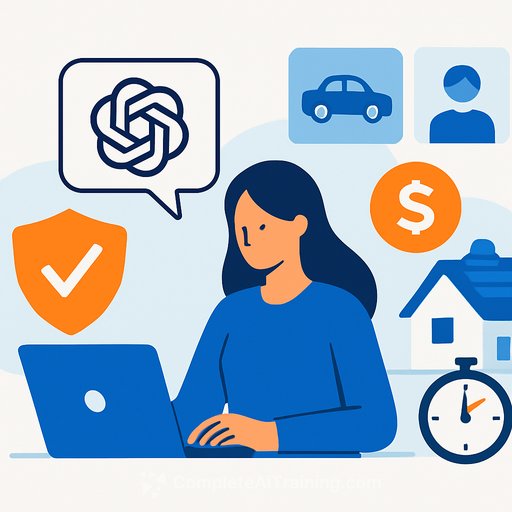
Teams are having success with transactional tasks-payments, ID cards, certificates, billing inquiries, and simple policy changes. That frees licensed staff to handle complex coverage comparisons, high-stakes account reviews, teen driver adds, and home purchase conversations.
This "automation for simple, human for complex" split keeps customer trust intact while improving speed. Several leaders stressed a high bar for accuracy and a human-in-the-loop for anything that impacts coverage decisions or sales conversations with high-value clients.
Practical next steps for carriers and brokers
- Define clear policies: acceptable use, data handling, review steps, and handoffs. Use a lightweight risk tiering model so not every use case needs the same controls.
- Stand up safe sandboxes with real (but appropriate) data. Encourage pilots with explicit success criteria and a short feedback loop.
- Prioritize high-volume, low-complexity workflows first-payments, COIs, ID cards, simple endorsements, FAQs, and intake routing.
- Keep a human-in-the-loop for coverage advice, renewals with material changes, and complex claims or underwriting.
- Upskill by role: agents on prompt quality and client communication with AI support; ops on workflow design; compliance on monitoring and audit trails. If you need structured programs, explore role-based options here: AI courses by job.
- Measure what matters: cycle time, first-contact resolution, written premium per FTE, service-level consistency after hours, and error rates.
Bottom line
AI is already useful in insurance-especially for transactional work and triage. The teams winning are setting guardrails, training their people, and rolling out in slices. Go slow to go fast: prove value in one workflow, lock the controls, then scale with confidence.
Your membership also unlocks: