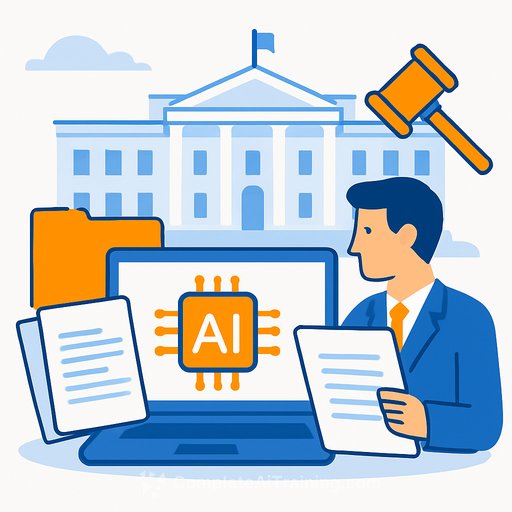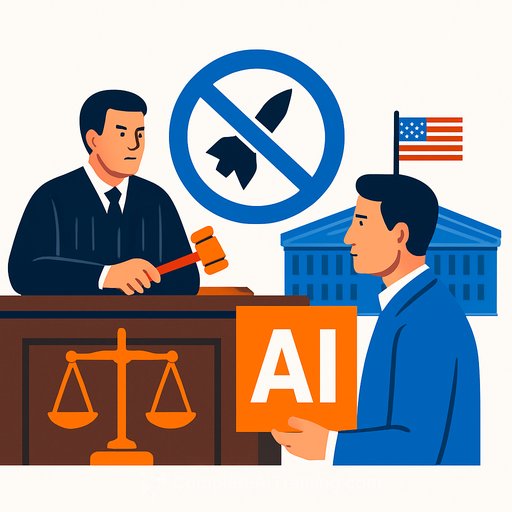
The Algorithmic Gavel: Are Governments Ready for AI-Led Governance?
AI is already embedded in public work. It routes service requests, flags fraud, models environmental policy, and nudges frontline decisions. The real question isn't whether to use it. It's whether we're ready to give it authority without losing accountability.
What's different this time
Past technologies changed how we share information and coordinate power. AI changes who or what makes the initial call. Predictive policing systems and automated welfare decisions show the risk: bias amplification, opaque logic, and human responsibility pushed into the background.
That tension is growing as agencies scale machine learning into tax enforcement, benefits integrity, and crisis planning. Efficiency is real. So are the consequences of a silent error.
Where AI already runs government tasks
An OECD scan cataloged hundreds of use cases across core functions-from service delivery to anti-corruption. Fraud detection, risk scoring, and resource optimization deliver measurable wins. But every win adds a governance burden: provenance, auditability, and recourse.
OECD: Governing with AI offers a useful map of what's in play and where controls are thin.
Oversight models are splitting
The U.S. is moving toward a more centralized AI stance, with directives to align state and federal action and weave civil rights into deployment. China's draft rules emphasize ethical, secure, and transparent systems under state guidance, signaling control and social stability as priorities. The EU's AI Act now sets strict obligations for high-risk uses-audits, documentation, and human oversight.
Different routes, same pressure: make high-stakes AI traceable and interruptible.
Public appetite and political pressure
Polling shows unease about privacy, job loss, and fairness. Some leaders, like Florida Governor Ron DeSantis, frame AI risk through labor disruption and scale-systems moving faster than oversight. Partisan lines are forming, and the platform that meets voter anxieties will likely set the next wave of policy.
The hidden costs you'll need to budget for
Algorithmic opacity increases investigation time when something goes wrong. Data leakage risks climb as models touch sensitive systems. And in critical policy areas-pandemic response, transportation control-model errors or adversarial attacks aren't PR issues; they're public safety issues.
Science reviews call for transparency by default and stronger research on real-world failure modes; see Research for related resources and studies. Your budget should include red-teaming, monitoring, and incident response, not just software licenses.
Ethics: who owns the mistake?
If an algorithm denies benefits incorrectly, who answers to the public-the vendor, the data team, or the agency head? Without clear accountability chains, trust erodes fast. International voices are pushing for open safety standards, shared risk classifications, and auditable decision trails.
Bottom line: ethics must be operational-codified into processes, logs, and signatures-not just statements on a website.
Practical readiness checklist for agencies
- Mission fit: Define the decision, stakes, and acceptable error rate before selecting a tool.
- Risk tiering: Classify systems by impact (inform, assist, recommend, decide). The higher the tier, the tighter the controls.
- Human-in-the-loop: Set clear escalation and override rules for all high-stakes outputs.
- Data governance: Source transparency, consent posture, retention limits, and de-identification rules.
- Vendor transparency: Require model cards, training data summaries, and change logs.
- Auditability: Log inputs, outputs, and model versions for every consequential decision.
- Bias and performance testing: Evaluate by subgroup. Track drift over time, not just at launch.
- Security: Red-team prompts, model endpoints, and integrations; plan for model exploits.
- Procurement clauses: Right to audit, incident reporting SLAs, indemnification, and rollback rights.
- Public engagement: Pre-brief oversight bodies and communities affected by high-impact deployments.
- Sunset and review: Set expiry dates and reauthorization gates; require proof of benefit.
- Interoperability: Prefer open formats, exportable logs, and clear off-ramps to avoid lock-in.
- Training and reskilling: Upskill analysts, investigators, and caseworkers on AI literacy and oversight.
- KPIs that matter: Equity, error correction time, appeals volume, service quality-publish them.
Procurement language you can reuse
- Right to audit models, datasets, and evaluation reports on request.
- Prohibit training on citizen PII without explicit, documentable consent.
- Provide model cards, data lineage summaries, and known limitations.
- Meet minimum accuracy and fairness thresholds; disclose test suites used.
- Notify of model updates 30 days prior; include rollback and freeze options.
- Log retention for 7-10 years for consequential decisions; FOIA-ready exports.
- Breach and incident reporting within 24 hours; vendor-funded remediation plan.
- Liability and indemnification for harms caused by model defects or misuse.
- Onshore storage for sensitive categories; disallow subcontracting without consent.
Minimal viable governance stack
- System inventory with risk tiers and owners.
- Data protection impact assessments tied to deployments.
- Model registry with versions, tests, and sign-offs.
- Independent ethics review for high-risk uses.
- Continuous monitoring: bias, drift, and security events.
- Appeals and remedy process for affected citizens.
- Public documentation portal with plain-language summaries.
Equity and inclusion: prevent a second digital divide
AI can expand services in low-resource settings, but access gaps can widen if training, connectivity, or language support lag. Build multilingual interfaces, offline options, and human help routes. Fund community partners who can translate tech into trust.
If your workforce needs a structured upskilling path, review practical courses by role here: AI courses by job.
What to pilot in the next 90 days
- Document summarization for case files with strict no-PII training settings.
- Benefits pre-screening assistants that suggest, not decide, with appeal scripts built in.
- Fraud anomaly triage where humans approve every action.
- Permitting Q&A copilots trained on your published rules and nothing else.
- Contact center assist that drafts-but never sends-responses without human review.
What not to automate yet
- Final eligibility decisions for benefits without human verification.
- Sentencing, parole, or child welfare determinations.
- Healthcare resource allocation during emergencies.
- Any action that limits liberty or access to essential services without an appeal path.
Policy moves for the next 12 months
- Align with national guidance and publish your agency AI policy.
- Adopt common data and logging standards across jurisdictions.
- Create a public incident and lessons-learned database for AI failures.
- Modernize procurement to prioritize transparency and audit rights.
- Stand up an interagency AI review board with civil rights expertise.
- Join international forums to share tests, documentation, and incidents.
Compliance note
If you work with high-risk systems in the EU or with EU data, review regulatory duties directly from the source: EU AI Act.
Bottom line
Readiness isn't a posture; it's a playbook you can defend in a hearing. Use AI to assist, log everything that matters, and keep a human hand on the lever for high-stakes calls. Move fast on low-risk wins, slow down where rights and safety are on the line. Authority stays with you-make sure the record proves it.
Your membership also unlocks: