TUMO Center Wins $1M WISE Prize for Education with AI-Driven Training Program
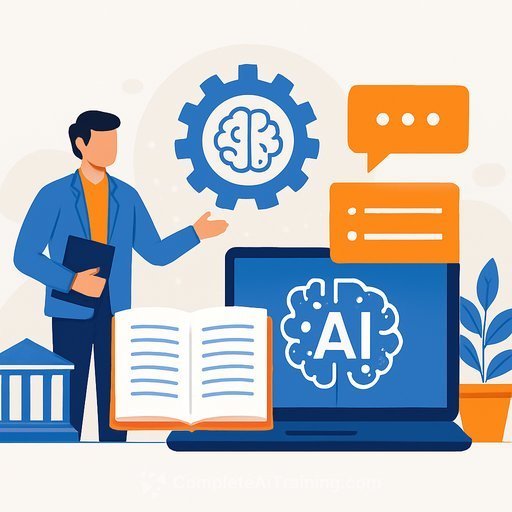
The Armenian TUMO Center for Creative Technologies has received the $1 million WISE Prize for Education for a new artificial intelligence training program built around its AI Colleague platform. The program is based on a simple idea with big consequences for learning: teaching with AI.
The WISE competition received 427 applications, with six finalists. TUMO's approach stood out for its innovation, effectiveness, and scalability, as shared in the organization's announcement.
Why this matters for educators
- AI as a co-teacher can extend teacher capacity without diluting quality.
- Project-based learning pairs well with AI guidance and immediate feedback.
- Scalable models can bring advanced skills to more students at lower marginal cost.
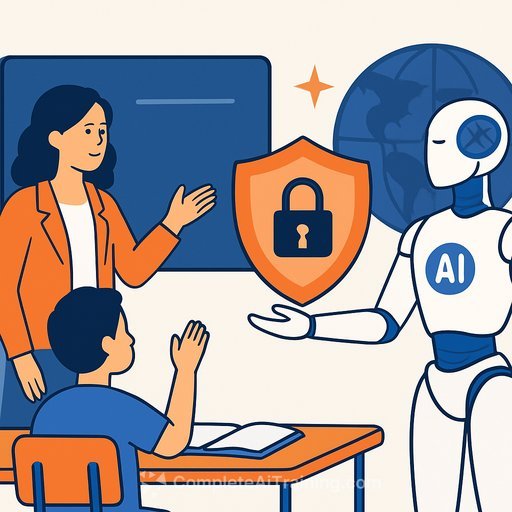
- Clear guardrails, assessment, and teacher upskilling are essential for safe rollout.
What "teaching with AI" can look like
Think of AI as a consistent, on-demand assistant that supports instruction, practice, and feedback-while teachers focus on coaching, community, and higher-order thinking. Done well, this reduces bottlenecks, personalizes pacing, and keeps learners moving through projects with fewer stalls.
The key is structure: defined learning paths, transparent prompts, and measurable outcomes. The tech is there; the difference is in the design and execution.
TUMO at a glance
- Opened in Armenia in 2011; approximately 25,000 Armenian teens (12-18) receive free training in modern technologies.
- Learning areas: programming, music, robotics, animation, 3D modeling, filmmaking, photography, game development, graphic design, and drawing.
- Centers outside Armenia: Paris, Marseille, and Lyon (France); Berlin, Mannheim, Hirscheid, and Lüdenscheid (Germany); Combra and Lisbon (Portugal); Los Angeles (USA); Gunma (Japan); Buenos Aires (Argentina).
- Planned centers: Astana, Montevideo, Luanda, Takasaki, Amsterdam, and Mumbai.
How to apply these ideas in your program
- Start with AI as a co-teacher in one strand (e.g., programming or design) before scaling across subjects.
- Build a prompt and project library aligned to your curriculum and local standards.
- Define data, privacy, and academic integrity policies upfront; communicate them to staff, students, and parents.
- Train teachers first-short, hands-on sessions that model real classroom use and common failure modes.
- Measure what matters: completion rates, time-on-task, quality of artifacts, and growth in specific competencies.
- Prioritize access: loaner devices, offline modes where possible, and clear support channels for students.
Further reading
Your membership also unlocks: