ARO Drilling Rolls Out ALTAVE's AI Monitoring on Nine Jack-Up Rigs in Saudi Arabia
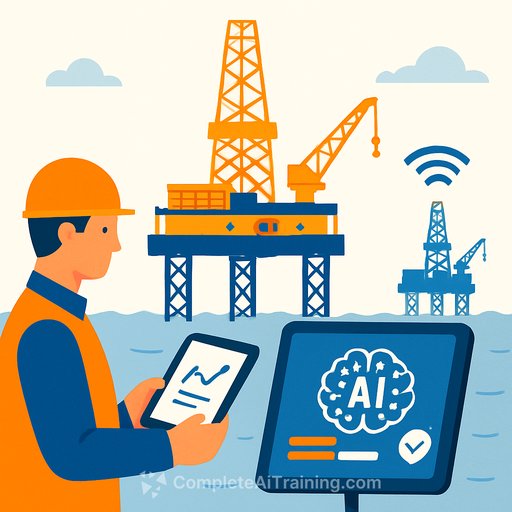
Monday, January 19, 2026 - ARO Drilling, the joint venture between Valaris and Aramco, has signed a multi-year agreement to deploy ALTAVE's Harpia AI-based video analytics across its fleet of nine offshore jack-up rigs in Saudi Arabia.
The platform uses computer vision to continuously monitor high-risk activities, verify PPE, and control access to restricted areas. During the pilot, the system delivered measurable gains in safety oversight, operational governance, and risk visibility.
What's being deployed
- AI-based video analytics for continuous monitoring of work sites, walkways, and critical zones.
- Automated checks for PPE compliance and restricted-area access.
- Configurable monitoring rules aligned to rig procedures and permits.
- Dashboards and periodic reports for HSE and Operations teams.
- 24/7 remote support and system oversight from ALTAVE.
Why this matters for Operations
This rollout moves camera systems from passive recording to active, event-driven oversight. It helps catch non-compliance early, shorten response times, and close blind spots during critical operations such as lifting, hot work, and confined-space entries. For practical guidance on deploying AI in offshore operations, see AI for Operations.
Standardized monitoring protocols should also support more consistent execution across rigs-useful for audits, incident reviews, and continuous improvement cycles.
Pilot outcomes and scale-up
Harpia's pilot on ARO units showed improvements in safety monitoring and risk visibility under offshore conditions. With the fleet-wide expansion, ALTAVE will maintain system performance with ongoing health checks and around-the-clock technical support.
How crews will use it day to day
- Real-time alerts for PPE and access violations, with clear escalation paths.
- Shift handovers supported by dashboards that summarize key events and exceptions.
- Weekly/monthly reports to track trends, repeat issues, and closure of corrective actions.
- KPIs to watch: PPE compliance rate, response times to critical alerts, adherence to permit-to-work steps, near-miss detection rate.
Implementation checklist for Operations leaders
- Map monitoring rules to existing SOPs, Life-Saving Rules, and permit workflows.
- Audit camera placement for coverage of lifting areas, drill floor, escape routes, and access points.
- Set alert thresholds and escalation matrices to avoid alarm fatigue.
- Confirm bandwidth, storage, and data retention policies with IT and compliance.
- Define responsibilities: who triages alerts, who verifies, who closes actions.
- Brief crews early-what's monitored, why it matters, how data is used.
- Schedule scenario drills to validate alert quality and response steps. For leadership and change-management planning tied to AI deployments, see AI for Management.
Context and next steps
Leaders at ARO highlighted this deployment as a step in bringing smarter tools into daily rig operations and raising the bar on safety and execution discipline. ALTAVE noted the system performed well under offshore conditions and is ready for scale.
As ALTAVE scales the solution fleet-wide, executives will need governance, risk oversight, and scaling strategies - guidance is available under AI for Executives & Strategy.
For teams standardizing procedures and controls, aligning monitoring rules with recognized frameworks can help. See the IOGP Life-Saving Rules for a practical baseline.
If you're planning crew upskilling for AI-enabled operations and HSE workflows, explore concise options here: AI training by job role.
Bottom line
Nine rigs will receive always-on, AI-based monitoring with configurable rules, dashboards, and 24/7 support. For Operations, the value is clear: cleaner compliance signals, faster intervention, stronger governance-and a repeatable way to embed those gains across the fleet.
Your membership also unlocks: