Art Schools Push AI Training as Students Push Back
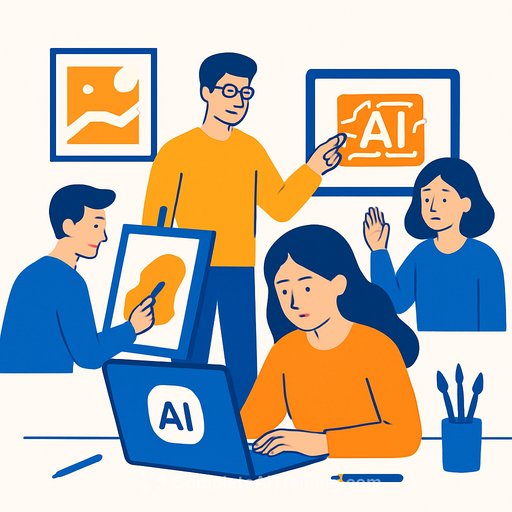
Creative institutions including CalArts, the Massachusetts College of Art and Design, and the Royal College of Art now encourage students to learn generative AI tools, even as many students and faculty oppose the technology. The shift reflects a broader tension: schools want graduates who can compete in industries where AI is becoming standard, but many creative professionals view the tools as threats to their livelihoods.
At CalArts, the curriculum now includes critical engagement with AI across disciplines. The school aims to help students "play an active role in shaping future technologies instead of simply reacting to them," according to CalArts communications. The approach includes learning technical limitations, copyright concerns, and ethical implications alongside hands-on tool training.
Not all students are accepting this direction. A 2023 survey by Ringling College of Art and Design found that 70 percent of students felt "somewhat" or "extremely" negative toward AI. At CalArts, students altered posters requesting AI artist assistance with anti-AI messages. A film student at the University of Alaska Fairbanks destroyed another student's AI-generated display piece by eating it in protest.
The core concern is straightforward: generative AI can now produce images, music, video, and animations that previously required skilled professionals. Text-to-image models like Midjourney and Google's Nano Banana generate images from text descriptions. Music generators like Suno and Udio create songs that mimic popular artists. Video models are spooking animators and VFX artists. The technology improves monthly.
Schools are caught between two pressures. Employers increasingly expect graduates to understand AI tools. At the same time, the models were often trained on copyrighted work without artist permission, and widespread AI adoption could reduce job opportunities in creative fields. Students paying tuition to learn skilled crafts worry they're being groomed to become prompt engineers instead.
Some educators are positioning AI as a complement to human creativity rather than a replacement. At York College of Pennsylvania, assistant professor Ry Fryar teaches students to use AI for ideation and concept visualization during planning stages, not for final work. "The focus is on creativity itself, because without that, the results are common, therefore dull and fundamentally inexpert," Fryar said.
Arizona State University is taking a different approach. The school will offer a course called "The Agentic Self" led by musician will.i.am in Spring 2026, teaching students to build their own AI systems that serve as "a digital extension of their creative identity, curiosity, and goals." ASU President Michael Crow framed the partnership as preparation for "the powerful shift in jobs toward AI."
CalArts also established the Chanel Center for Artists and Technology, which lists artificial intelligence and machine learning as key focus areas. The school is partnering with organizations like Adobe and Google to give students access to current tools and direct contact with the companies developing them.
The Pratt Institute's approach acknowledges the tension directly. The school recognizes that many AI tools "mine and share/sell user data, are trained on biased datasets, and have significant impacts on the environment." At the same time, Pratt notes that "fluency with AI tools is a growing competency sought by employers."
Schools defending their AI curriculum argue they have a responsibility to help students engage with and critique these tools directly. "This is the best way to equip creative communities with the skills and knowledge to influence how these tools evolve or and how they are used in creative work," CalArts said. The message is consistent across institutions: learn these tools now, or risk irrelevance later.
Whether that argument convinces skeptical students remains uncertain. Creative professionals in the industry are expressing similar doubts, and the gap between institutional strategy and student sentiment shows no sign of closing.
For educators designing curriculum around these tools, the challenge is teaching students to work with AI while preserving the core skills that make human creativity valuable. That balance will likely define creative education for the next several years.
Your membership also unlocks: