AI Deepfakes Create New Employment Discrimination Liability for Employers
A Baltimore County school principal was placed on administrative leave after a disgruntled athletic director used AI voice cloning to create fake audio recordings of him making antisemitic and racist remarks. The director circulated the recordings to teachers, the superintendent, and social media before the principal's voice was confirmed as cloned. The principal later hired a security detail after receiving threats. The athletic director was sentenced to four months in jail.
The incident exposes a gap in employment law. Courts and employers now face questions about liability when deepfakes-AI-generated or manipulated digital content-are used to create false evidence of discrimination or to manufacture hostile work environments.
Title VII Protection Does Not Cover False Reports
Title VII's anti-retaliation provision protects employees who report discriminatory conduct. But that protection only applies when an employee has a good faith, reasonable belief that the conduct was unlawful.
An employee who creates a deepfake to support a discrimination claim lacks that good faith belief by definition. Courts are unlikely to treat such conduct as protected activity under Title VII.
However, employers face liability in other directions. If an employer relies on deepfake evidence to make an employment decision-such as termination or demotion-the employee targeted by the false content may have grounds to sue. Employers could also face liability if deepfakes create a hostile work environment among staff.
Legal Standards for AI Evidence Still Developing
The law here is nascent. The Equal Employment Opportunity Commission's 2024-2028 Strategic Enforcement Plan explicitly targets technology-driven discrimination and digital harassment, signaling federal attention to the issue.
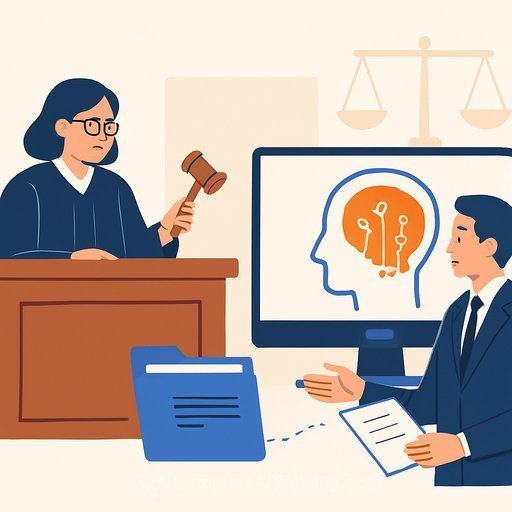
Proposed changes to the Federal Rules of Evidence would require parties to authenticate AI-generated content and meet expert witness standards when presenting deepfakes or algorithmic decision-making evidence in court.
What Employers Should Do Now
Employers cannot wait for legal clarity. Practical steps include updating employee handbooks to address synthetic media and manipulated content, and training HR staff to identify deepfakes.
Attorneys handling employment cases should independently verify the authenticity of audio, video, and text evidence before relying on it. A recording that sounds real may not be.
For legal professionals managing these issues, understanding how AI is used in employment contexts is no longer optional. AI for Legal professionals covers document review, compliance, and evidence evaluation-skills now essential for employment law. Paralegals handling document review and contract analysis should also develop competency in identifying AI-generated or manipulated content.
The Baltimore County case will not be the last of its kind. Employers and their counsel need to act before deepfakes become routine tools for workplace harassment.
Your membership also unlocks: