
AI news ·
Artificial intelligence dominates Cannes Lions 2026
Cannes Lions 2026 established AI fluency as a baseline expectation for advertisers. Agencies are hiring prompt designers for roles that did not exist two years ago.
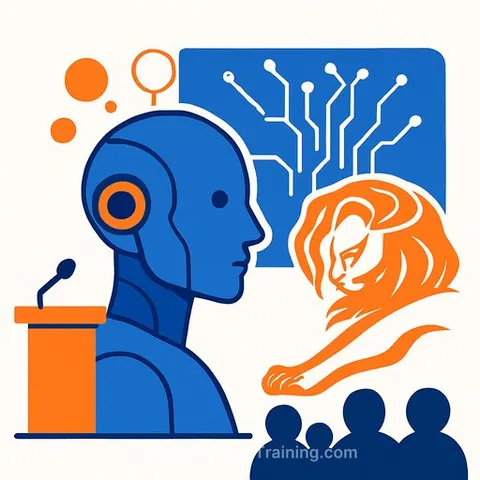
Cannes Lions 2026 wrapped last week in the South of France, and the festival made one thing unmistakably clear: artificial intelligence has moved from a fringe experiment to the central pillar of creative advertising. The week-long event, which draws agency leaders, brand marketers, and creative directors from across the globe, placed AI in nearly every seminar, award category, and late-night beach debate.
AI fills the Palais
From AI-generated storyboards that accelerated pitch processes to campaign analytics tools that shaped real-time creative decisions, the technology was inescapable. Jury rooms debated whether AI-assisted work should require new judging criteria. On stage, speakers challenged creatives to think of AI as a collaborator, not a crutch. As one participant put it: "AI was the connecting thread running through everything."
The tone was practical. Presenters showed how large language models cut research time from days to hours and how image generators enabled rapid prototyping for client presentations. A few agency leaders argued that the strongest work still begins with a human insight, but they acknowledged that ignoring AI's capabilities would leave any creative team at a disadvantage.
Not a replacement, but a reset
The festival conversation has shifted from "Will AI replace us?" to "How fast can we adapt?" Several creatives noted that early fears about job displacement have given way to a more precise concern: the gap between those who understand how to direct AI tools and those who don't will widen quickly. Speed, not sentience, is the new divide.
Workshops on prompt engineering and AI ethics drew full crowds. The Cannes Lions festival itself introduced an AI-focused learning track this year, underscoring how seriously the industry views the technology. Many creatives are now seeking dedicated training to integrate AI into their workflows-AI for Creatives courses are one way teams are building those skills.
Why this matters for creatives
Agencies are already hiring for roles that didn't exist two years ago, such as AI creative directors and prompt designers. The message from the Croisette is that AI fluency is becoming a baseline expectation, not a specialization. For working creatives, the immediate task is to learn how to steer AI outputs toward original, brand-appropriate ideas rather than generic results. The technology is not waiting for permission, and neither are the briefs coming back from clients who saw what's possible.