
AI news ·
Artificial intelligence enables re-identification of anonymized data, increasing legal risk for companies
AI can re-identify anonymous data, ending its legal safe harbor status. Firms now face stricter consent requirements and heightened litigation exposure.
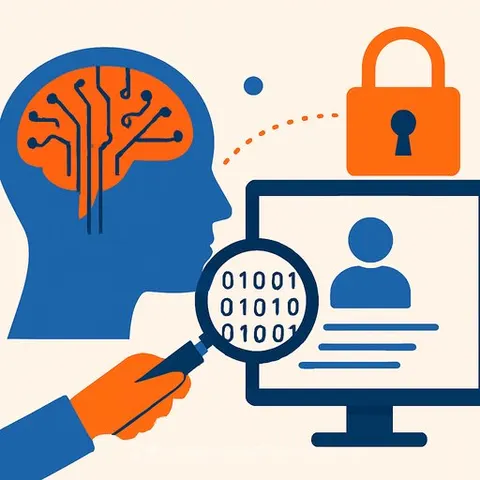
Companies have long treated data anonymization as a legal safe harbor, stripping direct identifiers like names and email addresses to reduce regulatory risk. That assumption is crumbling as artificial intelligence makes it faster and cheaper to re-identify individuals from datasets once considered anonymous. Privacy experts now warn that anonymization is not a permanent legal status but a temporary technical condition, and the consequences for businesses that fail to adapt their data governance practices could be severe.
Business models built on de-identified data face new scrutiny
Many data-driven enterprises depend on the premise that de-identified data sits outside the most restrictive legal obligations. AI systems can infer identity from patterns once thought analytically inert-location trails that reveal home and work addresses, purchase histories that narrow identity to a small cohort, or writing style analysis that connects anonymous text to known authors. When combined with publicly accessible information from data breaches, commercially procured datasets, or web-scraped corpora, seemingly anonymous records often become re-identifiable.
Researchers have demonstrated this risk repeatedly with voting records, clinical trial data, and HIPAA-covered information. The determinative question has shifted from whether a dataset contains identifying information in isolation to whether individuals can be re-identified when datasets are combined. That shift is already reshaping regulatory frameworks. The US Department of Justice's 2025 Data Security Program, for example, does not exempt anonymized, de-identified, or pseudonymized data from its scope if the data meets applicable thresholds.
The financial stakes of re-identification risk
If regulators conclude that data formerly considered anonymous remains reasonably re-identifiable, companies may face stricter consent requirements, expanded disclosure obligations, and heightened litigation exposure. Data-sharing economics could change as datasets once considered low-risk now require additional technical controls like differential privacy mechanisms, synthetic data generation, or formal re-identification risk audits. Organizations that built growth strategies around broad data access may discover that the cost and complexity of maintaining compliant data ecosystems is rising rapidly.
These pressures are visible in enterprise contracting. Legal departments are scrutinizing data-sharing agreements, vendor arrangements, and AI procurement terms for provisions related to re-identification risk, downstream model training, audit rights, and liability allocation. Some companies now treat anonymized data less as a safe harbor and more as a category of managed risk requiring the same contractual rigor applied to personal data.
Moving from binary status to evolving risk assessment
The legal question is shifting from "Were identifiers removed?" to "Could individuals realistically be re-identified by a reasonably capable actor using currently available methods?" Many organizations still treat anonymization as a binary status rather than an evolving risk assessment. Companies are adopting stronger contractual protections, such as prohibiting third parties from attempting re-identification, though contracting parties often rely on outdated assumptions about what reasonable means can achieve.
De-identification remains an important privacy safeguard when implemented rigorously and paired with continuous re-identification risk monitoring. But it no longer guarantees durable privacy protection in an AI-driven ecosystem. Organizations need to ask how identifiable data could become over time, what external data sources could alter that analysis, and who bears legal and contractual responsibility if re-identification eventuates.
Why this matters for legal professionals
Legal teams are on the front line of a structural reorientation in data governance strategy. The erosion of anonymization as a reliable safe harbor means contracts, compliance programs, and regulatory disclosures must account for identifiability as a spectrum of evolving technological risk. For in-house counsel and privacy lawyers, this shift demands updating data-sharing agreements, revisiting vendor due diligence, and advising business units that de-identified data can no longer be treated as categorically low-risk. Staying ahead requires understanding the technical capabilities that AI brings to re-identification-a topic explored in resources like AI for Legal-and integrating that understanding into day-to-day legal practice.