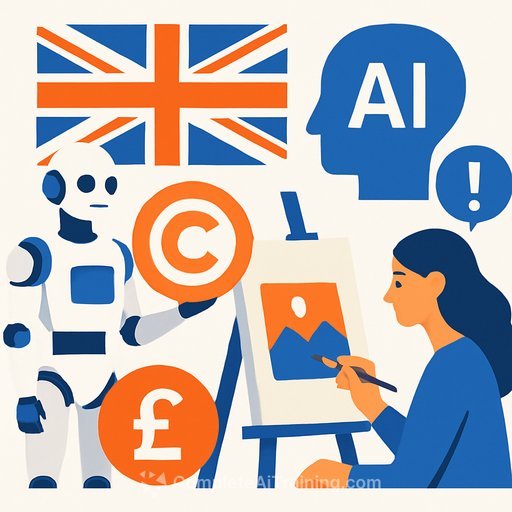
Artists Push Back as UK Retreats on AI Copyright Opt-Out
Britain's creative community just sent a clear message: consent isn't optional. In a recent government consultation, a strong majority rejected an "active opt-out" for AI training - a system that would have let AI companies use creative work by default unless artists objected.
Ministers have now stepped back from what had been their preferred option. The signal is simple: default access to creative labor won't fly.
What Was on the Table
The proposal would have introduced a broad text-and-data-mining exception. Novels, songs, films, and images could be pulled into training sets unless creators took explicit steps to block them.
For working artists, that flipped the burden. Protection would no longer be automatic. You'd have to watch every platform, every dataset, forever.
Most respondents said no. Many asked to keep existing protections or require licenses for AI training. This wasn't just legal wrangling - it was a defense of authorship and paid labor.
Culture Pushed Back - Loudly
Protest has been visible. Musicians released a near-silent album to make the point: strip value from creative work and you're left with silence. That symbolism hit home.
Composer and creator-rights advocate Ed Newton-Rex called the consultation outcome "an overwhelming show of support for the commonsense position that AI companies should pay for the resources they use, and a total rejection of the government's preferred option of handing AI companies the work of the UK's creatives for free." Consent isn't a nice-to-have. It's the baseline.
Where Government Stands Now
Officials acknowledged the backlash but haven't offered a single replacement model. They've promised more proposals soon, balancing tech growth with the rights of creators.
If you want the context behind the current exceptions, see the UK's guidance on text and data mining for non-commercial research here, and the earlier consultation on AI and IP here.
What This Means for Creatives
The conversation is shifting. It's no longer "how much culture can we extract to fuel machines?" It's "how do we build useful technology without erasing the people who make culture in the first place?"
For background on the research and data-mining debates that inform these policy choices, see AI Research Resources.
Copyright isn't a roadblock - it's a boundary. And boundaries protect the value of your work.
Practical Steps You Can Take Now
- License with clarity: Add explicit terms to contracts and website policies on whether your work can be used for AI training. Charge for it if you allow it.
- Use content credentials: Attach provenance metadata (C2PA "Content Credentials") to publish-ready files to signal authorship and usage intent. Learn more at c2pa.org.
- Protect your portfolio: Watermark publicly shared images where possible. Share lower-res versions if training misuse is a concern.
- Update your boilerplate: Add an AI-training clause to all client and platform agreements. Make consent explicit, not assumed.
- Join collective efforts: Participate in trade bodies, guilds, and future consultations. Collective pressure just moved policy - keep it up.
- Track your exposure: Periodically search for your work in known datasets and on model demo sites. Document misuse; it strengthens a claim.
For Studios Using AI
- License your training data: Treat datasets like any other resource you pay for. It's cheaper than reputational damage and legal risk.
- Build consent into your workflow: Keep records, link assets to licenses, and make opt-in the default for any proprietary model training.
- Pay creators: Commission datasets, negotiate reuse rights, and share value where models rely on living artists' work.
The Bottom Line
This is a rare moment where artists, publishers, and performers spoke with one voice - and were heard. The UK pulled back because creators made the terms clear: innovate, yes, but not at the expense of consent and compensation.
If you're integrating AI into your practice and want role-based learning options that respect creators' rights, explore the AI Learning Path for Data Scientists.
Your membership also unlocks: