Human-First AI Music: Notes from the Prose AI Music Creators Accelerator Demo Day
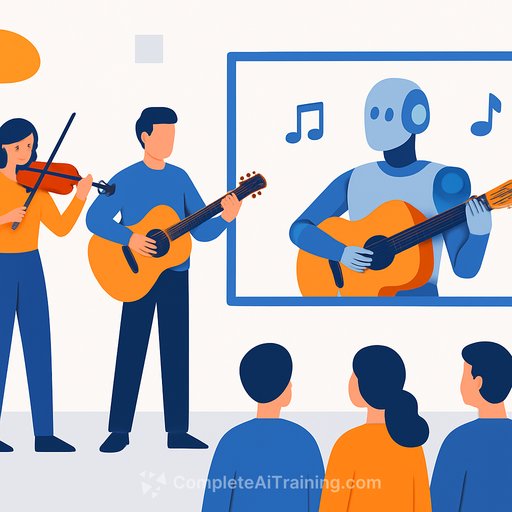
Most accelerators chase apps and pitch decks. This one spotlighted songs. The Prose AI Music Creators Accelerator brought together human artists who use GenAI as part of their process, not as a substitute for it. Their eight-week program wrapped with a public demo day on Friday (27 February), streamed live and then posted on-demand.
Founder Jules Miller of Prose Ventures framed it clearly: "There's a lot of noise around AI music, and the only way to understand it is to listen - to the music and to the real people behind it doing serious creative work." She added, "There's a difference between content generated at scale and artists building with intention." And the goal isn't displacement: "This isn't about replacing artists - it's about unlocking new dimensions of human creativity by using modern tools and processes to make art in ways that weren't possible before."
What stood out
- Range with teeth: K-Pop played on ancient instruments. "Victoriandustrial Folktronica." A sleeper genre we didn't know we needed: Tired Dad Core.
- Some uncanny avatars, sure-but the songwriting intent and human fingerprints were obvious.
- Finished work, not sketches. These artists already have releases live on streaming platforms.
The hard truth about AI tools
There's a shadow over today's tooling: some models were trained by scraping music without permission or payment. That wasn't the decision of the artists using them, but it complicates the celebration.
Progress looks like fair licensing, auditability, and clear payment flows back to musicians. If you care about provenance, look for vendors moving toward transparent data practices and initiatives like Fairly Trained.
What this means for working creatives
- Treat AI like an instrument, not a shortcut. Start with a concept and references; use tools to iterate, not to decide.
- Keep a human spine: melody, lyrics, and performance choices come from you. Let models handle variations, textures, or sound design assists.
- Build the world, not just the track: visual identity, lore, and persona. Avatars are optional; consistency is not.
- Document your pipeline. Save versions, note which tools you used, and credit contributions (human and machine).
- Favor tools with clearer data provenance or licensing. If you profit, make sure the pipeline can stand up to questions.
- Blend old and new: traditional instruments, field recordings, and human takes layered with AI outputs.
- Ship process, not only songs: behind-the-scenes clips, stems, and sessions that build community and trust.
- Think IP beyond singles: samples, packs, sync-ready edits, licensing, gaming tie-ins, and immersive experiences.
A quick-start workflow for your next AI-assisted release
- Define the thesis: emotion, concept, sonic references, and a simple one-sentence brief.
- Sketch the core motif via voice note or MIDI. Keep it human and simple.
- Generate 3-5 variations with your chosen tool. Curate hard. Delete more than you keep.
- Record lead vocals or core instrument. Use AI for harmonies, doubles, or timbre experiments if needed.
- Arrange in your DAW. Commit to structure early; stop moving the goalposts.
- Mix for clarity: gain stage, carve frequencies, add movement with automation.
- Final polish: limiter, loudness check, and device testing (studio, earbuds, car).
- Create visuals: cover art and 3-5 short clips for socials. If using an avatar, match look and lore.
- Distribute with clean metadata, writer/producer credits, ISRC, and notes on tool usage.
- Publish a short making-of. Capture feedback and update a living playbook for your next release.
Where to skill up
If you're building a hybrid workflow-human voice, AI assists, and pro production-this is a practical path: AI Learning Path for Vocal Artists & Songwriters.
Why this matters
The demo day made one point obvious: this is not push-button music. It's iteration, refinement, artistry, learning new skills, combining AI with traditional instruments, producing AI video, getting sharper on social, and more.
As Miller put it, "These artists are building real intellectual property. Brands that go beyond music into licensing, gaming, immersive experiences and more." And the conviction is clear: "While this may have started as a little bit of an experiment for me to see if there were venture-style opportunities in AI music, it ended as kind of an obsession! I am now 100% convinced that AI creators are the future of media, of brands, and of the creative industries… passionate humans who are creating real art."
Your move: pick one track, adopt three steps from the workflow above, and ship in two weeks. Then repeat with better notes.
Your membership also unlocks: